Master the 3 EMA Strategy for 5-Second Quickler Trading
The Three Exponential Moving Average (EMA) Strategy is a simple, visual way to read trend direction and momentum. Layering three EMAs makes it easy to see when price is trending, stalling, or tangled with no clear read. This guide covers how the setup works, how to structure entries, and why applying it to 5-second (Quickler) trades is extremely difficult.
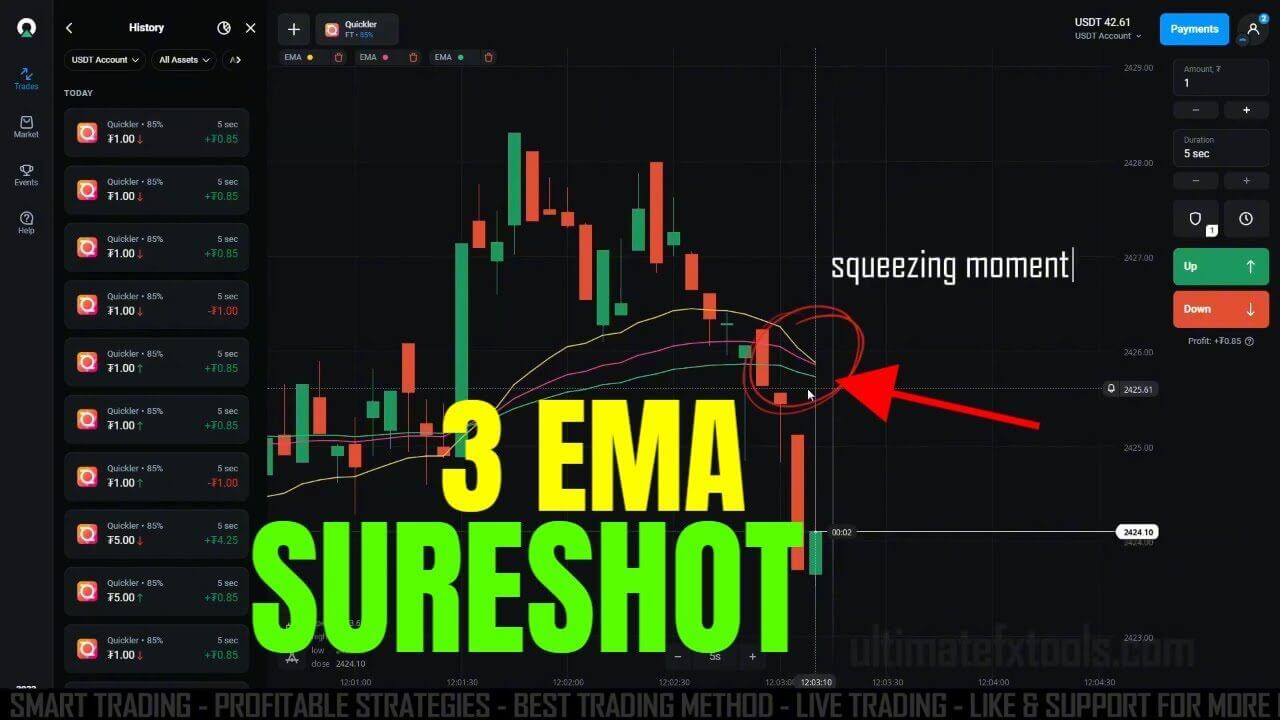
You will sometimes see this method promoted as a "3 EMA Sureshot." Be blunt about that: there is no such thing as a sure shot in trading. No moving-average setup wins every trade, removes losing streaks, or predicts the next candle. Treat "sureshot" as marketing language, not a description of results. What the method offers is a rules-based way to read the chart so decisions stay consistent instead of impulsive.
The Three EMAs and How Alignment Works
A common configuration uses a fast, medium, and slow EMA (for example 5, 13, and 21 periods — adjust to your own testing). The idea is to read their relationship:
- Aligned and spaced out — when all three EMAs stack in order and fan apart (fast on top for up-moves, fast on bottom for down-moves), momentum is running in that direction.
- Squeezing or crossing — when the EMAs converge and tangle, momentum is fading and direction is unclear. These are periods to stay out of, not to force a trade.
- Candlestick confirmation — a hammer, an engulfing candle, or two candles in the same direction can add context before you act.
One honest caveat: all three lines are the same type of indicator — EMAs of the same price series. When they agree, that is correlation, not independent confirmation. They always move together, so three aligned EMAs is one signal shown three ways. Pairing them with a different input, such as support and resistance or a momentum oscillator, adds more real information than a fourth moving average would.
Timeframe and Entry Rules
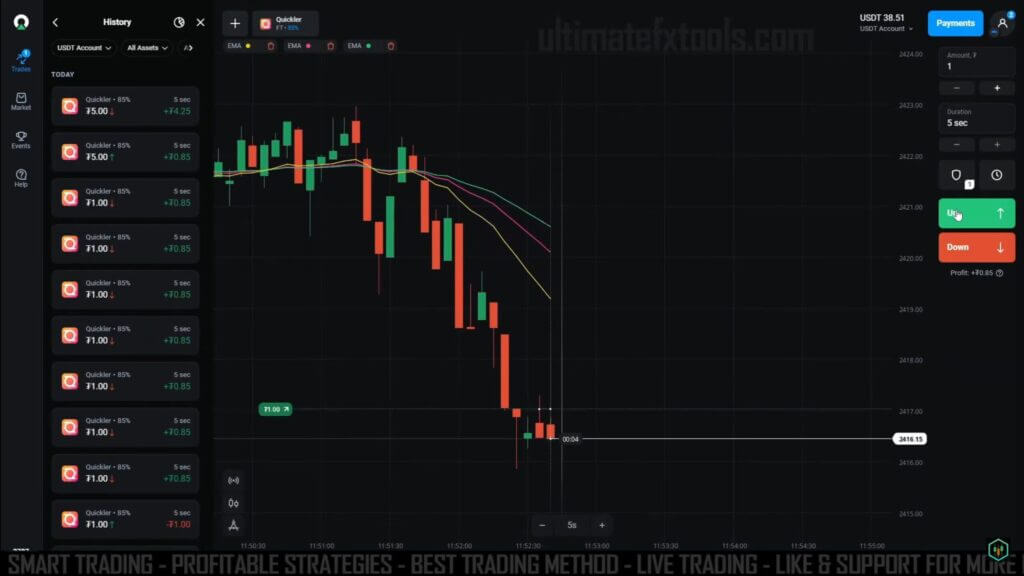
The mechanics are straightforward. For an upside continuation, price holding above all three aligned EMAs with follow-through candles suggests the trend is intact; trade in that direction until the averages squeeze. For a downside setup, look for the EMAs crossing lower with consecutive red candles, and step aside when the lines flatten or price pushes back above them. Wait for confirmation rather than anticipating it — jumping in early is one of the fastest ways to collect avoidable losses.
Why 5-Second Trading Is So Hard
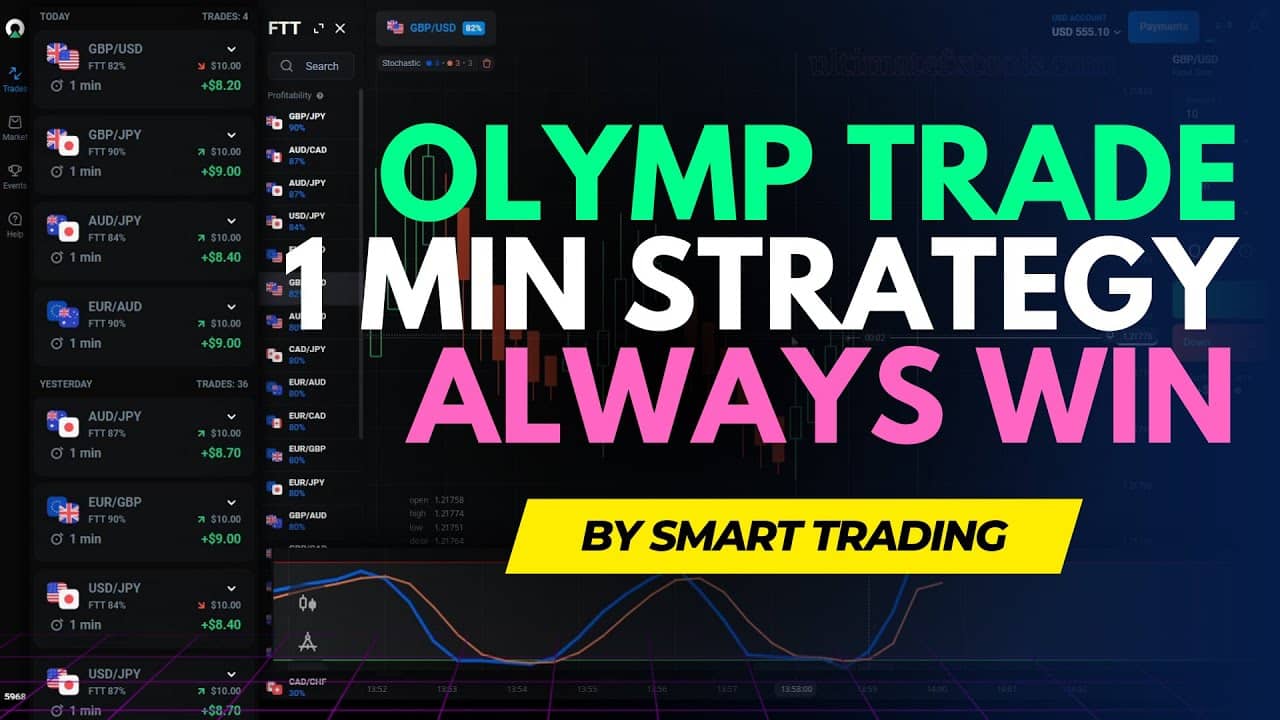
Here is the part most videos skip. At a 5-second horizon, price is dominated by noise, not trend. Moving averages lag by design — so on an ultra-fast timeframe they update after the move they describe has already happened. Spread, execution delay, and a fraction of a second of latency all take a proportionally huge bite out of a 5-second trade. The result is extremely high variance: outcomes swing widely, and short winning runs can be followed by equally sharp losing runs, largely from randomness. For a slower, more forgiving approach, the Olymp Trade 1 minute strategy gives the EMAs more room, and our Olymp Trade Quickler 5 Second Strategy breakdown adds context on the ultra-fast format.
Risk Management
On a high-variance format, risk control matters more than the entry signal:
- Risk only a small, fixed fraction of your account per trade, and keep sizes small when the EMAs are tangled or the market is choppy.
- Do not use a martingale. Doubling your stake after a loss to "recover" is dangerous — a normal losing streak, which 5-second variance produces regularly, can wipe out an account before a win arrives. Older versions of this strategy suggested doubling down; treat that as a warning, not a plan.
- Set a daily loss limit and stop when you hit it. Walk away from flat, directionless markets instead of forcing setups.
Demo-testing your rules before risking real money teaches you far more than chasing a "win rate." For a full library of indicators and strategy files to test on your charts, our $39 lifetime access bundles the tools in one place.
Frequently Asked Questions
Is the 3 EMA strategy a sure shot that wins every trade?
No. No strategy wins every trade, and "sureshot" is marketing language, not a real outcome. The 3 EMA method reads trend and momentum with consistent rules — it improves discipline, not certainty. Every trade carries risk, and losing trades are a normal part of using it.
Can I really use three EMAs to confirm a signal?
Only loosely. Because all three are the same type of indicator on the same price data, they move together and largely repeat one signal. For genuine confirmation, add a different tool — support/resistance, price action, or a momentum indicator.
Why is 5-second trading harder than longer timeframes?
At 5 seconds, price is mostly noise and moving averages lag the move they describe. Spread, latency, and execution delay weigh heavily on such short trades, producing very high variance where results swing sharply from randomness. Longer timeframes give the EMAs room to reflect an actual trend.
This content is for educational purposes only and is not financial advice. Trading involves substantial risk; you can lose some or all of your capital. No result is guaranteed and past performance does not indicate future results. Trade only what you can afford to lose.