5 Tips Olymp Trade Strategies
Olymp Trade fixed-time trades look simple: pick a direction, choose an expiry, wait for the result. That simplicity is exactly why so many beginners lose their first deposit in a week — every trade is an all-or-nothing decision made under time pressure, and without a clear process the platform turns into a guessing game.
The five tips below are the habits that separate traders who survive their first few months from those who quit early. None of them require a paid tool — they are about discipline, structure, and knowing what you are doing before you risk real money.
1. Trade with a Plan and a Fixed Stake
Before you open a single trade, decide three things in writing: what signal you will enter on, what expiry you will use, and how much you will stake per trade. A common starting point is risking 1–2% of your account balance per trade, kept identical for every position. Fixed staking removes the temptation to "size up" after a win or a loss, which is where most blown accounts begin. If your plan does not say exactly when to enter, you have a hope, not a plan.
2. Master ONE Strategy at a Time
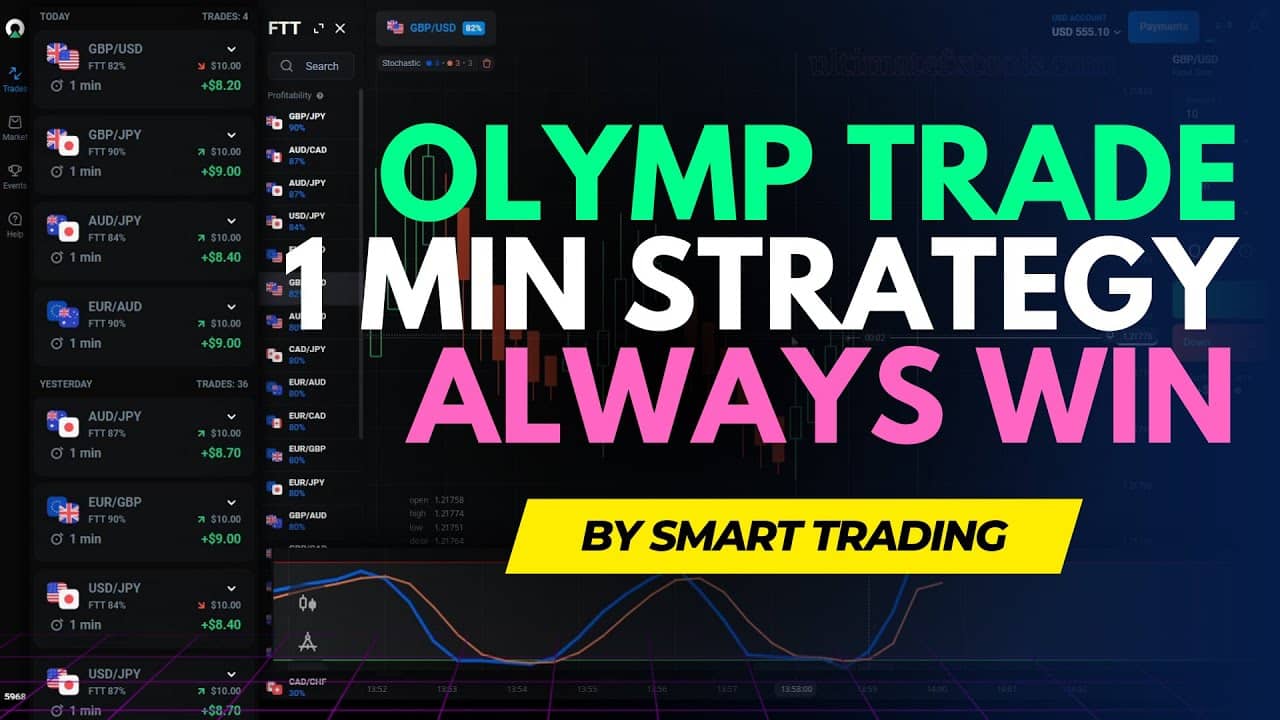
Beginners often collect five indicators and ten strategies before executing any of them properly. Pick one clearly defined setup — for example the Olymp Trade 1 minute strategy or, for fast-paced Quickler assets, the Quickler 5 second strategy — and trade only that setup for a few weeks. Track how it behaves in different market conditions before looking at anything else. Depth beats variety: fifty trades with one method teach you more than five trades each with ten methods.
3. Trade Liquid Sessions, Not Dead Hours
Fixed-time trades depend on price moving in a readable way, and that happens most reliably when major markets are open. The London session and the London–New York overlap (roughly 08:00–17:00 GMT) offer the cleanest trends on forex pairs, while quiet Asian hours often drift sideways and chop up otherwise good signals. Pick a two-to-three hour window inside a liquid session and trade only then — your setups will behave far more consistently.
4. Use the Demo Account First — Properly
Olymp Trade gives you a free demo balance, and it is the cheapest education you will ever get. Treat it like real money: use the same stake percentage, session hours, and single strategy you intend to trade live. Randomly clicking Up and Down on demo teaches you nothing except bad habits. Only go live once you can follow your written plan on demo for a sustained stretch without breaking your own rules.
5. Keep a Trade Journal and a Daily Trade Cap
After every trade, write down the asset, direction, expiry, reason for entry, and outcome. Within a few weeks the journal will reveal patterns you cannot see in the moment — for example, losses clustering in the last hour of your session when you are tired. Pair it with a hard daily cap, such as 5–10 trades maximum or stopping after two or three consecutive losses. The cap protects you from your worst trading, which almost always happens after a losing streak.
Common Beginner Mistakes
Most early losses on fixed-time trading come from the same three behaviors, so it is worth naming them directly:
- Chasing losses. Doubling your stake to "win it back" turns one bad decision into a chain of them. The urge to recover money quickly is your signal to close the platform for the day.
- Oversized stakes. Risking 10% or more per trade means a normal run of losses can wipe out a large share of your balance. Small, fixed stakes keep you in the game long enough to learn.
- Switching strategies daily. No method looks good after two losing trades. Abandoning it that early means you never gather enough data to judge it fairly — commit to a meaningful sample of trades first.
FAQ
What is the best timeframe to learn on?
Start on 5-minute expiries with 1-minute or 5-minute candles — slow enough to think through each entry, yet active enough for regular practice. Very short expiries like 1-minute or Quickler's seconds-based trades are far less forgiving of hesitation, so treat them as a later step. Whatever the timeframe, a small set of well-understood indicators — see our top 5 Olymp Trade indicators — beats a cluttered chart.
How long should I stay on the demo account?
A practical benchmark is two to four weeks of regular demo trading, or roughly 50–100 journaled trades with a single strategy. The real test is not the demo balance but your behavior: if you can follow your stake size, session window, and daily cap without exceptions, you are ready to go live with a small deposit. If you still break your own rules on demo, more screen time is the answer, not real money.
Do I need premium tools, or are free ones enough?
Free built-in indicators like moving averages, RSI, and Bollinger Bands are genuinely enough to learn the fundamentals, and you should master them first. Premium tools mainly save time by packaging tested settings, alerts, and ready-made templates — our $39 lifetime package bundles 100+ indicators and strategies that way. Either route works; what matters is understanding whatever tool you use rather than following its signals blindly.
This content is for educational purposes only. Trading involves risk. Past results do not guarantee future outcomes. Always practice responsible money management and limit your daily trades to avoid large losses.