Aroon and Stochastic 5 Seconds Trading Strategy
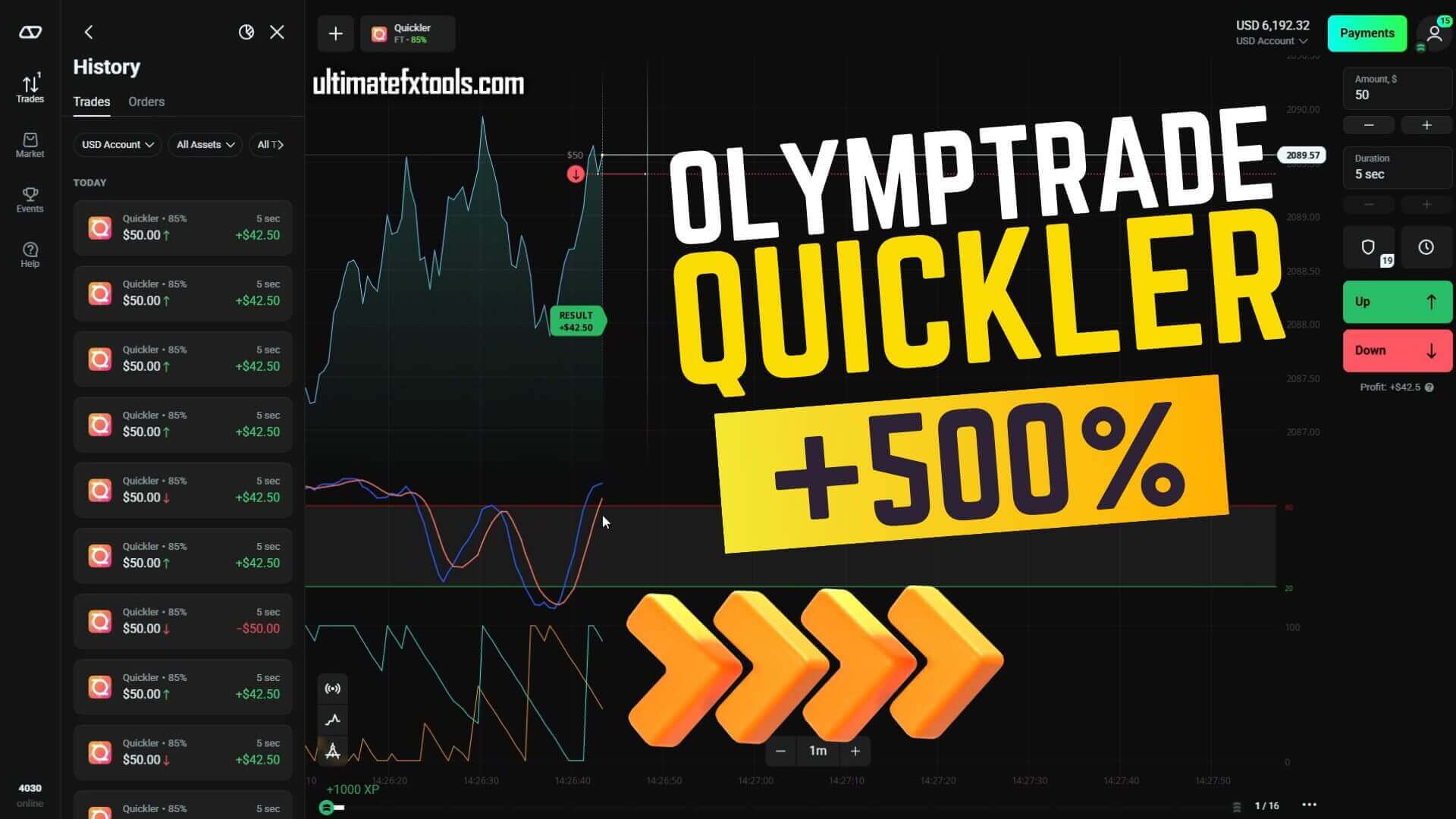
Pairing the Aroon indicator with the Stochastic oscillator is a popular idea among traders who use the Quickler 5-second contract on Olymp Trade. Before going further, be clear-eyed: a 5-second holding period is one of the highest-variance ways to trade that exists. Over such a tiny window, price is dominated by random noise and spread rather than by any trend, so no indicator combination can reliably read what happens next. Treat everything below as a study framework, not a shortcut.
What Aroon and Stochastic Actually Measure
The two tools look at different things, which is exactly why some traders combine them. Aroon is a trend tool. Its two lines (Aroon Up and Aroon Down) track how recently price hit its highest high and lowest low over a chosen lookback. When Aroon Up sits high and Aroon Down sits low, buyers have been setting fresh highs; a crossover between the lines hints that trend control may be shifting.
The Stochastic oscillator is a momentum tool. Its %K and %D lines swing between 0 and 100, flagging when price is stretched toward overbought (high) or oversold (low) territory. Because Aroon reads direction and Stochastic reads exhaustion, the two give different-but-complementary views: one asks "who is in control?" and the other asks "is this push running out of steam?"
How the Two Indicators Combine
The logic traders apply is confluence: a signal is only considered when both indicators point the same way at the same time, rather than acting on either one alone. In practice that means:
- Aroon lines crossing or reordering to suggest a possible directional shift.
- Stochastic sitting at an extreme (near the top or bottom) and its lines crossing back toward the middle.
- Both readings agreeing before any position is even considered. Disagreement is treated as a reason to stand aside.
Requiring agreement filters out some noise, but it does not remove it. On a 5-second chart the indicators recalculate constantly, so a "confirmed" setup can vanish before you finish clicking.
Timeframe and Entry Notes
Most people study this setup on the shortest chart the platform offers and only take a trade when a fresh candle opens, not mid-candle. Waiting for both tools to align, then acting on the next open, is meant to impose discipline. Many traders find these indicator ideas far easier to read on a 1-minute chart before ever touching 5 seconds — our Olymp Trade 1 minute strategy walks through a slower version of the same thinking, and the Olymp Trade Quickler 5 Second strategy covers the mechanics of the contract itself.
Why 5-Second Trading Is So Hard
At a 5-second horizon there is almost no room for a trend to develop. Spread, latency, and random tick movement can each be larger than the move you are trying to catch. Indicators built on price history are always a step behind, and here that lag is a meaningful fraction of the whole trade. Results tend to be extremely inconsistent: setups that look identical can resolve in opposite directions purely by chance. Realistic expectations matter more here than on any slower setup.
Risk Management
Because variance is so high, capital protection is the real strategy. Keep each position to a small, fixed fraction of your balance so a losing streak — which will happen — cannot wipe you out. Do not chase losses by doubling stake sizes: martingale-style recovery on a 5-second contract can drain an account in minutes and is a warning, not a tactic. Test everything on a demo account first, log your trades honestly, and only ever risk money you can afford to lose.
Frequently Asked Questions
Does this strategy win every trade?
No. Nothing wins every trade, and 5-second trading is especially unpredictable. Aroon and Stochastic only describe recent price behavior; they cannot predict the next few seconds. Expect losing trades and size your risk accordingly.
Why use two indicators instead of one?
Aroon and Stochastic measure different things — trend direction versus momentum extremes — so requiring both to agree filters out some weak signals. It reduces noise; it does not eliminate the underlying randomness of an ultra-short timeframe.
Can I get the exact settings and tools?
Yes. Our full indicator library, including ready-to-load setups for MT4 and MT5, is available for a one-time $39 lifetime payment, so you can test these ideas on a demo before risking anything.
This content is for educational purposes only and is not financial advice. Trading involves substantial risk; you can lose some or all of your capital. No result is guaranteed and past performance does not indicate future results. Trade only what you can afford to lose.