Master Live Trading with This 3-Indicator MetaTrader System
Many traders like to read charts on MetaTrader 4 and place short-duration trades on the Olymp Trade platform. This guide walks through a simple three-indicator layout you can build in MT4, how each tool behaves, and the checklist to follow before you consider an entry. Treat it as a framework to study on a demo account first, not a shortcut — no indicator setup can remove the risk that comes with short-term trading.
The Three Indicators Explained
The system layers three tools so you are reading momentum, direction, and a signal cue at the same time:
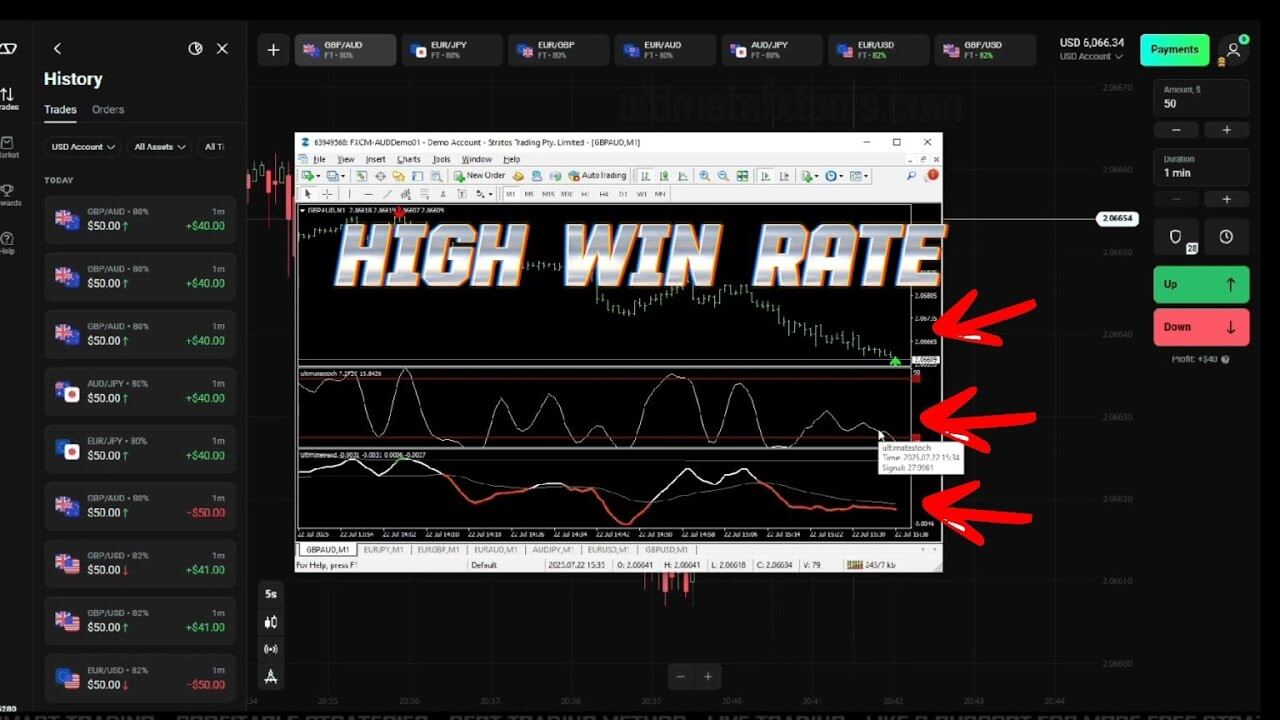
- 1. Ultimate Signal Indicator — a signal tool that prints an up or down arrow on the chart to flag a possible turning point. It is a cue to look closer, not an instruction to trade.
- 2. Stochastic Oscillator — a momentum oscillator that highlights overbought and oversold zones. Readings near the lower band can point to a possible upward reaction; readings near the upper band, a possible downward one.
- 3. Ultimate Trend Indicator — a trend and support/resistance tool. It maps the zones where price has reacted before, so you can favour signals that appear in the direction of the wider trend.
A note on confirmation: arrow-based signal tools are frequently built from momentum maths that resembles a stochastic. If two of your three indicators are effectively reading the same thing, they will tend to fire together — that is correlation, not independent confirmation. Keep that limitation in mind and lean on the trend tool for a genuinely different perspective.
MetaTrader Setup and Chart Configuration
To follow along you will need MetaTrader 4 with the three indicators attached to one chart, plus an Olymp Trade account for placing trades. A common configuration for this style is a fast Heiken Ashi chart with a short trade duration, but timeframes are a personal choice — test a few and keep what you can actually read in real time. Faster charts produce more signals and more noise, so slower settings are often easier for beginners to manage.
Entry Checklist (Buy Example)
Rather than acting on a single arrow, wait for the picture to line up. For a buy setup you would look for:
- An upward arrow from the signal indicator
- The stochastic sitting in or leaving the oversold zone
- Price resting near a support level marked by the trend indicator
A sell setup mirrors this. When the three agree it does not promise a winning trade — it simply gives you a defined, repeatable reason to act instead of guessing. Skip the setups that are unclear; there is always another one.
Risk Management
Short-duration trading can lose quickly, so protecting your capital matters more than any signal. Keep each trade small — many traders risk no more than 1% of their balance and start at the platform minimum while learning. Decide your maximum daily loss before you begin and stop for the day once you hit it.
A word on martingale: some versions of this strategy suggest doubling position size after a loss to "recover." This is a martingale approach, and it is dangerous. A short losing streak can wipe out an account far faster than the small wins built it up. We do not recommend it. If a trade goes against you, the safer response is to close, review, and wait for the next clean setup rather than chase the loss.
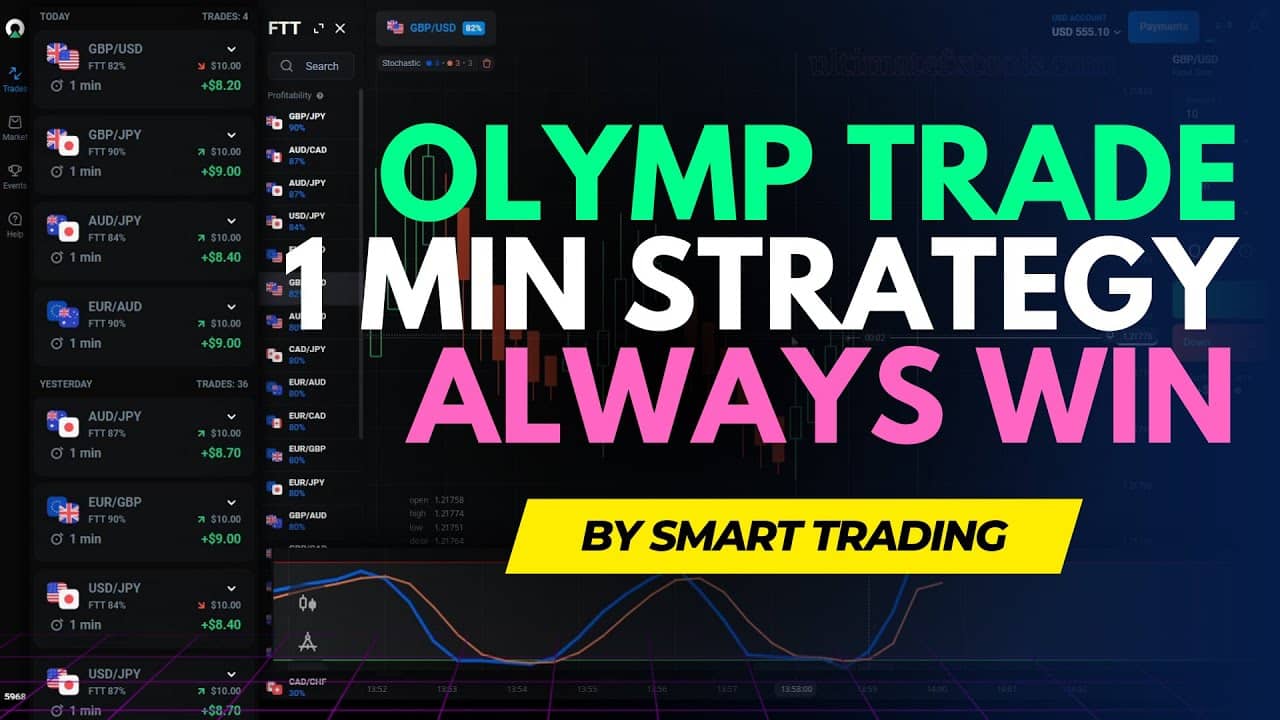
All three indicators are part of the full toolkit available with lifetime access for a one-time $39. If you want the complete strategy walk-through, you may also find the Olymp Trade 1-minute strategy and the Quickler 5-second strategy useful companions.
Frequently Asked Questions
Does this 3-indicator strategy win every trade?
No. No strategy or indicator combination wins every trade. Markets are uncertain, signals fail, and losing runs are a normal part of trading. The purpose of the setup is consistency in how you make decisions, not a guaranteed outcome.
Do I need to buy anything to try it?
You can study the concept on a demo account using standard MT4 tools such as the built-in Stochastic Oscillator. The named indicators above are part of the paid toolkit, but the core idea — momentum, trend, and a signal cue agreeing — can be tested for free first.
What timeframe works best?
There is no single best timeframe. Faster charts give more signals but more false ones; slower charts are calmer and easier to read. Test on a demo account and choose the setting that fits how quickly you can act.
This content is for educational purposes only and is not financial advice. Trading involves substantial risk; you can lose some or all of your capital. No result is guaranteed and past performance does not indicate future results. Trade only what you can afford to lose.