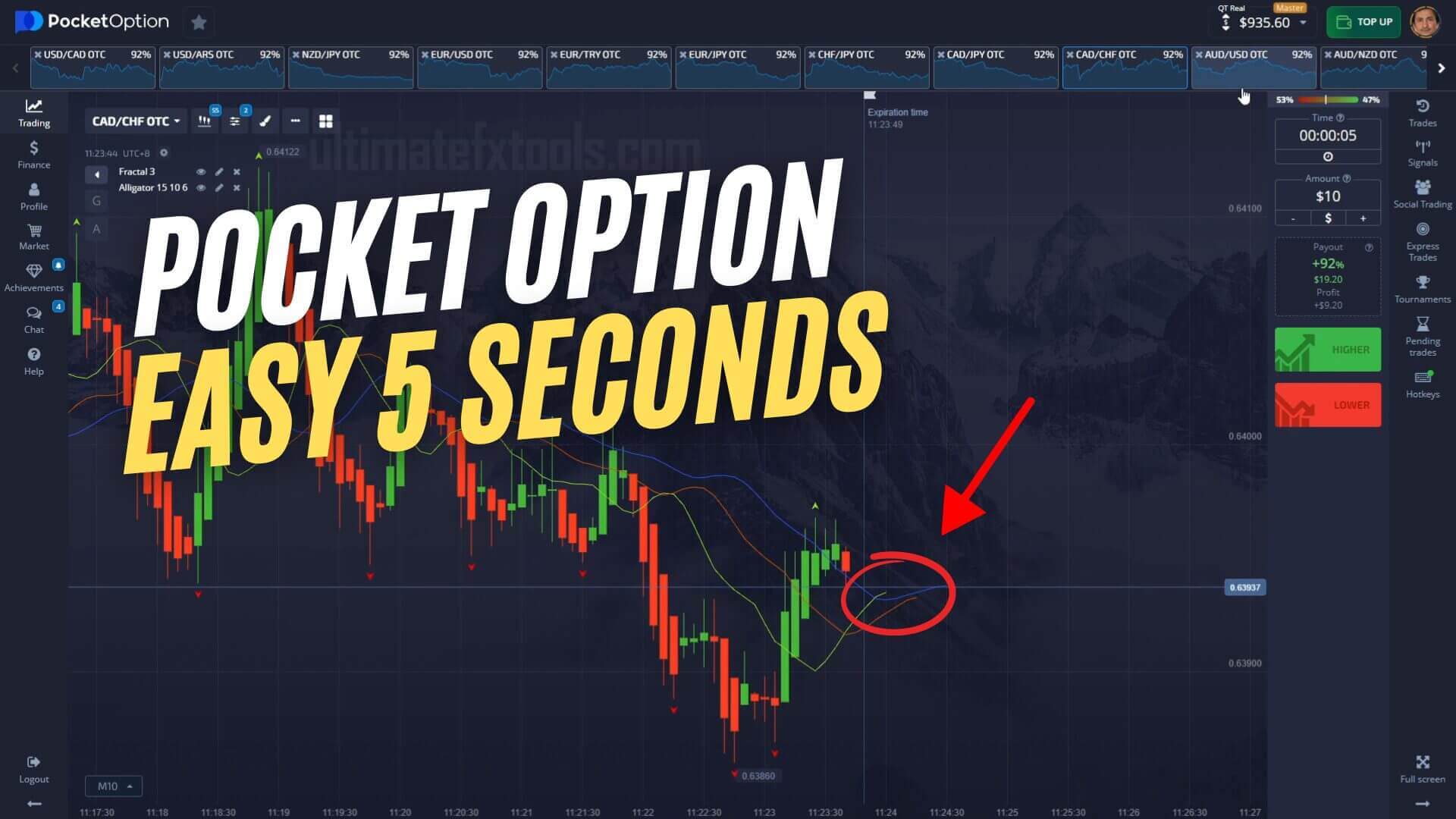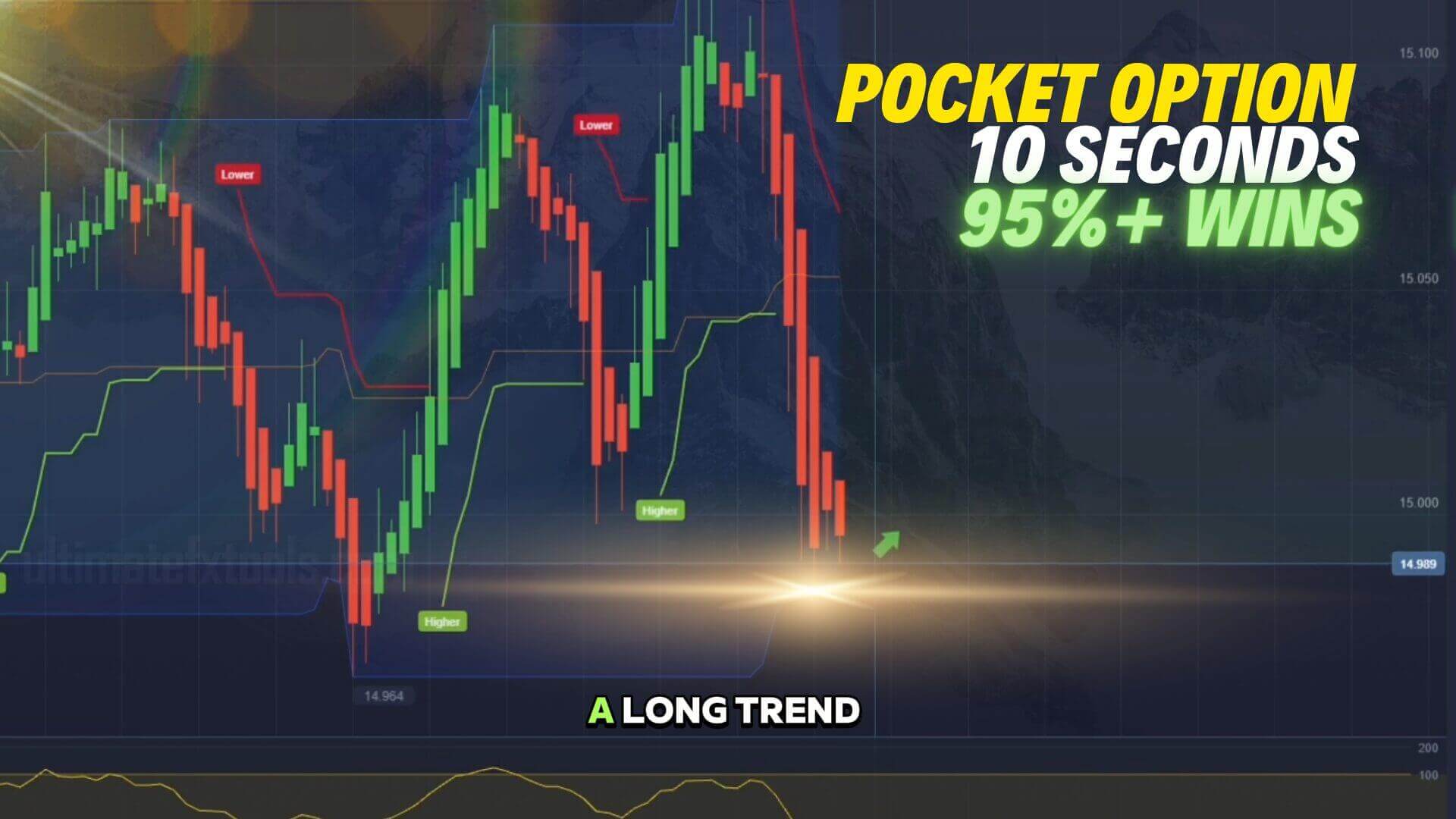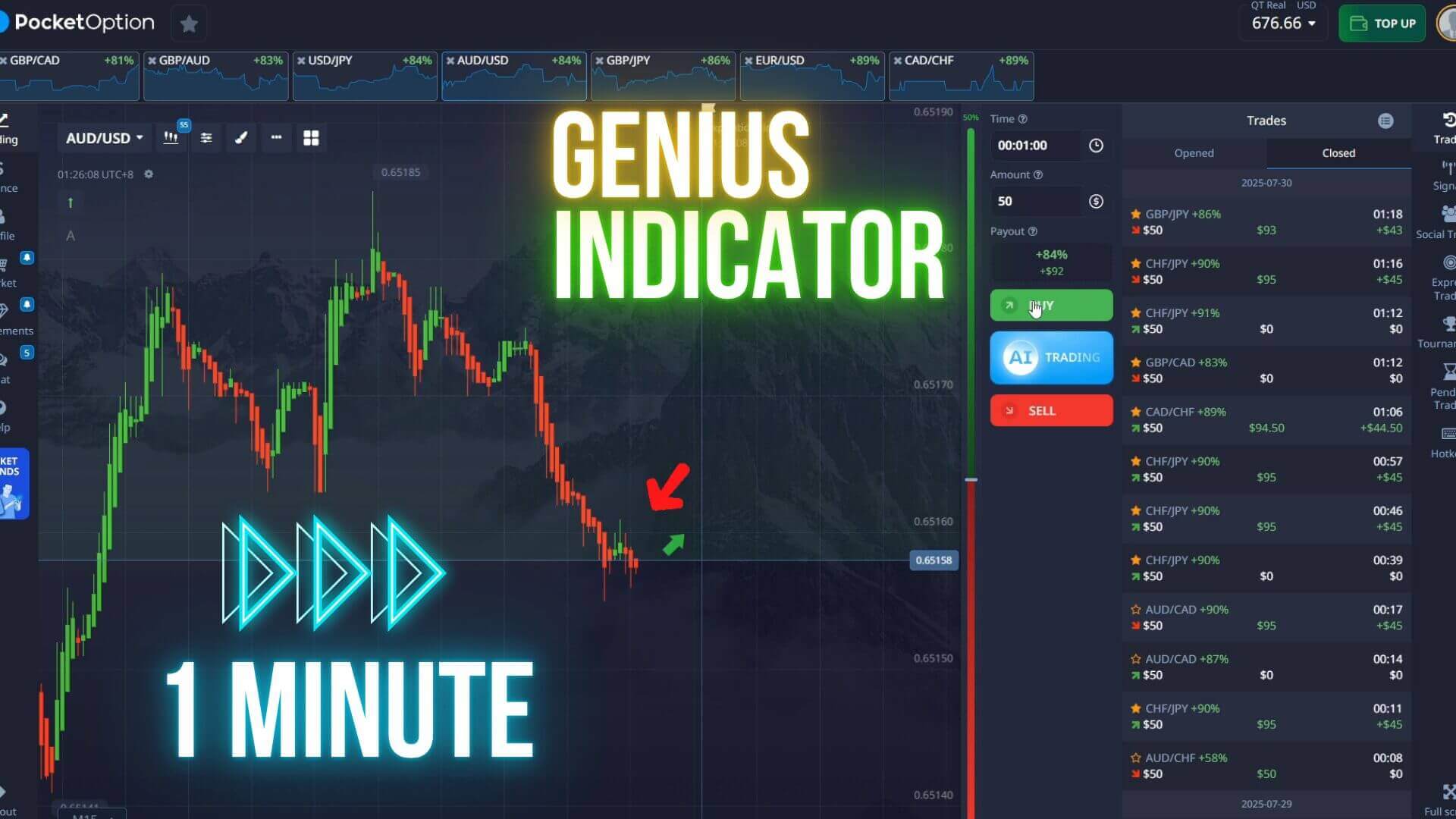
Pocket Option Hack
Let's be clear in the first paragraph: there is no exploit here. Nothing on this page bypasses, glitches or beats the platform. "Hack" is just the nickname traders gave a particular MACD reading on Pocket Option's 5-second duration, and all it does is give you a repeatable rule for pressing the button instead of guessing. It is a technique, not a loophole, and no setup wins every trade. What follows is what MACD measures, how the entry is read, and why a 5-second expiry is the harshest place to try it.
What MACD Actually Measures
MACD stands for Moving Average Convergence Divergence, and despite the name it is doing something simple. It subtracts a slow exponential moving average from a fast one. The result is the MACD line, and it tells you one thing: whether short-term price is pulling away from longer-term price, and in which direction. A signal line — a moving average of the MACD line itself — is layered on top, and the histogram is just the gap between the two drawn as bars.
That is the whole story. MACD is a momentum gauge, not a forecast: it describes what price has already done, and it lags by construction, because every moving average is built from history.
The Entry Logic
The setup watches for a momentum flip in the final seconds of a forming candle. The reading is narrow on purpose:
- Up (call): the MACD line crosses above its signal line while the histogram bars are shrinking on the downside and starting to turn — momentum rolling from sellers to buyers.
- Down (put): the MACD line crosses below its signal line with the histogram rolling over from the upside.
- Stand aside: the MACD line is hugging zero and the histogram is flat — no momentum to read, and a cross there means nothing.
Confirmation matters more than the cross itself. Check that the candle body agrees with the direction the MACD is pointing, and that price is not sitting on a level it has already bounced off twice. Some traders run the Smart Trade indicator alongside the MACD purely as a second opinion — when its notification disagrees with the cross, the setup is treated as noise and skipped. Filtering out the disagreements is where the consistency comes from, not from taking more entries.
Why 5 Seconds Is the Least Forgiving Timeframe There Is
This is the part the videos skip. A 5-second duration is the least forgiving expiry there is. At that horizon price barely moves on momentum at all — it moves on the spread, on order flow, and on plain randomness. The MACD you are reading is built from candles far longer than the window you are trading, so you are asking a lagging tool to describe the next five seconds. It cannot.
Everything is amplified. Your reaction time becomes a meaningful fraction of the trade, and a half-second late click changes the outcome. There is no room to be right slowly, which is the normal way of being right in trading.
And a word on what people do next: after a loss, the instinct is to double the stake to win it back. Do not. Each trade is statistically independent — the platform has no memory of your last loss, and a losing streak does not make the next entry more likely to land. Doubling improves nothing; it only concentrates more of your account into a single outcome, and the losing sequence that empties it is shorter than you think. Flat stakes, every time.
Setup and Settings
Keep it plain. Use the standard MACD configuration — 12 fast EMA, 26 slow EMA, 9 signal line — which is what the reading above assumes. Do not tune the periods hunting for a version that looks better on past charts; that is curve-fitting, and it does not survive live price. Set the Pocket Option duration to 5 seconds, trade one or two pairs you know, and keep the chart clean so the histogram turn stays readable under time pressure.
Then the part that matters most: stake a small fixed fraction of your balance per trade, cap your trades per session before you start, and stop for the day at a preset loss limit decided while you are calm. Practise on a demo account until the reads are automatic. If it does not hold up on demo, it will not hold up with real money.
If 5 seconds proves too tight — and for most people it does — the same MACD logic reads better with more room. Compare this 5-second MACD settings breakdown or a simpler 5-second approach.
FAQ
Is the Pocket Option hack a real exploit?
No. It is a nickname for a MACD reading on a short duration, nothing more. There is no glitch, mod or unlock involved, and anything sold to you as one is not worth your money.
Can I use these MACD settings on other platforms?
Yes. The 12 / 26 / 9 configuration is standard, so the same reading translates to other trading platforms such as Quotex, IQ Option and Olymp Trade wherever a comparable short duration exists. The indicators used alongside it are included with the single $39 lifetime plan.
Should I increase my stake after a losing trade?
No. Trades are independent of one another, so a loss tells you nothing about the next entry. Raising the stake to recover only concentrates risk into fewer outcomes. Keep stakes flat and keep your session limits fixed.
This content is for educational purposes only. Trading involves risk. Past results do not guarantee future outcomes. Always practice responsible money management and limit your daily trades to avoid large losses.