Pocket Option OsMA and Vortex Trading
Combining two complementary indicators is a common way to filter out weak signals, and OsMA paired with the Vortex Indicator is a popular pairing on Pocket Option. One reads momentum, the other reads directional trend, so together they can help you avoid taking a trade when the two disagree. This guide explains what each tool actually measures, how the setup fits together, sensible settings, and the limits you should keep in mind before risking any money.
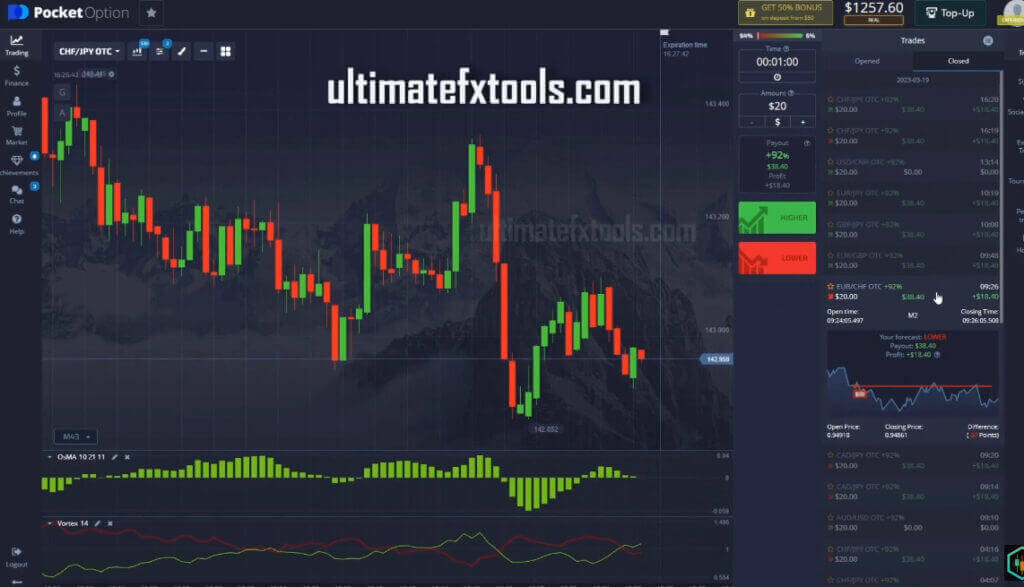
What OsMA and Vortex Each Do
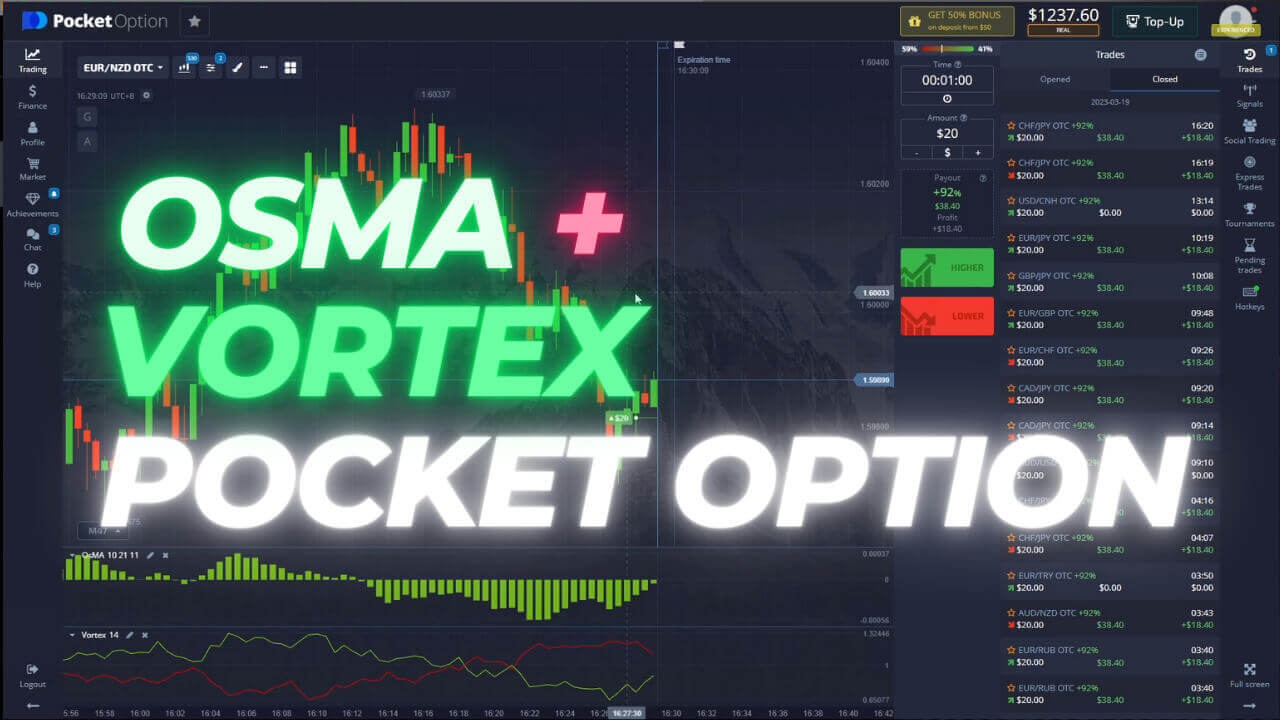
The OsMA (Oscillator of Moving Average) is the histogram of the MACD, plotting the distance between the MACD line and its signal line. When the bars grow above zero, short-term momentum is leaning bullish; when they grow below zero, momentum is leaning bearish. Because OsMA is built from moving averages, it is a lagging tool - it confirms a shift after it has begun rather than predicting one, and it can chop back and forth around the zero line in sideways markets.
The Vortex Indicator uses two lines, VI+ and VI-, that measure upward and downward price movement. When VI+ crosses above VI-, it points to a developing uptrend; the opposite crossover points to a downtrend. Vortex is designed to identify trending conditions, but like any trend tool it produces false crossovers when price is ranging.
How the Two Combine
The idea behind the pairing is confirmation. Vortex frames the broader direction, and OsMA confirms that momentum is pushing the same way. A long idea might line up when VI+ sits above VI- and the OsMA histogram is above zero and expanding. A short idea is the mirror image. When the two disagree - for example Vortex points up but OsMA is fading below zero - it is usually a signal to stand aside rather than force a trade. This filtering is the whole point: neither indicator is reliable alone, and both lag, so requiring agreement helps screen out some of the weaker setups.
Settings, Timeframe and Entry Rules
These are starting points, not magic numbers - test them on a demo before using real funds:
- Vortex Indicator: a period of 14 is a common default. Shorter periods react faster but whipsaw more.
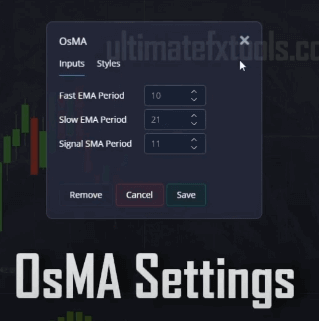
- OsMA: the standard 12, 26, 9 MACD inputs are a reasonable baseline.
- Timeframe: the 1-minute to 5-minute charts suit short Pocket Option expiries, but lower timeframes carry more noise.
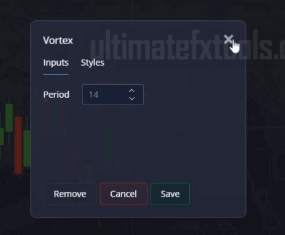
A basic entry checklist: wait for the Vortex crossover in your intended direction, confirm the OsMA histogram agrees with that direction on the same candle, and skip the trade if the two conflict or if price is drifting flat. Read more about the underlying oscillator at Babypips. If you want to compare approaches, the best 5 Pocket Option EMA strategies and the one-indicator Pocket Option setup are useful companion reads.
Realistic Expectations and Risk Management
Both OsMA and Vortex lag and can whipsaw badly in choppy, range-bound conditions, which is exactly where many binary-style losses happen. No indicator combination removes that risk. Keep your position size small and consistent, and never chase a losing streak by doubling your stake - martingale-style position sizing is dangerous and can wipe out an account quickly. Decide in advance how much of your capital you are willing to risk in a session, and stop when you hit that limit. If you want the ready-made indicator files and other tools, they are part of the $39 lifetime bundle.
Frequently Asked Questions
Does the OsMA and Vortex setup win every trade?
No. No indicator or combination of indicators wins every trade. Both tools lag price and give false signals in ranging markets, so losing trades are a normal part of using this or any strategy. Manage risk on every position.
Which timeframe works best for Pocket Option?
Many traders use the 1-minute to 5-minute charts for short expiries. Lower timeframes react faster but contain more noise and false crossovers, so test different settings on a demo account first.
Can I use OsMA and Vortex on other platforms?
Yes. Both are standard indicators available on most charting platforms and trading platforms, so the same confirmation logic can be applied beyond Pocket Option.
Watch the Full Walkthrough
This content is for educational purposes only and is not financial advice. Trading involves substantial risk; you can lose some or all of your capital. No result is guaranteed and past performance does not indicate future results. Trade only what you can afford to lose.