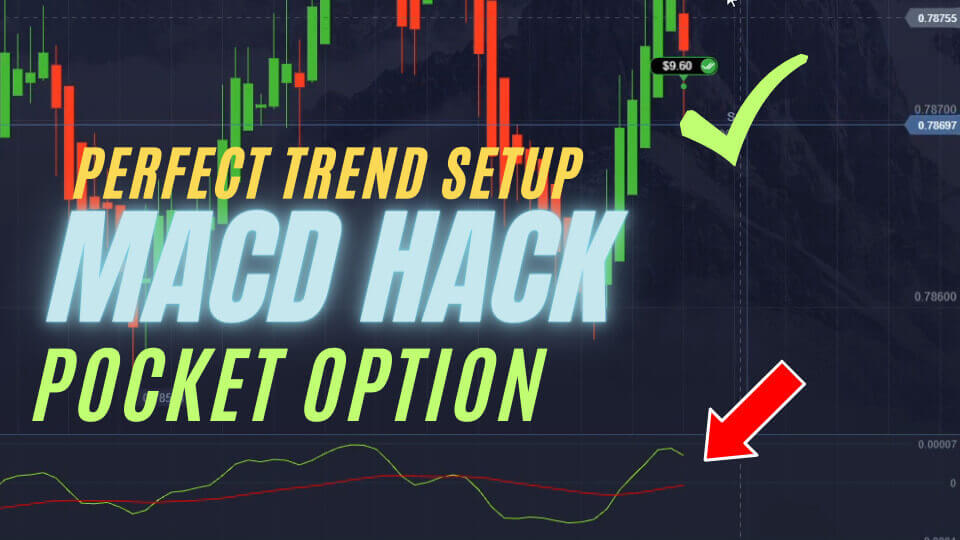
Pocket Option Strategy - Perfect Trend Setup
This is a trend-following approach for the Pocket Option platform built around the MACD indicator with a faster set of inputs. The idea is simple: wait for the market to line up in one clear direction, then trade with that direction rather than against it. It is a structured framework, not a shortcut, and it works far better as a repeatable routine than as a source of one-off calls.
Why "Perfect" Is a Misnomer
Let's be honest about the name. No trend setup is "perfect," and this one isn't either. Markets shift between trending and ranging conditions, news can override any indicator in seconds, and the MACD is a lagging tool that confirms movement after it has already begun. Some signals will be clean and some will fail outright. Treat "perfect" as a memorable label for the setup, not a promise. A realistic goal is a consistent, rule-based process you can review and improve, not a signal that is right every time.
What Is Pocket Option?
Pocket Option is a trading platform where traders speculate on whether the price of an asset will be higher or lower after a set expiry time. It offers a range of assets and a straightforward interface, which is why it is popular for short-timeframe trading. Because each trade has a fixed expiry, entry timing and direction matter more than on a traditional buy-and-hold platform.
The Trend Setup Explained
The setup relies on identifying a market that is moving with clear momentum rather than chopping sideways. Trend and price structure are your reference points, and being able to read them is central to trading this way. Here is the general workflow:
- Identify an asset or currency pair that is currently trending rather than stuck in a tight range.
- Watch the MACD lines for a crossover in the direction of that trend.
- Wait for the crossover to actually complete instead of anticipating it.
- Consider a trade in the direction of the trend, and skip the setup entirely when the market is flat or unclear.
MACD Settings and Timeframe
The Moving Average Convergence Divergence (MACD) is a trend-following momentum indicator that measures the relationship between two moving averages of an asset's price. This setup uses a faster configuration intended for short expiry trading:
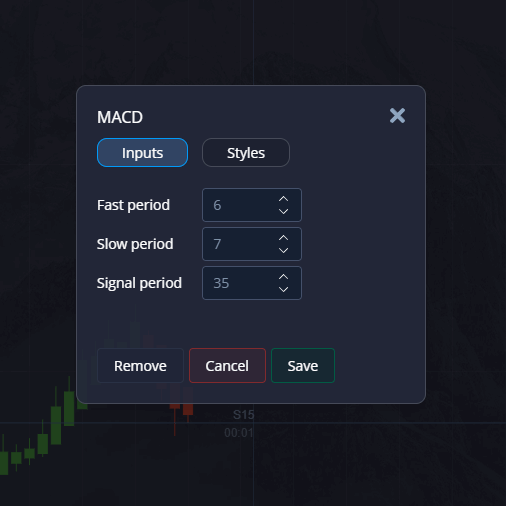
The MACD inputs shown are a Fast Period of 6, a Slow Period of 7, and a Signal Period of 35. Faster settings react more quickly to price, but they also produce more false crossovers, so expect noise. These numbers are a starting point for study, not a fixed formula — test them on a demo account and adjust to the asset and timeframe you actually trade.
How to Apply It
Once the indicator is set up, the routine is straightforward:
- Choose an asset or pair that is trending rather than ranging.
- Wait for a clean MACD crossover aligned with that trend.
- If you take the trade, enter in the direction of the crossover using a short expiry, commonly around 30 seconds to 1 minute.
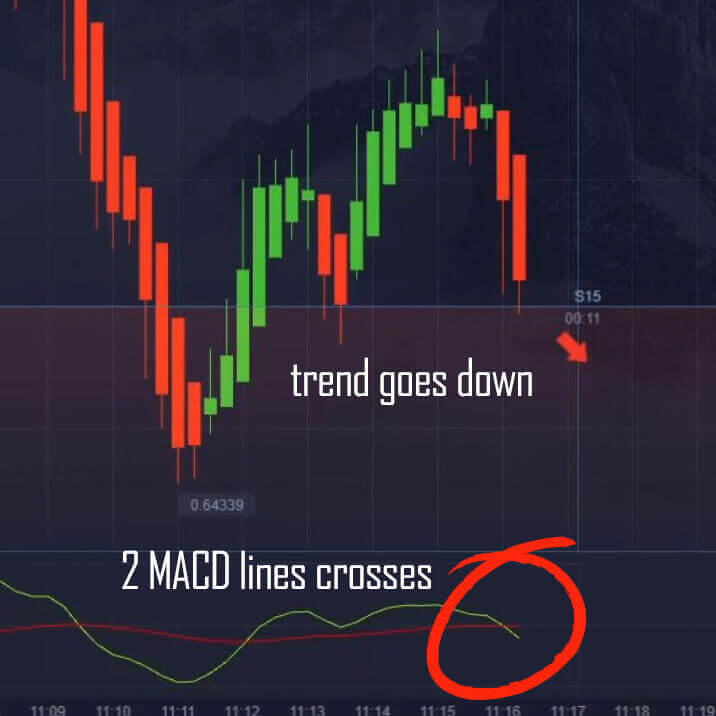
This approach depends on the market trending in one direction. During choppy, sideways conditions the MACD will whipsaw and most crossovers will be unreliable, so the strongest edge you have is patience and skipping the poor setups. If you want to add a second layer of confirmation, our Momentum and DeMarker strategy shows how a second indicator can filter out weaker signals.
Risk Management
Because each trade carries risk, protect your account before chasing any setup. Use a fixed stake per trade — a small, consistent percentage of your balance — and set a hard daily loss cap, then stop for the day once you hit it. Avoid martingale or any doubling-after-a-loss scheme: each trade is an independent event, and increasing size to "recover" losses can wipe an account quickly. Keep a simple log of your trades so you can see which conditions the setup handles well and which it does not.
Frequently Asked Questions
Does this setup win every trade? No. No strategy wins every trade, and this one is no exception. Some MACD crossovers will fail, especially in ranging markets. The goal is a consistent, rule-based process with strict risk control, not a flawless signal.
Which timeframe should I use? The example uses short expiries around 30 seconds to 1 minute on a fast chart. Shorter timeframes carry more noise, so many traders test slightly longer expiries on a demo account first to find what suits their style.
Can I combine it with other tools? Yes. Many traders pair the MACD with support and resistance levels or a second momentum indicator to filter out weak signals. You can explore more short-timeframe ideas in our 1 Minute Pocket Option signals guide.
If you want the full indicator library — MT4 and MT5 tools, strategies, and presets — it is available for a one-time $39 lifetime payment with no subscription.
Pocket Option Strategy Perfect Trend Setup
This content is for educational purposes only and is not financial advice. Trading involves substantial risk; you can lose some or all of your capital. No result is guaranteed and past performance does not indicate future results. Trade only what you can afford to lose.