Quotex 10 Seconds MACD Winning Streak: An Honest Look
The idea of a "winning streak" on the 10-second Quotex timeframe is appealing, but it is worth being clear about what a streak actually is. A run of green trades is normal statistical variance, not proof of a repeatable edge. Flip a coin ten times and you will sometimes land five, six, or seven heads in a row. Short-term trading works the same way: sequences of wins and losses happen naturally, and a hot streak tells you very little about whether your method will hold up over hundreds of trades.
This guide walks through a simple MACD-based setup for Quotex, explains why the 10-second timeframe is exceptionally difficult, and sets realistic expectations so you can size risk sensibly rather than chase a streak.
What the MACD Setup Looks Like
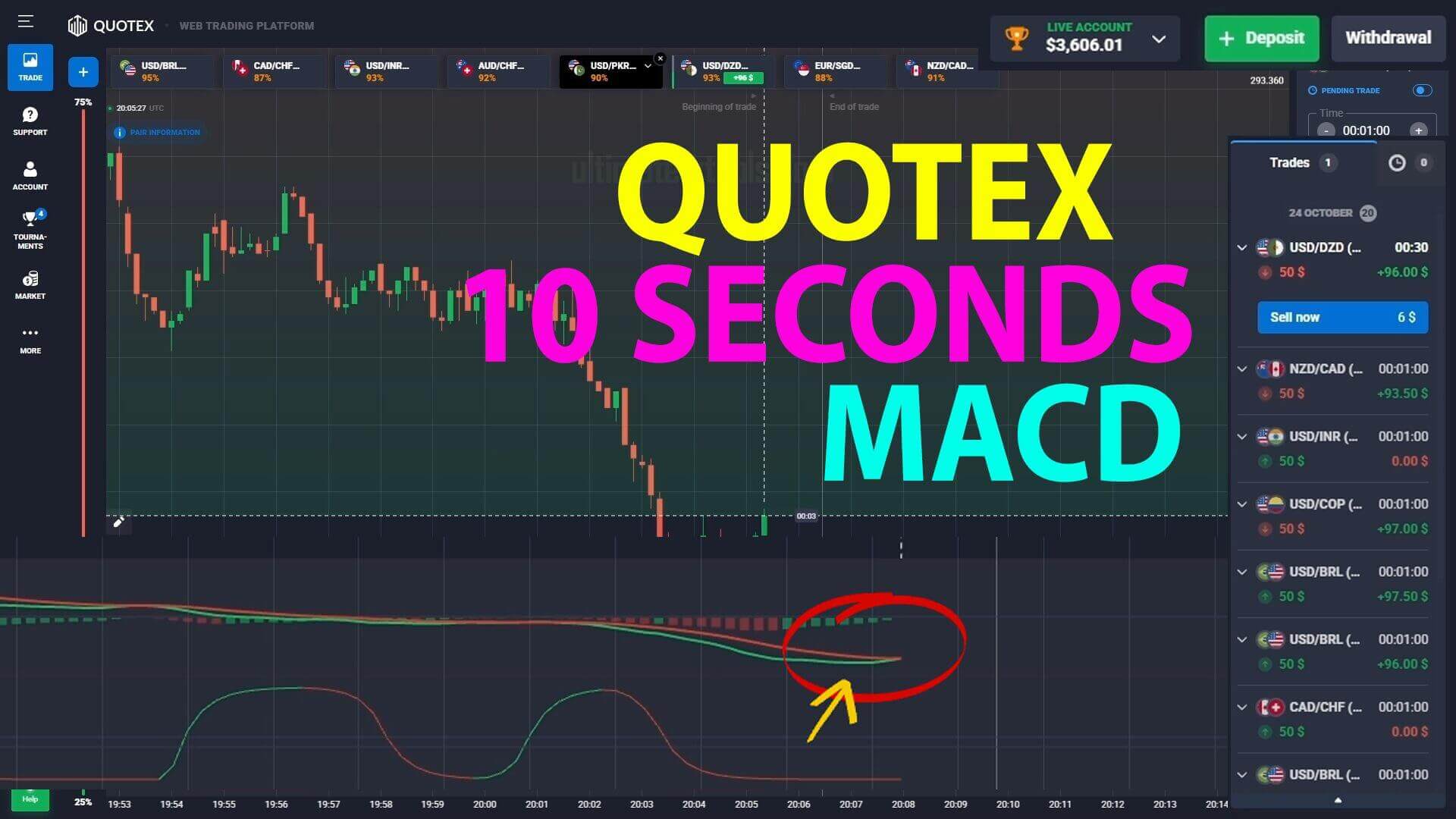
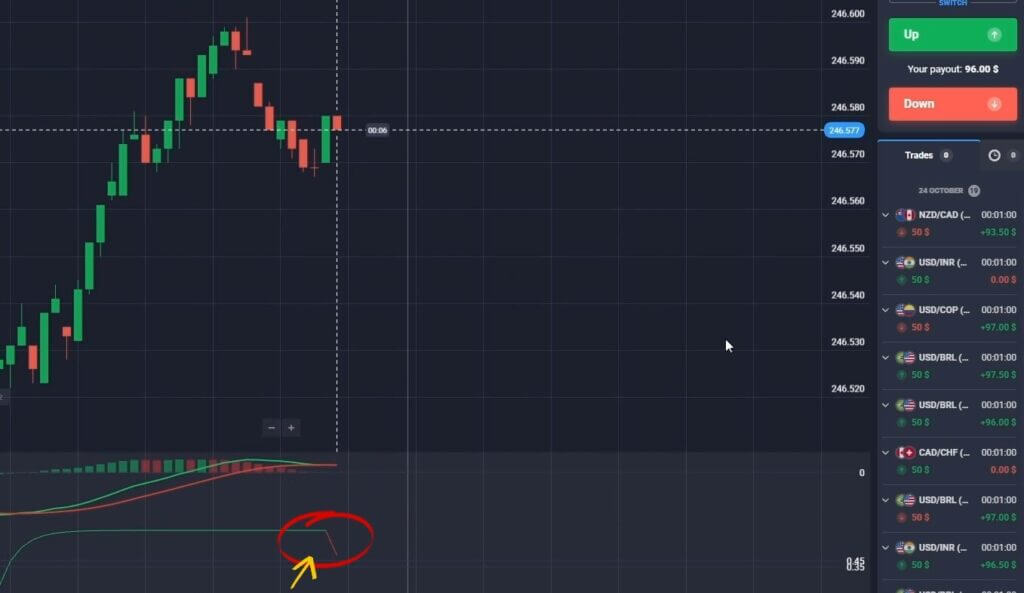
The MACD (Moving Average Convergence Divergence) is a momentum indicator built from moving averages. It plots a MACD line, a signal line, and a histogram that widens or narrows as momentum shifts. The classic reading is a crossover: when the MACD line crosses above the signal line, momentum is turning up; when it crosses below, momentum is turning down.
Because MACD is derived from moving averages, it lags price by design. It confirms a move that has already started rather than predicting the next one. On very fast charts that lag matters a great deal, so many traders pair it with a trend filter such as a longer moving average or a cycle indicator to avoid acting on every minor wiggle.
Timeframe and Entry Rules
- Long bias: wait for the MACD line to cross above its signal line while the broader trend filter also points up, then consider a buy at the next candle open.
- Short bias: wait for the MACD line to cross below its signal line while the trend filter points down, then consider a sell.
- Skip conflicting signals: if the crossover and the trend filter disagree, stand aside. No trade is a valid decision.
Why a "Winning Streak" Is Just Variance
It is tempting to read a streak as evidence that you have unlocked something. In reality, short sequences are dominated by chance. A method that is only slightly better than a coin flip can still produce long green runs, and a genuinely weak method can look brilliant for an afternoon before reverting. The honest way to judge any setup is over a large sample, with consistent stake sizing and honest record-keeping, not by the length of your last lucky run.
Why 10-Second Trading Is So Hard
The 10-second timeframe is extremely high-variance. At that speed, price is mostly noise: spreads, momentary liquidity gaps, and random ticks dominate, and there is almost no room for a lagging indicator like MACD to give a clean read. Signals fire and reverse within a single candle, decision windows are a heartbeat long, and fixed-time payouts are structured so the platform holds a mathematical edge over enough trades. Slower charts give indicators room to work and give you time to think; 10 seconds gives you neither.
Risk Management
Because outcomes on this timeframe swing hard, risk control matters more than any indicator setting. Trade only money you can afford to lose, keep each stake small and fixed as a tiny percentage of your account, and set a firm daily loss limit that ends the session when hit. Avoid martingale: doubling your stake after a loss feels like a shortcut back to breakeven, but a normal losing streak can wipe out an account before it recovers. A demo account is the right place to see how the setup behaves before any real money is involved.
Realistic Expectations
Treat this as one tool for reading momentum, not a shortcut to a fixed outcome. Expect losing trades alongside winning ones, judge the approach over many trades rather than a single streak, and keep a trading journal so your decisions stay objective. For more Quotex ideas, see our Quotex easy strategy and the Quotex 1 minute strategy, which uses a slower, more forgiving timeframe. Members who want the full indicator library can get lifetime access for $39.
Frequently Asked Questions
Does this strategy win every trade?
No. No strategy wins every trade. MACD lags price and the 10-second timeframe is dominated by noise, so losing trades are a normal, expected part of using it. A winning streak is variance, not a guarantee that the next trade will win.
Is the 10-second timeframe good for beginners?
It is one of the hardest environments to learn in. The fast pace leaves no time to read signals or manage emotions. Beginners are usually better served practising on a 1-minute or longer chart on a demo account first.
Can I use martingale to recover losses?
It is not advised. Martingale increases your stake after each loss, and a routine losing streak can escalate faster than an account can absorb. Fixed, small stakes and a daily loss limit are far safer.
This content is for educational purposes only and is not financial advice. Trading involves substantial risk; you can lose some or all of your capital. No result is guaranteed and past performance does not indicate future results. Trade only what you can afford to lose.


