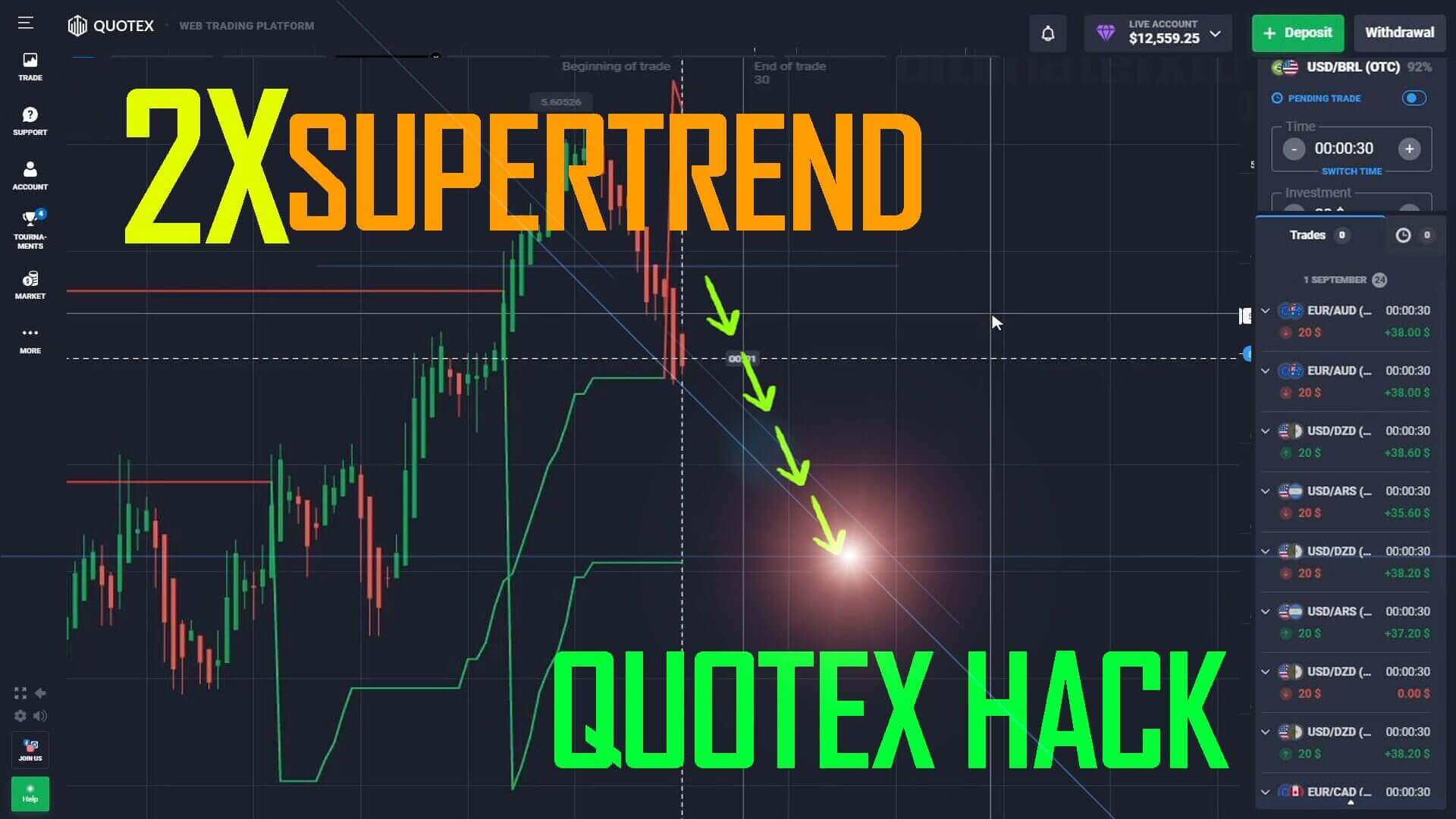
The dual SuperTrend approach on Quotex uses two copies of the same SuperTrend indicator with different sensitivity. One is tuned to react quickly to price and the other is tuned to move slowly and smoothly. Together they let you read the underlying trend and time an entry from a single, uncluttered chart, which suits the short expiries that Quotex and similar platforms are built around.
The idea is simple to follow but takes discipline to trade well. The slow SuperTrend acts as your directional filter and answers one question: is the market leaning up or down right now? The fast SuperTrend then handles timing, flipping colour as momentum shifts so you can act at a sensible moment rather than chasing a candle. On this page we walk through how the two lines work together, sensible settings to start with, clear call and put rules, and the timeframe, expiry and risk notes that keep the method sustainable.
Quotex Super Trend Hack
Live Trading Results
- In the trading video, the method is demonstrated step by step using the 2x Supertrend Indicator.
- The focus is on OTC (Over-the-Counter) markets utilizing specific trading strategies.
Live Trading Strategies using Charting Method
5-Second Candle Time:
- Essential for determining market strength.
- Using Heiken Ashi Candles to identify crucial trend moments.
Identifying Entry Points:
- Example with EUR/AUD:
- Candles reached the upper green Super Trend indicator.
- Shift to the red Super Trend line indicated a good opportunity to trade down for 30 seconds, resulting in a win.
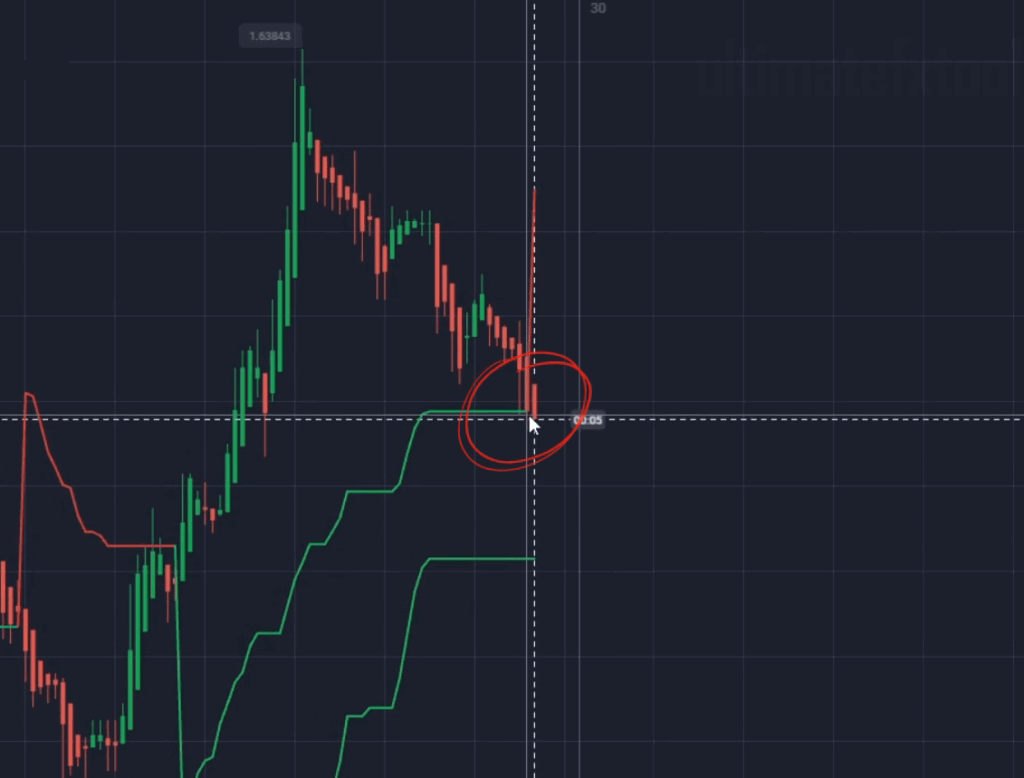
- Example with EUR/AUD:
Trend Analysis:
- The strategy involves observing the crossing of two Super Trend lines, which signifies a potential lower trend.
- Red Super Trend indicates a bearish trend, leading to successful trades when trading on a downward movement.
Discipline and Patience
- The method requires patience and discipline for best results.
- We encourage viewers to practice and perfect this trading method.
Unlock the Strategy
 Unlock Indicator Settings
How Two SuperTrends Work Together
A single SuperTrend line already tells you direction: price above a green line points up, price below a red line points down. The weakness is that one line, on its own, either reacts too late (if it is slow) or whipsaws you (if it is fast). Running two of them solves that trade-off. The slow line stays with the broader move and filters out noise, while the fast line sits closer to price and marks the shorter swings inside that move.
When both lines agree — both showing the market leaning the same way — you have alignment, and that is the only condition under which this method looks for a trade. When the two lines disagree, the market is usually ranging or turning, and those are the moments the method tells you to wait. Reading the chart becomes a simple colour check rather than a guessing game.
Recommended SuperTrend Settings
This strategy does not ship with a fixed set of numbers, so treat the following as a sensible starting point rather than a fixed rule. A common, easy-to-reproduce pairing is a fast SuperTrend at ATR period 10 with multiplier 1 (written 10/1) and a slow SuperTrend at ATR period 10 with multiplier 3 (written 10/3). The shared period keeps them responding to the same volatility window, while the lower multiplier on the fast line makes it hug price and flip sooner.
- Fast SuperTrend (timing): ATR period 10, multiplier 1 — reacts quickly and signals the entry.
- Slow SuperTrend (trend filter): ATR period 10, multiplier 3 — smoother, defines the direction you are allowed to trade.
If you find the fast line flips too often on a given pair, nudge its multiplier up toward 1.5 or 2. If it feels sluggish, keep it near 1. Pair the reading with 5-second Heiken Ashi candles, as shown in the example above, to gauge whether momentum is genuinely committing to the move before you act.
Buy / Call and Sell / Put Rules
The core rule is that both SuperTrends must agree before you take a position. One line alone is never enough.
- Call (buy / up): the slow SuperTrend is green (price above it) and the fast SuperTrend flips from red to green while price holds above both lines. Enter on the flip, in the direction of the slow line.
- Put (sell / down): the slow SuperTrend is red (price below it) and the fast SuperTrend flips from green to red while price stays below both lines. Enter on the flip, in the direction of the slow line.
- Stand aside: the two lines point in opposite directions, or price is chopping across them. No alignment means no trade.
The EUR/AUD example higher up follows exactly this logic: candles pushed into the upper SuperTrend, the line shifted to red, both lines then agreed to the downside, and that alignment marked the entry for a short expiry.
Best Timeframe, Expiry and Risk
Dual SuperTrend reads cleanest on short intraday charts. Many traders watch a 1-minute chart (or the 5-second candle view Quotex offers) and pair it with a 30-second to 1-minute expiry, so the trade resolves while the fast-line signal is still fresh. Longer expiries dilute the timing edge the fast line is meant to provide.
Whatever settings you land on, protect your account first. Risk a small, fixed fraction of your balance per trade, avoid revenge-trading after a losing entry, and cap the number of trades you take in a session so a rough patch stays small. Test the pairing on a demo balance until the signals feel natural, and remember that OTC pairs behave differently from weekday market pairs. Consistency comes from following the same rule set every time, not from chasing every candle.
For more Quotex setups that lean on the same indicator, see the Quotex DeMarker and Super Trend method and the Quotex 1 Minute Strategy 2022 using SuperTrend and ZigZag. If you are just starting out, the Quotex Easy Strategy is a gentler introduction. The full indicator settings and downloadable tools for every strategy on the site are included with one-time lifetime access.
FAQ
Do I need two separate indicators for this?
No. You add the same SuperTrend indicator to the chart twice and give each copy different inputs — a fast pair such as 10/1 and a slow pair such as 10/3. Both lines then sit on the same chart so you can compare them at a glance.
What if the two SuperTrend lines disagree?
That is your signal to wait. Disagreement usually means the market is ranging or turning, which is exactly when short-expiry entries are least reliable. The method only looks for a trade when both lines point the same way.
Which timeframe and expiry work best?
A 1-minute chart (or Quotex's 5-second candle view) paired with a 30-second to 1-minute expiry keeps the fast-line timing relevant. Always confirm the settings on a demo balance before risking real funds.
This content is for educational purposes only. Trading involves risk. Past results do not guarantee future outcomes. Always practice responsible money management and limit your daily trades to avoid large losses.


