
Quotex Winning Strategy
Quotex is a popular trading platform known for its range of currency pairs and OTC assets, plus a payout structure that appeals to short-term traders. Pairing it with a signal tool like Smart Trade is a common approach for reading momentum on fast timeframes. In this guide we walk through what the indicator actually plots, how to build entry rules around it, and why the "95% winning" figure attached to strategies like this one deserves a hard, honest look.
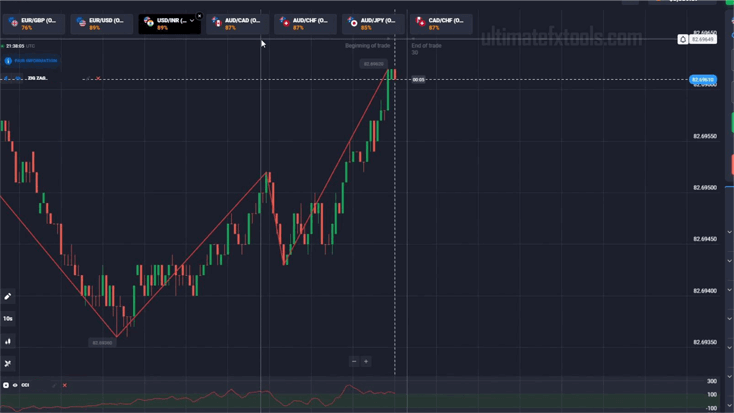
What the Smart Trade Indicator Does
The Smart Trade indicator is an alert-based tool that watches price action and prints a buy or sell signal when its internal conditions line up. Its job is to save you screen time and flag potential turning points, not to predict the future. Like any indicator, it is built from past price data, so its signals describe what has already happened and only suggest what might come next.

Because a lone signal can fire in choppy conditions, most traders filter it with a second tool. A common combination is an RSI or a moving average: for example, take a Smart Trade buy only when price sits above a moving average and RSI is recovering from oversold, or a sell only when price is below the moving average and RSI is rolling over from overbought. The filter reduces low-quality entries but never removes them.
Is the "95% Win Rate" Real? No.
Let us be direct: no indicator setup, including this one, wins 95% of trades in live conditions. That number is marketing, not a measured outcome. A big source of confusion is that Quotex advertises payout percentages, and a high payout is not a win rate. An 85 to 95% payout describes how much you earn on a single winning trade, not how often you win. Anyone quoting a fixed 95% win rate is either citing a payout figure or a cherry-picked backtest that ignores spreads, slippage, missed fills, and losing streaks. Treat Smart Trade as a decision aid that tilts the odds slightly, not a machine that removes risk.
Timeframe and Entry Rules
Fast binary-style trades usually run on the 1-minute to 5-minute charts. A workable routine looks like this:
- Pick one liquid pair with a clear, orderly trend rather than a wildly volatile one.
- Wait for a Smart Trade signal that agrees with your higher-timeframe trend direction.
- Confirm with your filter (RSI, moving average, or the Quotex 1 minute approach) before committing.
- Skip the trade if signals conflict or the market is ranging with no momentum.
Discipline matters more than the exact settings. Chasing every alert is the fastest way to give back gains, so trade only the setups that meet all of your conditions.
Realistic Expectations
A more honest goal is a modest edge applied consistently over many trades. Even a genuinely good strategy will hit losing runs, and short expiry times amplify the effect of random noise. Judge the approach over a sample of dozens of trades, not two or three lucky ones. If you want a gentler starting point, the Quotex easy strategy covers simpler entries worth practising first.
Risk Management
Risk control is what keeps you in the game long enough for any edge to show. Keep each trade small, commonly no more than 1 to 2% of your balance, so a bad streak cannot wipe you out. Avoid martingale-style doubling after losses: it feels logical but a handful of consecutive losses can drain an account fast, and it is one of the most common ways traders blow up. Always test on a Quotex demo account first, keep a simple log, and stop for the day once you hit a preset loss limit.
Frequently Asked Questions
Is the 95% win rate real?
No. No setup wins 95% of live trades. The 95% figure people repeat is almost always a payout percentage or a selectively chosen backtest, not a real win rate you can expect going forward.
What timeframe works best with Smart Trade?
The 1-minute and 5-minute charts are most common for short expiry trades, but they are also noisier. Test a few timeframes on demo and keep the one where your rules produce the cleanest, most consistent signals.
Where can I get the Smart Trade indicator?
Smart Trade, along with 100+ other indicators and strategies, is included with UltimateFXTools lifetime access for a one-time $39.
This content is for educational purposes only and is not financial advice. Trading involves substantial risk; you can lose some or all of your capital. No result is guaranteed and past performance does not indicate future results. Trade only what you can afford to lose.


