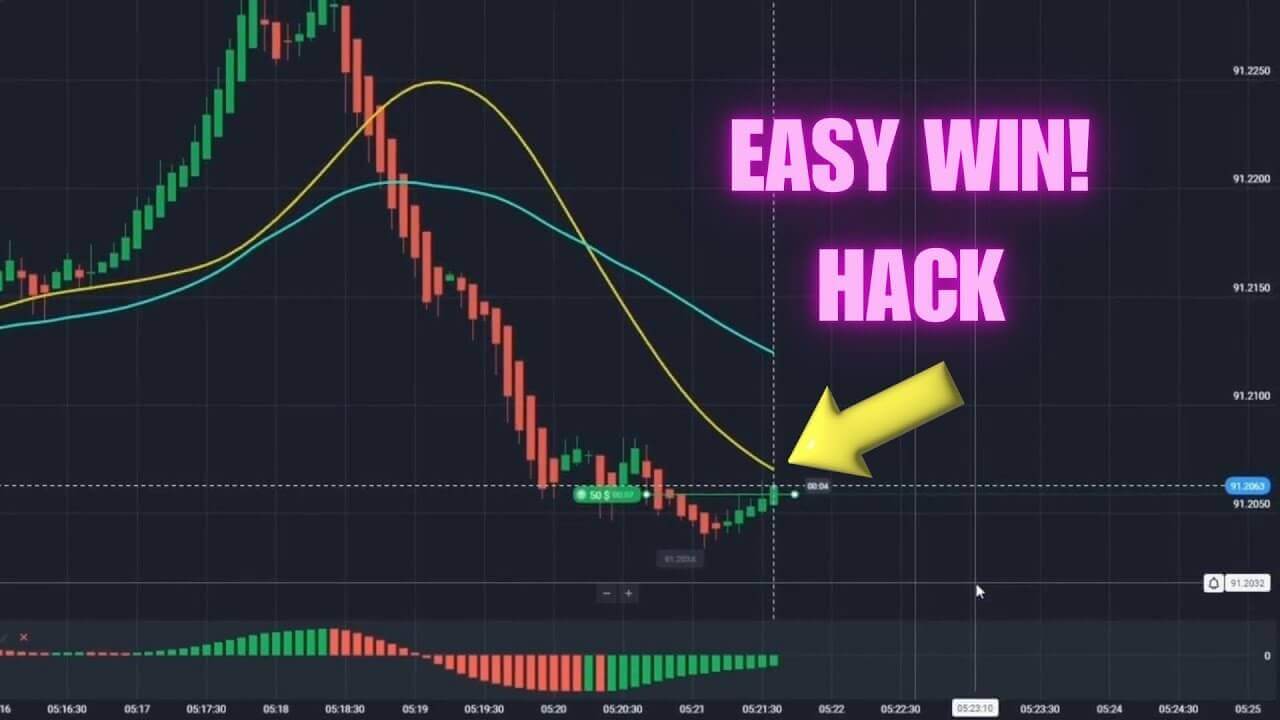
The "Quotex easy win hack" is a nickname for a simple trend-following setup that pairs two moving averages with the Awesome Oscillator. It is a structured way to read momentum on a chart, not a trick that beats the platform. Used with discipline, it can help you spot cleaner entries, but it comes with normal losing trades like every other approach.
What This Setup Actually Is
Two moving averages smooth out price so a trend is easier to read, and the Awesome Oscillator (AO) measures whether momentum is building or fading. When both agree, you have a clearer picture of direction. That is the whole idea behind the "hack" label: it is a filter that helps you avoid guessing, not a shortcut around risk.
Indicators, Timeframe and Entry Rules
- Indicators: add a fast and a slower moving average to the chart, plus the Awesome Oscillator in the lower panel.
- Timeframe and expiry: many traders watch the 1-minute chart with a short expiry. Faster timeframes are noisier, so treat every signal as optional, not automatic.
- Direction: when the fast average crosses above the slow one and the AO turns green (positive momentum), that leans bullish. The mirror case — a downward cross with red AO bars — leans bearish.
- Confirmation: only act when the moving-average cross and the AO shift point the same way. Conflicting signals are your cue to stand aside.
- Context: check the wider trend first. Fighting a strong move because a single crossover appeared is how good rules produce bad trades.
Why "Hack" and "Easy Win" Are Misnomers
There is no hack that beats a trading platform, and nothing about short-expiry trading is easy or automatic. The words are marketing labels that spread on social media. Moving averages and the AO are lagging indicators — they describe what price has already done, so they will lag turns and produce false signals in choppy or ranging conditions. A realistic goal is a repeatable, rule-based process, not a run of wins.
 Unlock Indicator Settings
Unlock Indicator Settings
Unlock Indicator Settings
Watch It In Action
Risk Management
Because short-expiry trades resolve quickly, protecting your capital matters more than any single signal. Practical guardrails:
- Use a fixed stake — a small, constant percentage of your balance per trade.
- Set a daily loss cap and stop for the day once you hit it.
- Avoid martingale. Each trade is independent, so doubling your stake after a loss does not improve the odds and can drain an account fast. It is a warning, not a plan.
- Test the setup on a demo account first, and only ever trade money you can afford to lose.
If you want to explore related approaches, compare this with the Quotex easy strategy or the Quotex 1-minute strategy to see how different indicator combinations behave on the same charts.
FAQ
Is this really an "easy win" or a hack?
No. It is a straightforward trend-and-momentum setup with normal losing trades. There is no hack that beats the platform, and no indicator can remove risk or predict the market.
What timeframe works best?
Many traders use the 1-minute chart with a short expiry, but faster charts are noisier. Match the expiry to your entry logic and skip signals you cannot clearly justify.
Where can I get the full indicator settings?
The exact indicator files and settings are part of the tool library available for a one-time $39 lifetime purchase, with MT4/MT5 downloads and updates included.
This content is for educational purposes only and is not financial advice. Trading involves substantial risk; you can lose some or all of your capital. No result is guaranteed and past performance does not indicate future results. Trade only what you can afford to lose.


