Quotex Trading - Simplify Trading Method
This setup is often shared online under the label "Quotex hack," so let's be clear from the start: it is not a hack. Nothing here exploits the platform, bypasses pricing, or forces a favourable outcome. It is simply a disciplined, three-indicator chart layout built on exponential moving averages (EMAs). Calling it a hack sets the wrong expectation. What you actually get is a clean, repeatable way to read short-term momentum on the 1-minute chart, nothing more.
The idea is to spot quick reversals, sudden shifts in price direction that unfold within a minute or two, and to use three EMAs as a visual filter for when momentum may be stretched. Reversals can offer entry points, but they are never certain: a price that looks stretched can stay stretched. The EMAs help you frame the market; your own judgement and risk control do the rest.
The Three Indicators, and What Each One Does
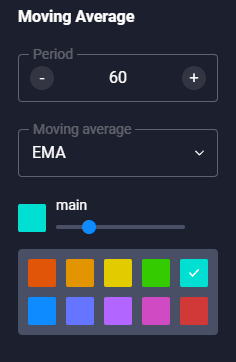
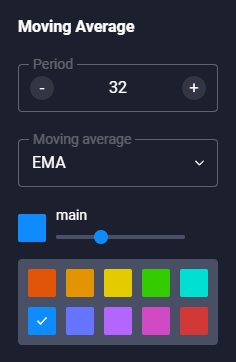
All three indicators in this method are exponential moving averages set to periods of 12, 32, and 60. It is worth stating plainly that these are the same type of tool at three different speeds. When they agree, that is correlation, not independent confirmation. Three EMAs lining up tells you the recent trend is consistent across time windows; it does not add a second, unrelated signal the way pairing an EMA with volume or a momentum oscillator would.
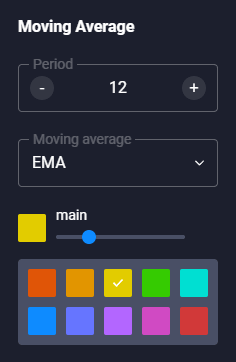
- 12-period EMA (fast): reacts quickly to price and hugs the most recent candles, so it shows the immediate short-term direction.
- 32-period EMA (medium): smooths out some of the short-term noise the fast line picks up, giving a more balanced read of the current trend.
- 60-period EMA (slow): moves the least and acts as the broader reference, marking the dominant direction over a longer window.
Why "Hack" Is a Misnomer
No indicator combination beats the platform or guarantees an outcome. A "hack" implies a shortcut that removes risk, and that does not exist in short-duration trading. This EMA layout is a normal, disciplined setup: it defines conditions you can recognise, and you only act when they appear. Treat it as a framework for consistent decisions, not a magic trigger. If a video or post promises certainty, that is marketing, not method.
Timeframe and Entry Rules
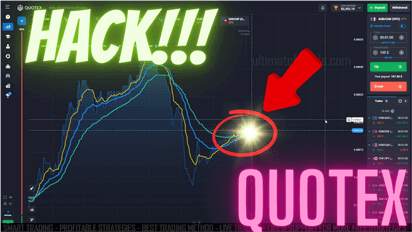
Work on the 1-minute chart with a 1-minute trade duration. The condition this method looks for is the three EMAs first spreading apart and running roughly parallel, then the fast line beginning to cross back toward the others, which can hint that short-term momentum is fading and price may pull back toward the slower averages.
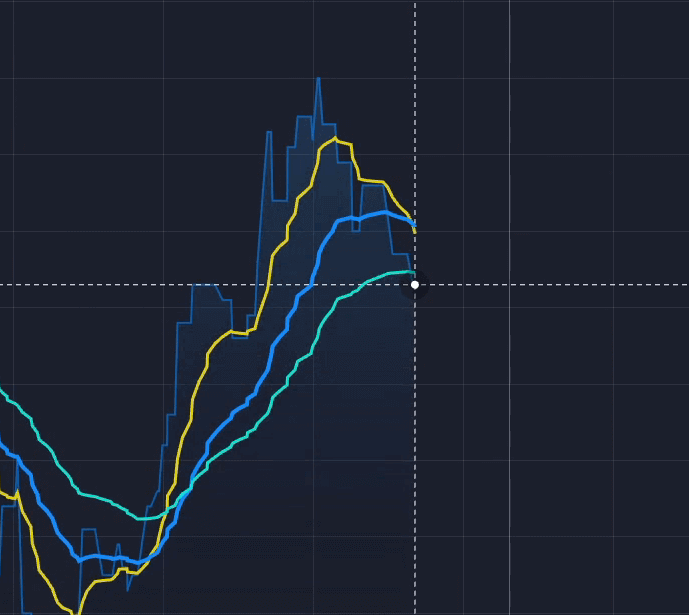
In the example above, the 12 EMA crosses the 32 EMA while price sits near the 60 EMA. That alignment is a starting point to consider a reversal, not a promise of one. Wait for the condition to actually form rather than anticipating it, and skip trades where the lines are tangled or flat, since a directionless market gives the setup nothing to work with. If you want a gentler place to practise the EMA idea first, our Quotex easy strategy and the Quotex 1 minute strategy walk through similar reversal logic step by step.
Risk Management and Realistic Expectations
Short-duration trading carries substantial risk, and a losing streak is a normal part of any method. Protect yourself with rules you set in advance:
- Risk only a small, fixed amount per trade, an amount you can comfortably afford to lose.
- Set a daily loss limit and stop for the day once you reach it.
- Do not use martingale or any doubling-after-a-loss scheme. Chasing losses can wipe out an account quickly and turns one bad run into a much larger one.
- Test the setup on a demo chart until the conditions are second nature before risking real money.
Judge the method over many trades, not a single one, and expect wins and losses in any sequence. If you decide you want the full indicator library and strategy pack, it is available for a one-time $39 lifetime payment.
Frequently Asked Questions
Is this really a hack, and does it always win?
No. It is a standard EMA-based setup, not a hack, and no strategy always wins. It cannot exploit the platform or guarantee a result. It simply gives you a consistent way to read momentum so your decisions are disciplined rather than random.
Do three EMAs confirm each other?
Not independently. All three are the same type of indicator at different speeds, so when they agree that is correlation, not a second unrelated signal. For real confirmation you would add a different tool, such as volume or a momentum oscillator.
What settings and timeframe does it use?
Three EMAs with periods of 12, 32, and 60 on the 1-minute chart, traded with a 1-minute duration. The alert-signal strategy shows how you might layer an alert on a similar approach.
Quotex Platform - Only 3 Indicators
This content is for educational purposes only and is not financial advice. Trading involves substantial risk; you can lose some or all of your capital. No result is guaranteed and past performance does not indicate future results. Trade only what you can afford to lose.


