Short-Term Trading on Olymp Trade: A Practical Setup
Short-term trading on Olymp Trade means opening and closing positions within a few minutes rather than holding for hours or days. The appeal is speed: you get frequent chances to read momentum and act on it. The trade-off is that fast timeframes are noisy, so a repeatable, rule-based approach matters far more than any single tool. This guide walks through how a short-term setup works, what indicators and timeframes suit it, and how to keep risk under control.
Many traders pair Olymp Trade with a signal indicator such as Binary Sniper Pro v3 on MetaTrader 4 (MT4) for the chart read, then execute manually on the platform. The indicator is a decision aid, not an autopilot — you still confirm each entry yourself.
Indicators, Timeframe, and Entry Rules
Short-term trading rewards a small, consistent set of tools rather than a cluttered chart. A common combination is a trend filter plus a momentum reading:
- Timeframe: the 1-minute (M1) chart for the setup, with a glance at the M5 to gauge the wider direction.
- Trend context: a moving average (for example a 20-period EMA) to see whether price is generally rising or falling.
- Momentum: an oscillator such as RSI, Stochastic, or DeMarker to spot stretched conditions and possible turns.
- Signal confirmation: wait for the indicator and the trend context to agree before considering an entry.
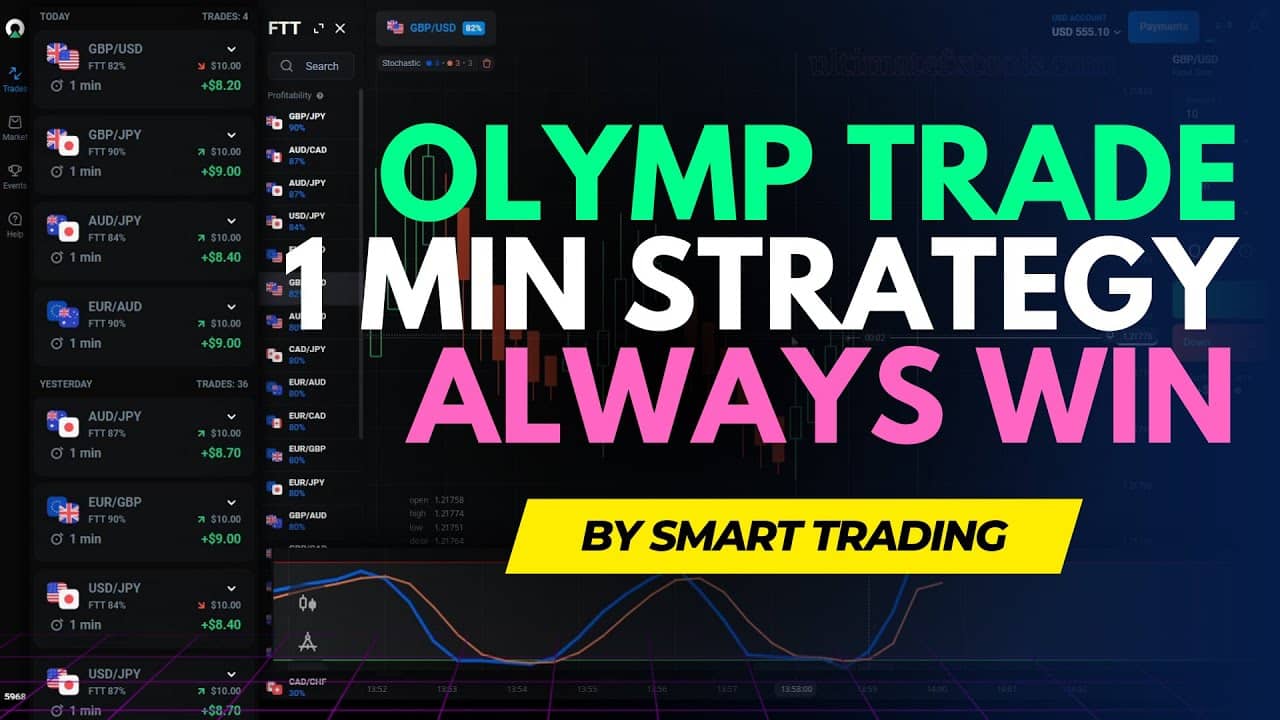
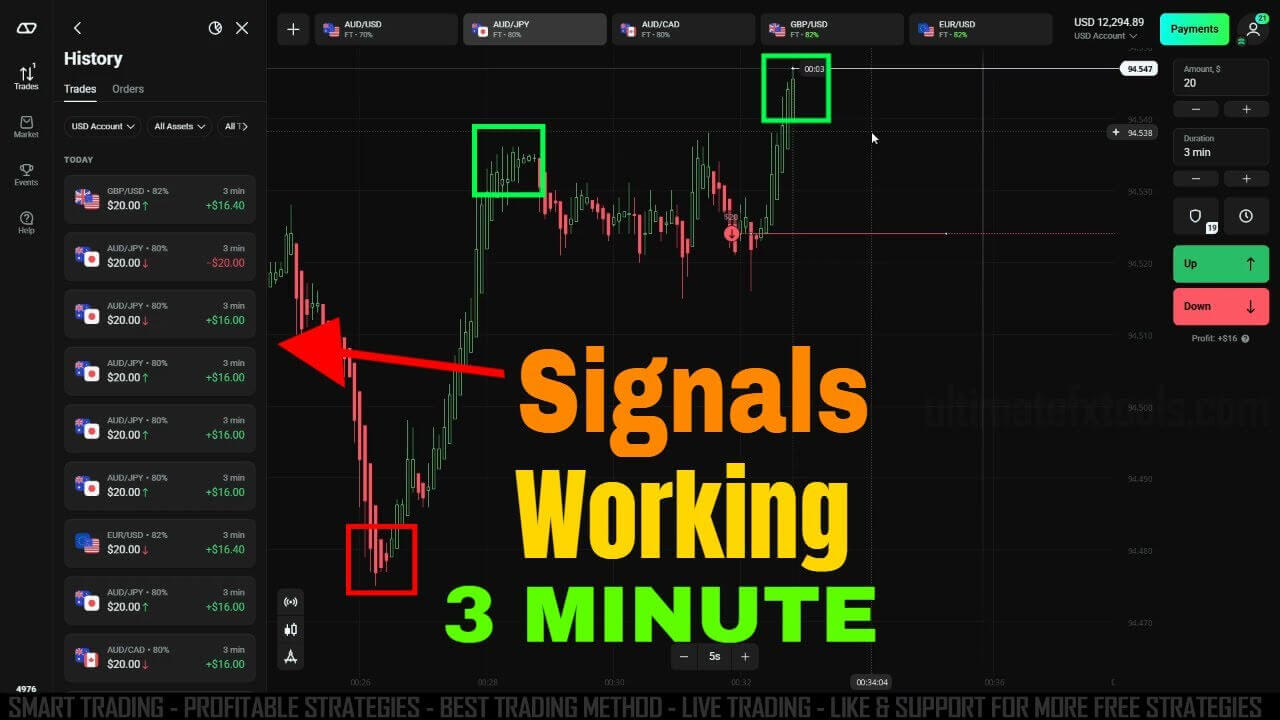
A simple entry routine is: identify the M5 trend direction, wait for the M1 chart to pull back and then show a signal in that same direction, and only then place a short 1-to-3 minute position on Olymp Trade. Skipping trades where the signals disagree is a feature, not a missed opportunity — fewer, cleaner setups usually beat constant activity. For a slower-paced comparison, see the Olymp Trade 1-minute strategy.
Installing the Indicator on MT4
To run a custom indicator alongside Olymp Trade, add it to MT4: open File > Open Data Folder > MQL4/Indicators, copy the indicator file into that folder, restart MT4 or refresh the Navigator, then drag the indicator onto a 1-minute chart. You read the chart in MT4 and place the actual trades on the Olymp Trade platform.
Realistic Expectations
Short-term trading is inherently uncertain. No indicator, timeframe, or rule set can tell you in advance which trades will work — every position carries the risk of a full loss. Signals shift the odds you are reading momentum correctly; they do not remove the randomness of one-minute price moves. Treat results across many trades, not any single outcome, as the measure of whether an approach fits you, and test any setup on a demo balance before risking real money.
Risk Management
Risk control is what keeps a fast strategy survivable. A few ground rules:
- Risk only a small, fixed amount per trade (many traders cap it at 1–2% of the account).
- Set a hard daily loss limit and stop trading once you hit it — step away rather than chase.
- Keep your stake size the same on every trade; do not scale up to recover a loss.
A warning on the martingale method: doubling your stake after a loss to "win it back" is high-risk and can wipe out an account fast. Each short-term trade is an independent event — a loss does not make the next trade more likely to win — and doubling simply concentrates more and more capital on a single outcome. A short losing streak, which is normal, can exhaust your balance. There is no version of martingale that is safe: a fixed stake with a hard daily loss cap is the far more sustainable path, and any "capped" martingale is still just delayed risk, not managed risk.
Frequently Asked Questions
Does this strategy win every trade?
No. No strategy, indicator, or timeframe wins every trade, and anyone promising that is misleading you. Short-term markets are noisy and every position can lose. The goal is a disciplined process and controlled risk, not a perfect record.
What timeframe is best for short-term Olymp Trade trading?
The 1-minute chart is common for the entry, with the 5-minute chart used to read the broader direction. Very short expiries leave little room for error, so start on a demo balance until your rules feel consistent.
Do I need to buy tools to trade this way?
No — you can trade this setup with the built-in indicators on any charting platform. If you want the full indicator library, chart templates, and setup guides in one bundle, they are available for a one-time $39 lifetime payment, but they are an optional convenience rather than a requirement.
For related short-timeframe ideas, the Olymp Trade Quickler 5-second strategy covers an even faster style of entry.
Short Term Trading Olymp Trade Strategy
This content is for educational purposes only and is not financial advice. Trading involves substantial risk; you can lose some or all of your capital. No result is guaranteed and past performance does not indicate future results. Trade only what you can afford to lose.