What is Pocket Option OTC?
If you have opened your trading app on a Saturday and noticed that assets are still moving while the regular forex market is closed, you have run into OTC trading. OTC stands for "Over-The-Counter", and on a platform like Pocket Option it refers to a set of synthetic instruments that stay available around the clock, including weekends and off-hours when banks and major exchanges are shut. This short explainer walks through what OTC actually is, how it differs from real-market trading, and what to keep in mind before you risk any money on it.
The key thing to understand is that OTC prices are not pulled from a live global exchange. Instead, they are generated by the platform's own algorithm, which produces a price feed designed to resemble real market movement. Because the platform creates and runs this feed, OTC markets carry a different risk profile than the underlying spot forex or stock markets they are named after.
How OTC differs from real-market hours
During normal trading hours, the price of a pair like EUR/USD reflects the buying and selling of countless banks, funds, and traders across the world. No single participant controls it. OTC instruments work differently:
- The price feed is synthetic. Weekend and off-hours quotes are algorithm-generated by the platform rather than sourced from a public exchange.
- Availability is the main appeal. OTC lets you trade when regular markets are closed, which is why so many people first meet it on weekends.
- The house sets the terms. The platform decides the payout percentages and the conditions of each contract, so the odds are structured in its favour, much like any fixed-payout product.
- Volatility can behave differently. Without real-world order flow, moves are shaped by the platform's model, so patterns you learned on live charts may not carry over cleanly.
The pros and cons of OTC trading
OTC is neither a shortcut nor a scam by definition. It is simply a product with its own trade-offs that you should weigh honestly before committing funds.
Potential upsides: markets are open on weekends and holidays; you can practise chart-reading and discipline when nothing else is trading; and a demo balance lets you explore it with zero financial risk.
Real downsides and risks: because the feed is generated by the platform, you are effectively trading against the house rather than a neutral market. Fixed-payout structures mean a losing trade typically costs your full stake while a winning one returns less than 1:1, so the maths already leans against the trader. Add the fast pace of short expiries and it becomes easy to overtrade. Be especially wary of "OTC bots", paid "guaranteed" signals, and martingale-style systems that tell you to double your stake after every loss. Martingale can wipe out an account in a short losing streak and should be treated as a warning sign, not a plan.
Approaching OTC responsibly
If you decide to explore OTC, a measured approach reduces the chance of an expensive lesson:
- Start on a demo account and stay there until you genuinely understand how the instrument behaves.
- Risk only a small, fixed percentage of your balance per trade, and never chase losses.
- Ignore anyone promising certainty. No signal, bot, or strategy can remove risk from a fixed-payout product.
- Keep a simple journal so you can see, in your own numbers, whether an approach is actually working over time.
If you want to study price action with proper tools, our lifetime $39 access includes 100+ indicators you can load on MT4/MT5 charts for practice and analysis. Reading charts well is a skill that transfers, even if the OTC feed itself is synthetic.
Is OTC right for you?
OTC suits curious traders who understand exactly what they are dealing with: a platform-run, higher-risk environment where convenience comes at the cost of a house-set edge. It is a poor fit for anyone hoping to "make money on the weekend" quickly or who cannot comfortably afford to lose their stake. Treat it as a place to practise discipline, not as an income stream.
Is OTC rigged?
"Rigged" is the wrong word, but the concern behind it is fair. OTC feeds are algorithm-generated and the platform sets the payouts, so the odds are structured in the house's favour by design, the same way a casino's are. That is not hidden manipulation; it is the nature of a fixed-payout product. Understand the edge is against you and size your risk accordingly.
Can you win on OTC?
Individual trades can and do win, and some traders string together good runs. But because payouts are below 1:1 and the feed is house-controlled, no method makes outcomes certain, and results vary from person to person. Anyone claiming a fixed win rate or guaranteed profit is not being straight with you.
Should beginners start with OTC?
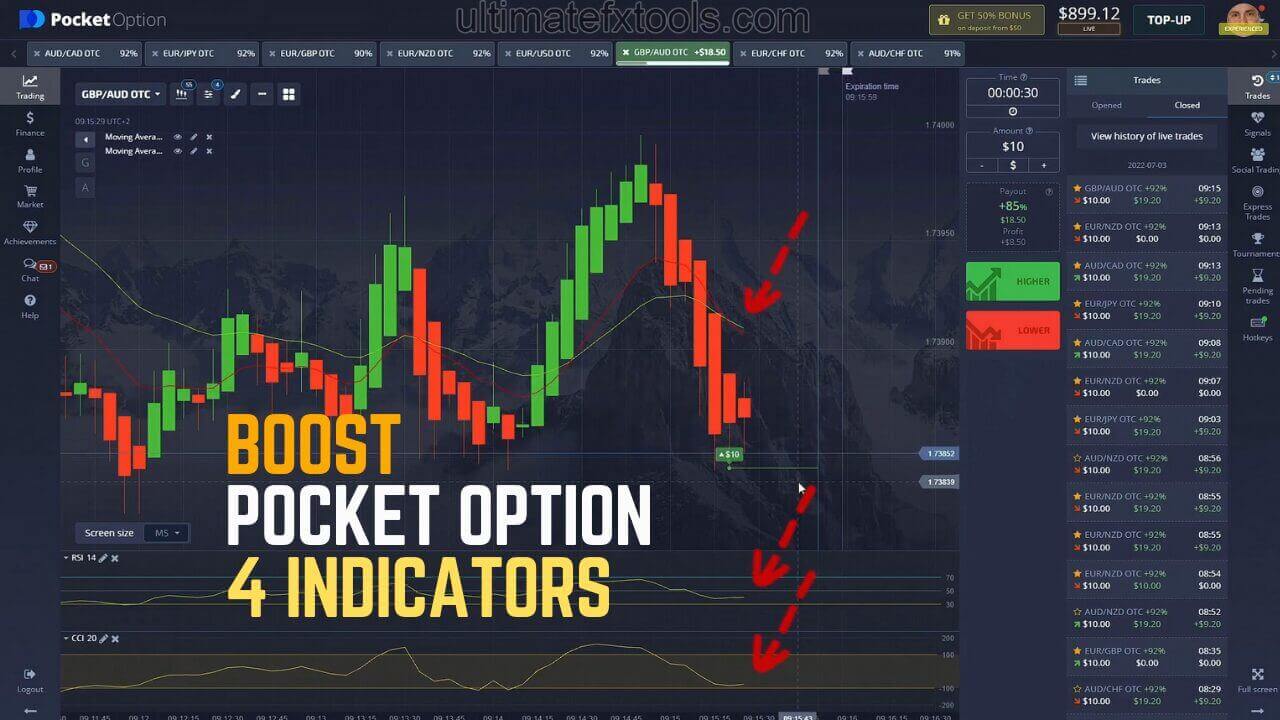
Only on a demo balance. New traders are better served learning core concepts first, for example our 5 tricks for beginners or a structured setup like the 4-indicators approach, before risking real money anywhere, OTC included.
This content is for educational purposes only and is not financial advice. Trading involves substantial risk; you can lose some or all of your capital. No result is guaranteed and past performance does not indicate future results. Trade only what you can afford to lose.