5 Powerful AI Trade Assistant - Pocket Option
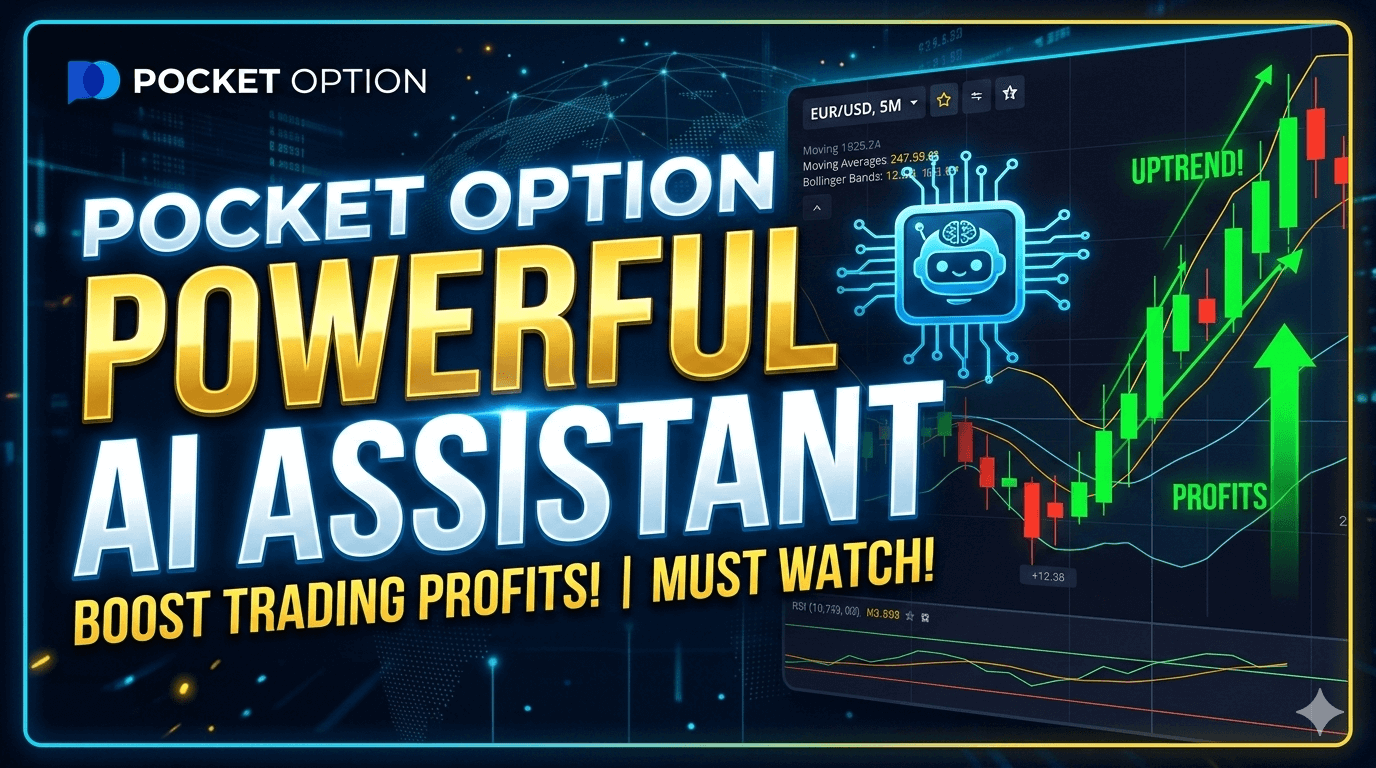
Short-duration trading on Pocket Option moves fast, and most traders lose focus long before they lose money. An AI trade assistant is built to take some of that pressure off. Instead of staring at a dozen charts and second-guessing every candle, you let a scanner do the heavy reading and surface the setups that actually fit your rules. On this site that role is filled by the PipGems AI scanner and its indicator alerts, which flag potential CALL/PUT conditions and let you make the final call.
It is important to be honest about what these tools are. An AI assistant is decision support, not autopilot. It does not know the future and it cannot remove risk. What it can do is keep you organised, cut down on impulsive entries, and give you a repeatable process. Below are five practical ways an AI assistant helps Pocket Option traders build consistency.
1. Scan Charts Faster Than You Can Manually
The biggest time sink in short-term trading is flipping between pairs looking for a clean setup. An AI scanner reads multiple charts at once and highlights the ones that match your conditions. This is exactly the job of an AI smart screener for the best currency pairs. You still decide whether to take the trade, but the shortlist is done for you in seconds rather than minutes.
2. Confirm Signals Before You Commit
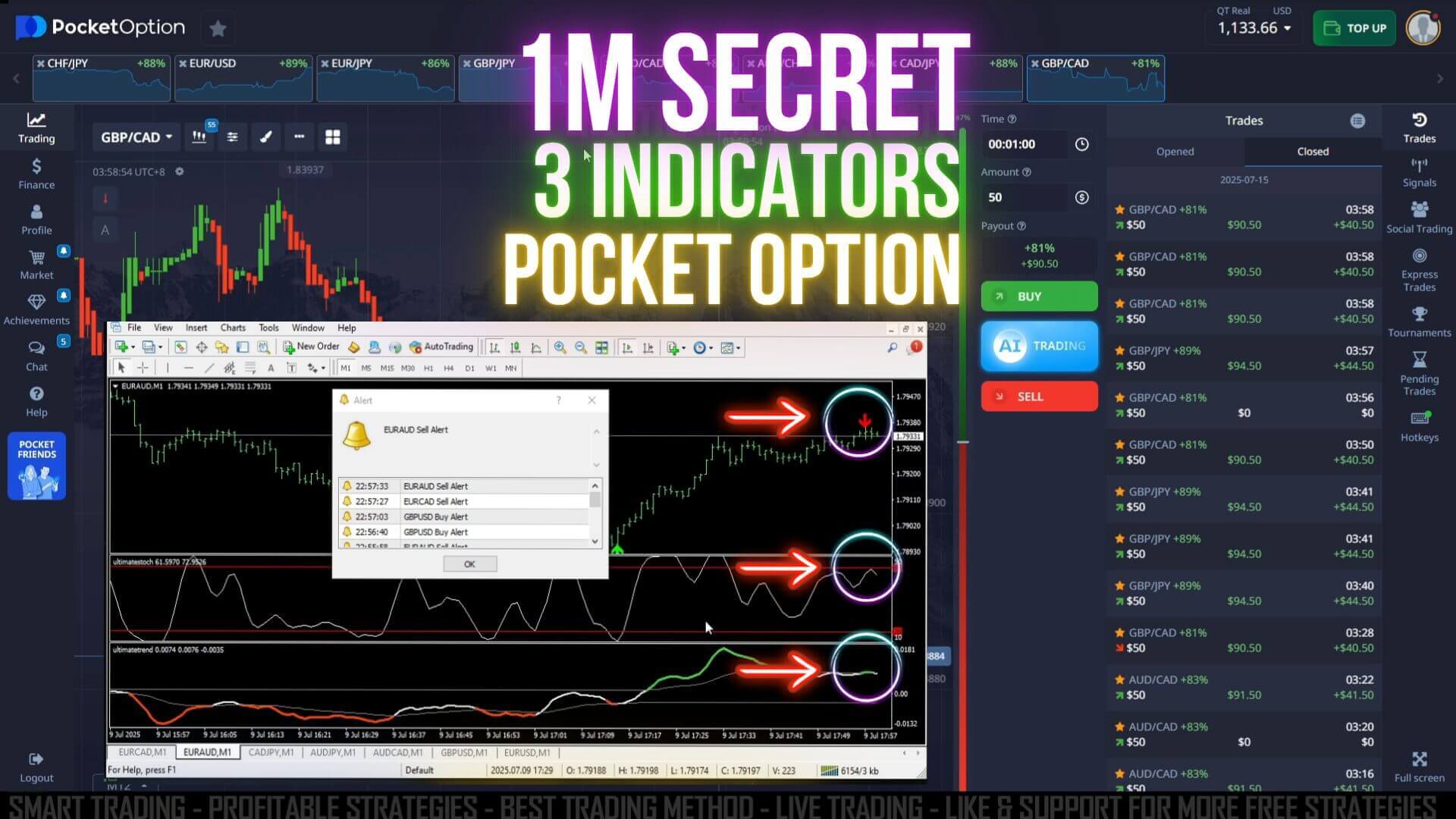
A single indicator firing is rarely enough. A good assistant lets you stack confirmation, so a candle pattern lines up with momentum and a scanner reading before you act. Reviewing how a 60-second AI scanner reads Pocket Option charts shows how confirmation works in practice, where one clear signal is checked against the broader picture. Treat every signal as a suggestion to verify, not an order to follow, and you filter out a lot of weak entries.
3. Improve Your Timing on Entries
On 30-second and 1-minute trades, being a few seconds early or late changes everything. An AI assistant helps you wait for the condition to actually form instead of jumping in on a hunch. Walking through a structured Pocket Option AI strategy makes the timing routine concrete: define the setup, wait for confirmation, then enter with intent.
4. Reinforce Risk Discipline
The fastest way to blow a session is oversized stakes and revenge trades after a loss. An assistant can support fixed stake sizing, session limits, and a hard stop for the day so emotion does not drive your bet size. The ideas in this Pocket Option AI risk management guide pair well with any scanner, because no signal quality matters if a single trade can wipe out ten good ones. Protecting your capital is what lets you keep trading tomorrow.
5. Keep a Trading Journal
You cannot improve what you do not track. Logging each trade, the signal behind it, and the outcome turns a string of random results into feedback you can learn from. A companion like the PipGems Strategy Hub risk-management app makes journaling part of the routine. Over time your notes tell you which setups suit you and where your discipline slips.
Using AI Signals Responsibly
An AI signal is a starting point, not a green light. Confirm every signal with your own reading of the chart before committing, so the assistant supports your judgement rather than replacing it. Combine that with a fixed stake on every trade, and you remove a major cause of large losses: betting more when you feel confident or when you are trying to win back a loss. Set a daily cap on the number of trades and the amount you are willing to risk, then stop when you hit it, win or lose.
FAQ
Are AI trade signals guaranteed to be correct?
No. No signal, indicator, or AI tool can guarantee a result, and any source promising that is misleading you. AI signals are a probability-based aid that helps you spot and confirm setups faster, but the market can move against any trade. Always confirm with your own analysis and only risk what you can afford to lose.
What is the best timeframe for AI signals on Pocket Option?
There is no single best timeframe, but many traders start with 1-minute expiries because they give enough time to read the candle and confirm the signal without rushing. Faster 30-second and 15-second trades demand sharper timing and stricter discipline. Practise on a demo account first and settle on the timeframe that fits your reaction speed and routine.
Is there a free option, or do I need the paid package?
You can begin with the free scanner and indicator alerts to learn the workflow before spending anything. If you want the full library of indicators and tools with lifetime updates, the complete package is a one-time payment on the pricing page. Start free, get comfortable with the process, and upgrade only when the tools have proven useful to your own trading.
This content is for educational purposes only. Trading involves risk. Past results do not guarantee future outcomes. Always practice responsible money management and limit your daily trades to avoid large losses.