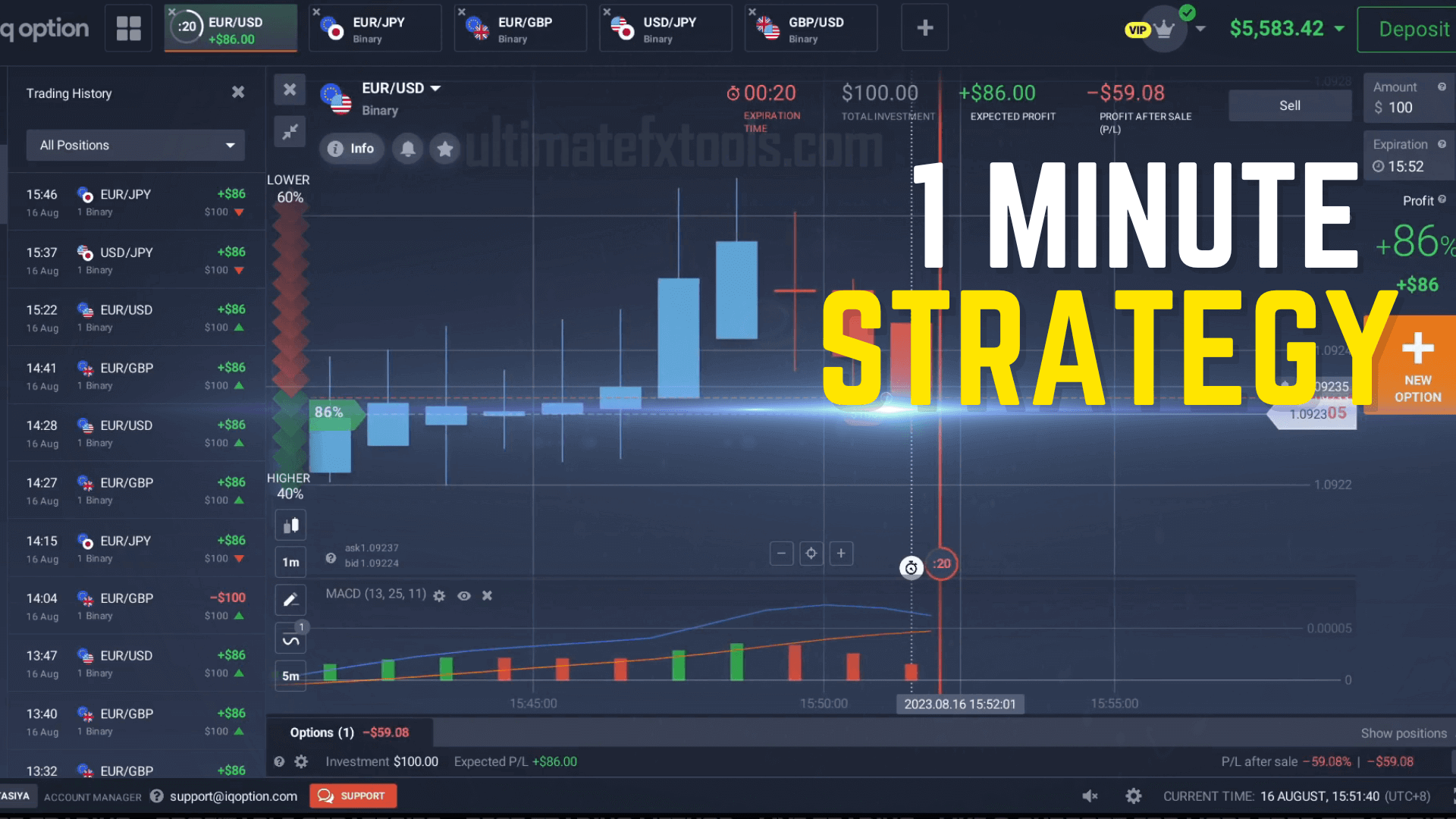
A 1-minute chart on IQ Option moves fast, and no setup wins every trade. This guide walks through a simple, rules-based approach that pairs a trend filter with a signal indicator so your entries are consistent rather than impulsive. Treat it as a framework to test on a demo account first.
1-Minute IQ Option Strategy: MACD + XProfit
The idea behind this setup is to combine two things that agree with each other before you act: a momentum filter (the MetaTrader 5 MACD) and a signal from the XProfit indicator. On a 1-minute timeframe, price is noisy, so requiring two conditions to line up helps you skip low-quality trades. It will not remove losing trades — it simply makes your entries repeatable.
Chart, Timeframe and Indicators
- Timeframe: M1 (1 minute). Expect a high number of signals and high variance from candle to candle.
- Pairs: Liquid majors such as EUR/USD tend to behave more predictably than thin, illiquid symbols.
- Indicators: MACD as the trend/momentum filter, plus the XProfit signal indicator for entry alerts. You can add a second oscillator if it helps you read momentum.
Installing the XProfit Indicator
- Install MetaTrader 5 from metatrader5.com (Windows, macOS and Linux builds are available).
- Copy the XProfit indicator file into the data folder under
MQL5 > Indicators.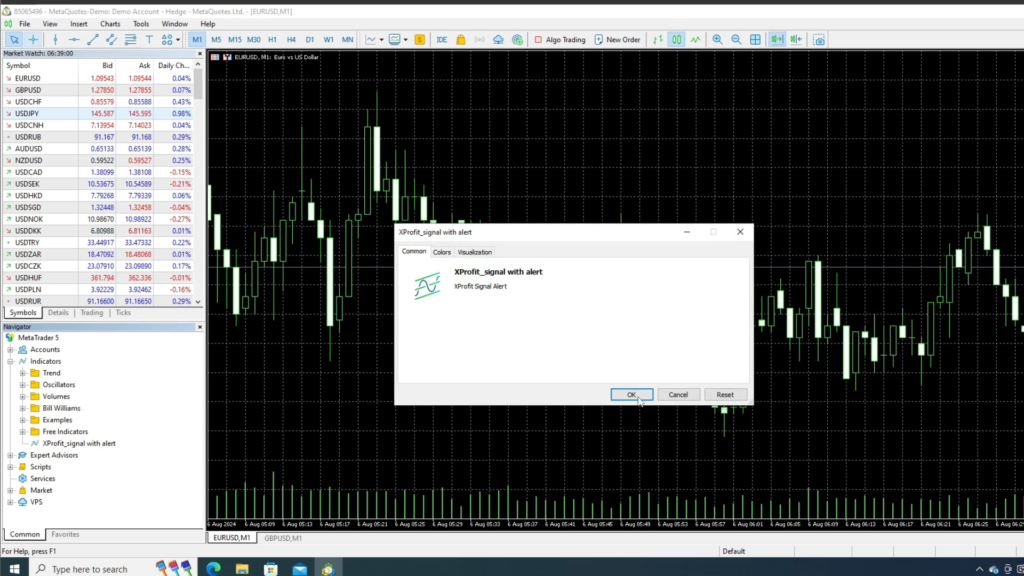
- In the Navigator panel, right-click and choose Refresh so the indicator appears.
- Open a new M1 chart for your chosen pair via
File > New Chartand attach the indicator.
Entry Rules for the 1-Minute Setup
Wait for both conditions to align before entering, and skip the trade if they disagree:
- Sell / lower entry: XProfit prints a sell alert and MACD is turning or sloping downward.
- Buy / higher entry: XProfit prints a buy alert and MACD is turning or sloping upward.
- No trade: the alert fires but MACD is flat or pointing the other way. A skipped trade is a valid outcome.
Keep your expiry short and consistent with the M1 timeframe, and record every trade so you can review what actually worked over a large sample rather than a lucky streak.
Realistic Expectations
One-minute trading is high-variance by nature: spreads, slippage and a single fast candle can turn a good read into a loss. No indicator predicts the market, and results vary between traders, pairs and market conditions. Test on a demo account until the rules feel automatic, then start small with money you can afford to lose. For a broader look at input tuning, see our notes on IQ Option indicator settings.
Risk Management
On a fast timeframe, risk control matters more than any single signal. A few habits that keep you in the game:
- Use a fixed stake per trade — a small, constant percentage of your balance — instead of raising size after a loss.
- Avoid martingale. Doubling up after losses is dangerous: each 1-minute trade is independent, and a normal losing run can wipe an account quickly.
- Set a daily loss cap and a session time limit, then stop when you hit either — no exceptions.
- Only trade conditions your rules actually cover; step aside during news spikes and low-liquidity hours.
FAQ
Does this strategy win every trade?
No. No strategy wins every trade, and 1-minute trading is especially high-variance. The MACD filter is there to improve the quality of your entries, not to remove losses. Judge it over a large sample on demo, not on a handful of trades.
Which pairs and expiry work best on M1?
Liquid majors like EUR/USD are a sensible starting point because they tend to have tighter spreads. Keep the expiry short and consistent with the 1-minute chart, and test different pairs on demo to see what suits your style.
Where can I get the XProfit indicator?
XProfit is part of the full UltimateFXTools library. You can get lifetime access to all 100+ indicators and strategies for a one-time $39 on the pricing page. Before going live, practice the rules on a demo account.
This content is for educational purposes only and is not financial advice. Trading involves substantial risk; you can lose some or all of your capital. No result is guaranteed and past performance does not indicate future results. Trade only what you can afford to lose.