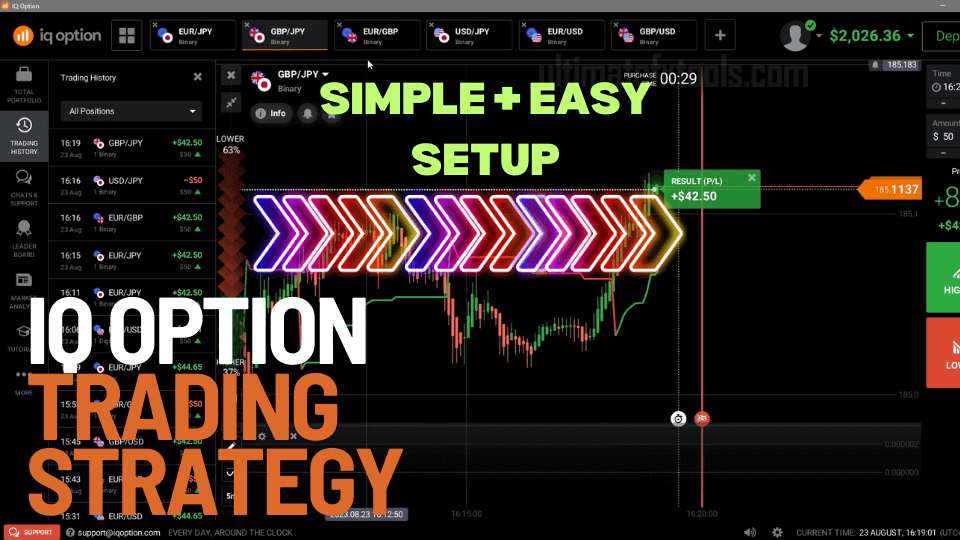
IQ Option Simple Trading Strategy 2023
If you are new to charts and just want a clear, rules-based way to read the market, a simple approach usually beats a complicated one. This walkthrough keeps things beginner-friendly: one main indicator, a short list of entry rules, and a strong reminder to test everything on a demo account first. Simple does not mean easy money — it means fewer moving parts to misread. Any strategy will produce losing trades, so treat this as a learning framework rather than a shortcut.
Understanding the Platform
IQ Option is an online trading platform for a range of instruments including forex, stocks, ETFs, commodities, and cryptocurrency. It is popular with beginners because of its clean interface and its built-in analytical tools, most of which are free to add to a chart. Before risking money, spend time on the platform's practice account so you understand how orders, expiry times, and the chart controls behave.
What the Simple Strategy Uses
The core of this method is a single tool: the ATR Trailing Stops indicator. ATR (Average True Range) measures how much price typically moves, so the trailing line adapts to the current volatility instead of sitting at a fixed distance. That makes it a handy visual guide for the direction of the trend.
Suggested Settings
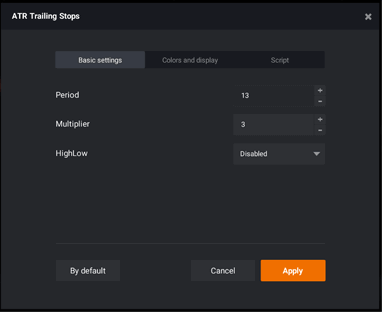
To keep it simple, change the default ATR Trailing Stop settings to a period of 13 and a multiplier of 3. These are only a starting point — the values that suit one pair or timeframe may not suit another, so review them on a demo chart before you rely on them.
Reading the Trend
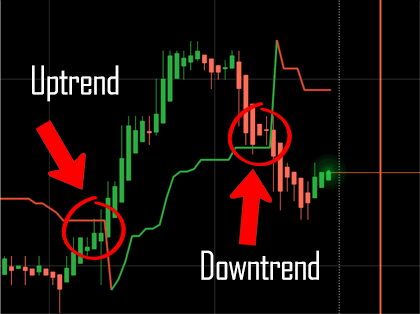
Trend identification is the whole basis of the strategy. You are simply asking whether price is generally rising (uptrend) or generally falling (downtrend), and letting the ATR line confirm it rather than guessing.
- Upward bias: When candles hold above the ATR Trailing line, the market is leaning bullish and you would look for higher entries.
- Downward bias: When candles hold below the ATR Trailing line, the market is leaning bearish and you would look for lower entries.
If the line keeps flipping back and forth, the market is likely ranging. In choppy conditions the cleanest choice is often to stay out until a clearer direction appears.
Timeframe and Entry Rules
Beginners are usually better off on slightly slower charts, so favour a chart and expiry that give you time to think rather than the fastest ticks available. A 30-second to 2-minute expiry is a reasonable range to test:
- Higher entry: Consider a buy-direction trade only when the trend reads as bullish and price is holding above the ATR line.
- Lower entry: Consider a sell-direction trade only when the trend reads as bearish and price is holding below the ATR line.
Wait for confirmation instead of chasing every candle. One clear signal you understand is worth more than five rushed trades. For related beginner setups, see our IQ Option 1 minute strategy and the IQ Option best indicator settings guide.
Realistic Expectations for Beginners
A simple strategy reduces confusion, but it does not remove risk. You will have losing trades, streaks happen, and no indicator predicts the future. The goal early on is consistency of process — following your own rules every time — not chasing a big result. Keep a simple journal of your trades so you can see what actually works for you over dozens of entries, not just one lucky session.
Risk Management
Risk management is what keeps you in the game long enough to improve:
- Start on a demo account and only move to real money once your rules are second nature.
- Risk a small, fixed fraction of your balance per trade so one bad run cannot wipe you out.
- Avoid martingale-style doubling after a loss — it can escalate losses very quickly and drain an account.
- Set a daily stop: when you hit a set number of losses, walk away and review.
- Only trade money you can genuinely afford to lose.
Frequently Asked Questions
Does this strategy win every trade?
No. No strategy or indicator wins every trade. ATR Trailing Stops helps you read direction and manage risk, but losing trades are a normal, unavoidable part of trading.
Is this suitable for complete beginners?
Yes, because it relies on one indicator and a short set of rules. That said, spend real time on a demo account first and keep your position sizes small when you go live.
Do I need paid tools to try it?
No. IQ Option's built-in charting tools are enough to test this approach. If you later want a bundle of MT4/MT5 indicators and strategies, our $39 lifetime access collects them in one place, but it is optional.
This content is for educational purposes only and is not financial advice. Trading involves substantial risk; you can lose some or all of your capital. No result is guaranteed and past performance does not indicate future results. Trade only what you can afford to lose.