Pocket Option Trading With Only 3 Indicators
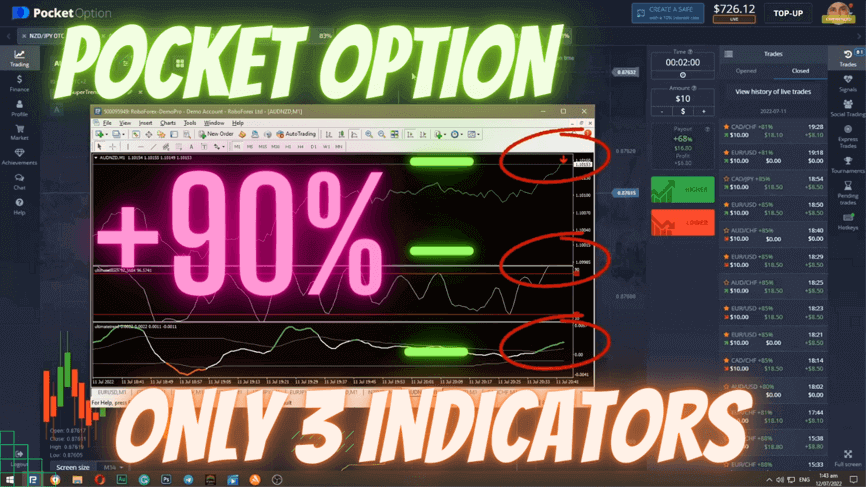
Pocket Option is a short-term options trading platform where you decide whether a chosen asset will finish higher or lower after a fixed time window. Because entries are quick and time-bound, a clear, repeatable read on direction matters more than the number of tools on your chart. This strategy stays deliberately simple: three MetaTrader 4 (MQL4) indicators that each answer a different question before you commit.
The idea is not to stack more signals, but to have three complementary readings — a directional signal, a trend filter, and a momentum check — that either agree or clearly do not. When they disagree, the cleanest decision is usually to skip the setup. This is confluence, not certainty, and it will produce losing trades like any other approach.
The 3 Indicators and What Each Does
1. Ultimate Signal Indicator
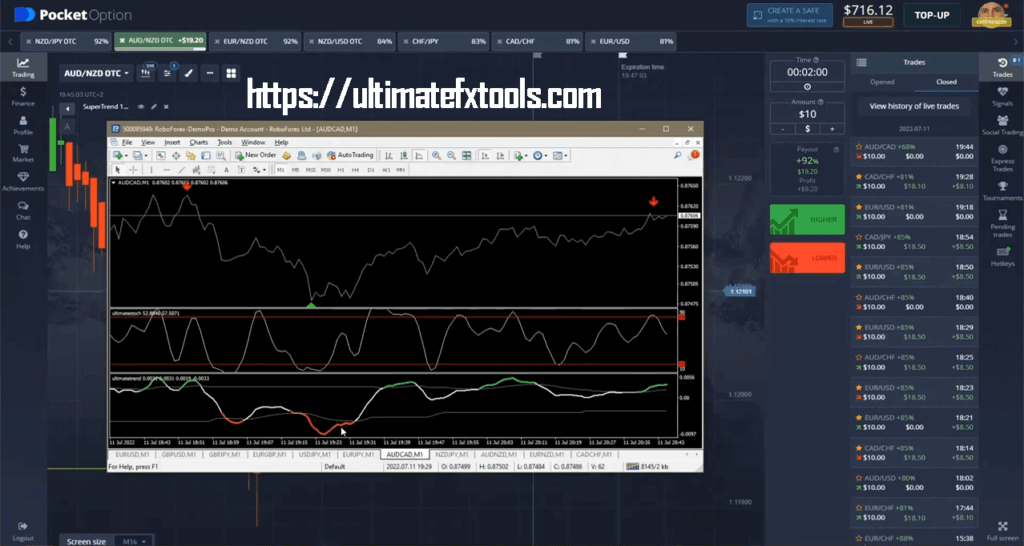
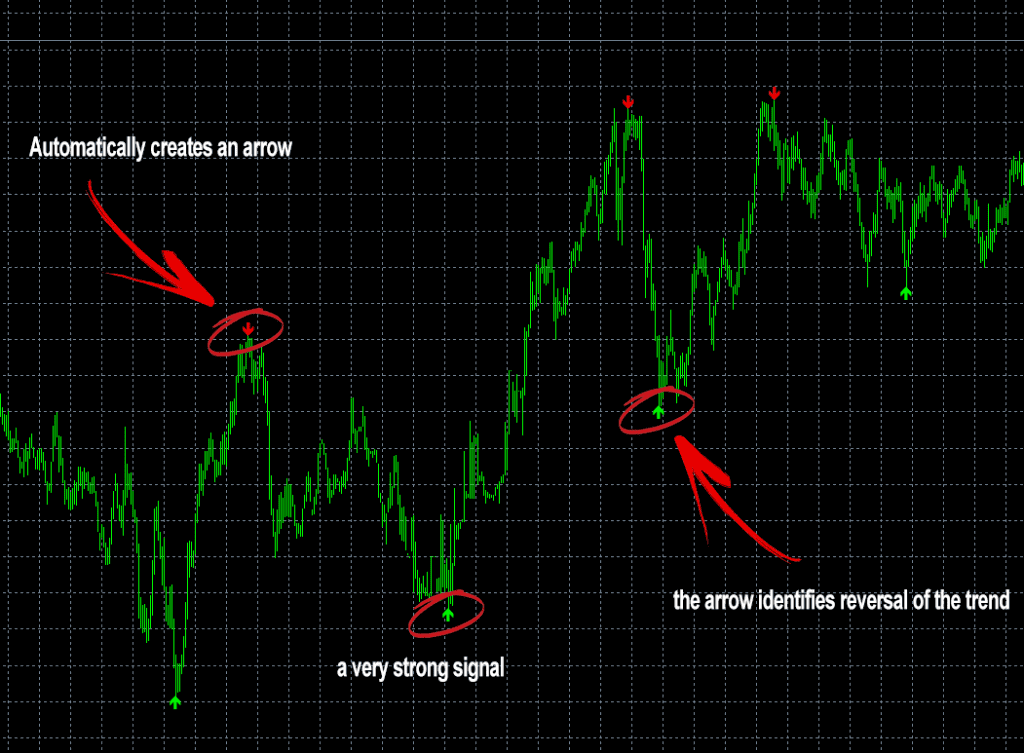
The Ultimate Signal Indicator runs on MetaTrader 4 and prints an arrow to suggest a possible up or down entry on any pair and timeframe. It is meant as an alert, not a verdict. Importantly, this arrow can repaint — meaning a printed arrow may shift or disappear as new candles form — so you should never act on it alone. Treat it as the prompt that tells you to check the other two tools.
2. Ultimate Trend Indicator
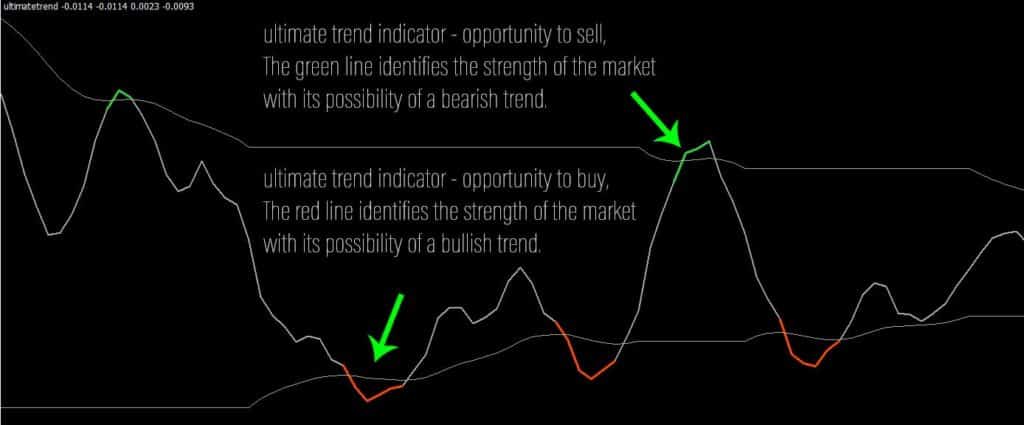
The Ultimate Trend Indicator is built on MACD and Ichimoku logic and colours the underlying trend as up or down, giving you a baseline direction. Its job is to filter the signal arrow: if the arrow points up but the trend read is down, the two disagree and the setup is weaker. Note that the signal arrow and this trend tool both describe direction, so they lean on related information rather than being fully independent — the oscillator below is what adds a genuinely different dimension.

3. Ultimate Stoch Oscillator
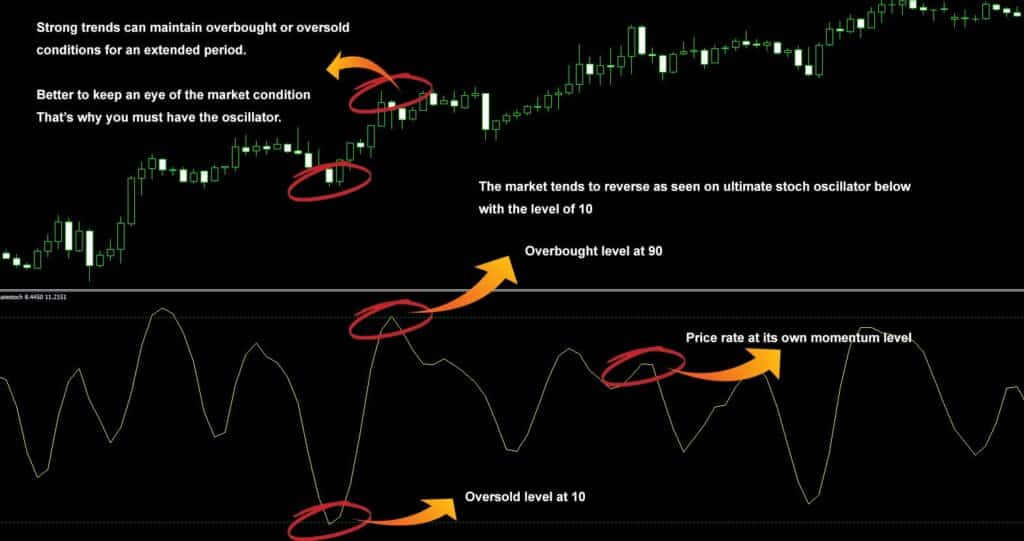
The Ultimate Stoch Oscillator is a stochastic-style momentum tool that compares the closing price to its recent range, helping you judge whether an asset is stretched or has room to continue. Because it measures momentum rather than direction, it is the most independent of the three and can flag when a trend is losing steam before price turns.
How to Combine Them: Timeframe and Entry Rules
Pick a timeframe that matches your Pocket Option expiry — for example, a 1-minute chart with roughly 1–3 minute expiries, or a 5-minute chart with longer windows. Keep the same chart settings each session so your reads stay consistent. A sensible checklist for a call (up) trade:
- The Ultimate Signal Indicator prints an up arrow and holds through candle close.
- The Ultimate Trend Indicator confirms an uptrend baseline in the same direction.
- The Ultimate Stoch Oscillator is turning up and not already stretched at the top of its range.
Reverse each condition for a put (down) trade. If any one of the three disagrees, the honest response is to wait for a cleaner setup rather than force an entry. Fewer, better-aligned trades are easier to manage than many marginal ones. For contrast, you can see how a leaner setup behaves in our 2-indicator 15-second strategy.
Realistic Expectations
No indicator combination predicts the market, and repainting tools like the signal arrow often look better in hindsight than they behave in real time. Expect a mix of winning and losing trades, and test the approach on a demo account until you understand its behaviour. If you want to compare it against other short-term approaches, our 3-second Pocket Option strategy and Pocket Option tips are useful reference points.
Risk Management
Risk a small, fixed amount per trade — many traders cap this at 1–2% of their balance — so a losing streak cannot wipe out your account. Do not use martingale (doubling your stake after a loss); it can escalate a normal run of losses into a catastrophic drawdown very quickly. Set a daily loss limit, stop when you hit it, and never trade money you cannot afford to lose.
Pocket Option 3 Indicators - Ultimatefxtools
Watch the full walkthrough below to see how the three indicators line up on a live chart. All three tools are part of the UltimateFXTools library, available with lifetime access for a one-time $39.
Frequently Asked Questions
Does this 3-indicator strategy win every trade?
No. No strategy wins every trade. These indicators only help you spot when direction, trend, and momentum agree; the market can still move against a well-aligned setup, so losing trades are a normal part of the process.
Are three indicators better than one?
Not automatically. Extra indicators only help if they add different information. Here the signal arrow and trend tool both read direction, so they partly overlap, while the oscillator adds a separate momentum view. The value is in the confirmation between different types, not in the raw number of indicators.
Can I use this on the free demo first?
Yes, and you should. Practise on a Pocket Option demo account until you are comfortable reading all three indicators together and managing your risk before you ever risk real money.
This content is for educational purposes only and is not financial advice. Trading involves substantial risk; you can lose some or all of your capital. No result is guaranteed and past performance does not indicate future results. Trade only what you can afford to lose.