Why Non-OTC Pairs Matter for These Signals
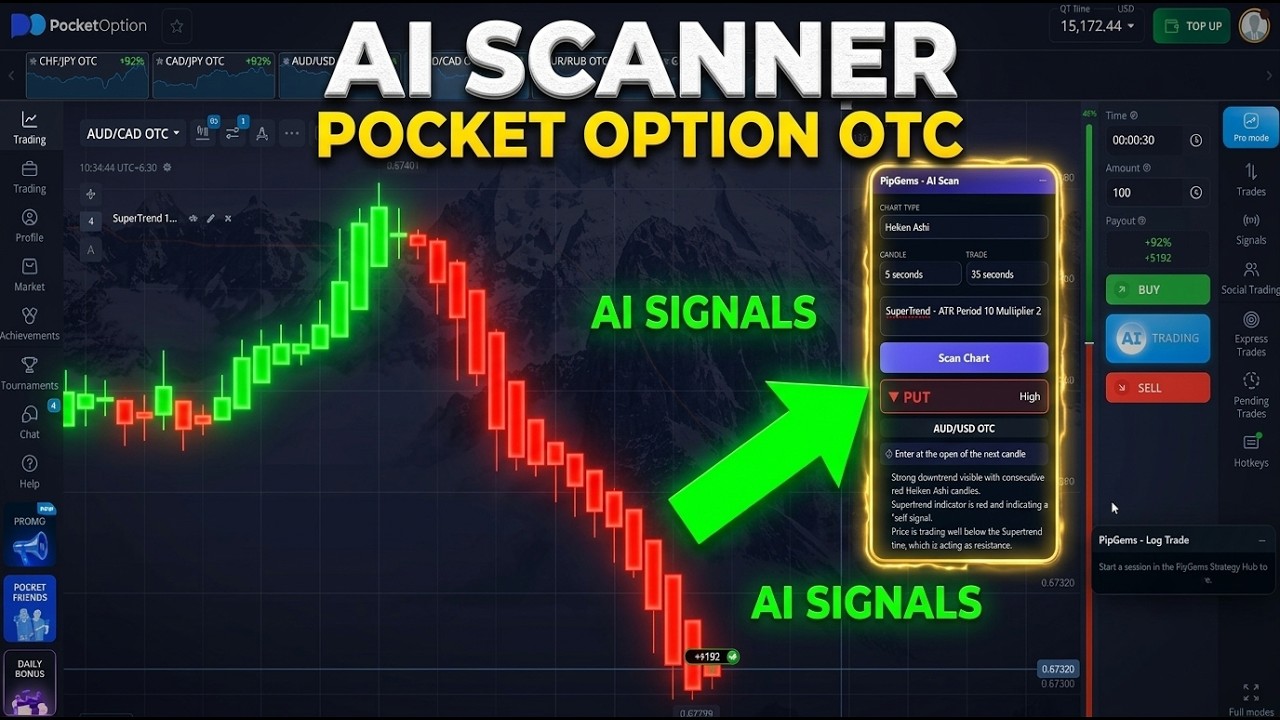
This is the single most important rule in the whole session, and it is the one most traders get wrong. PipGems generates its signals from the live MetaTrader market — real interbank price feeds for pairs like EUR/GBP, GBP/CAD and AUD/CHF. Pocket Option, meanwhile, offers two versions of almost every pair: the normal one and an OTC one.
OTC ("over the counter") pairs are the broker's own synthetic quotes, used when the real market is closed or thin. They look like the real pair, they are named like the real pair, but they do not follow the same price. So a signal calculated on the real EUR/GBP feed has no relationship to what the EUR/GBP OTC chart is doing.
The rule that follows is simple: if the signal comes from the live market, trade it on the live-market pair. In the Pocket Option asset list, that means picking the entry without the "OTC" tag. Trading a MetaTrader-derived signal on an OTC chart is the fastest way to turn a good signal into a random one.
Setting Up the Signal Feed on Mobile
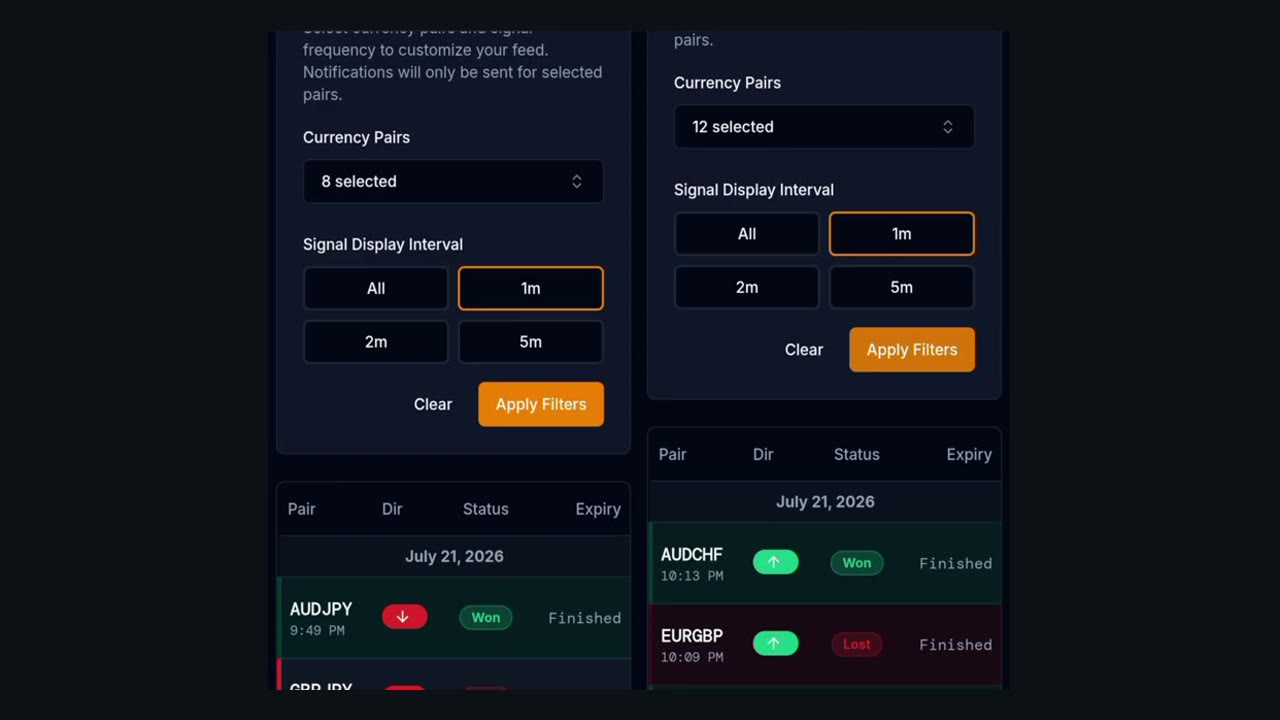
The PipGems app runs alongside the broker app on the same phone. Two settings shape what you actually see:
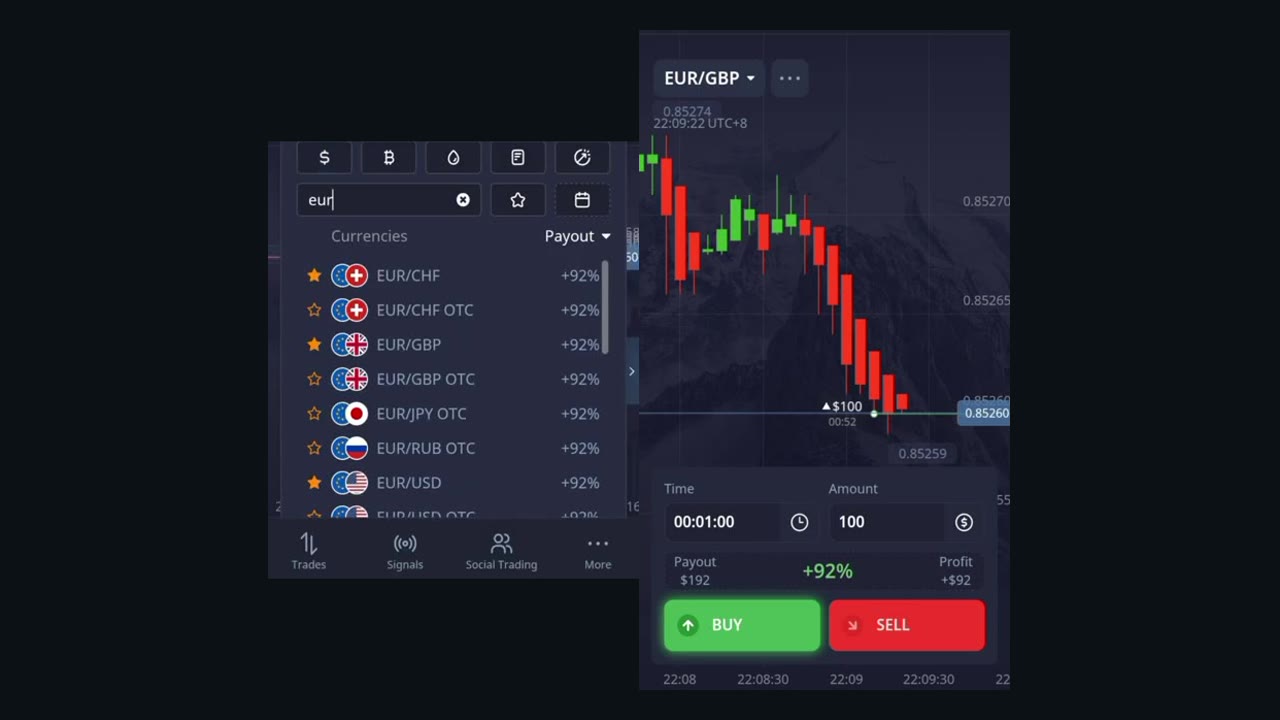
- Currency Pairs — a multi-select filter. The session starts at 8 selected and grows to 12–13 as more pairs are added by searching (typing "us" surfaces EURUSD, USDJPY, GBPUSD; typing "eur" surfaces EURUSD, EURGBP, EURAUD, EURCAD, EURCHF).
- Signal Display Interval — All, 1m, 2m or 5m. This session runs on 1m, matching the 1-minute expiry used on every trade.
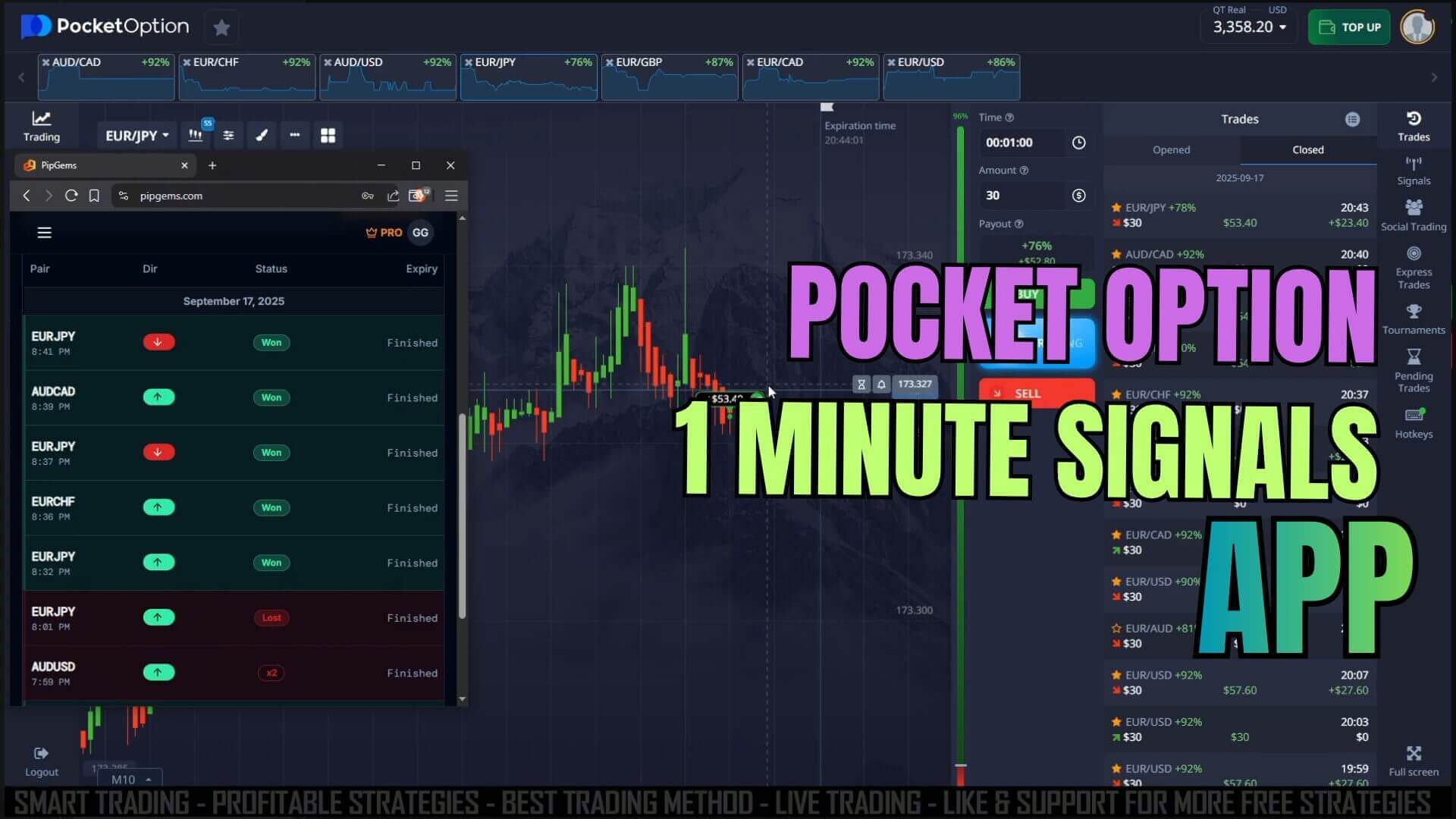
Below the filters sits the results feed — pair, direction arrow, status (Won / Lost) and expiry — so you can see how the recent signals on your selected pairs actually resolved before you commit to the next one.
Why Add More Pairs?
More selected pairs means more signals per hour — but the reason for expanding the list mid-session is narrower than that. Payouts differ from pair to pair, and adding pairs that Pocket Option pays more on gives you better options to choose from when two signals arrive close together. You are not trying to take every signal; you are trying to have a well-paid one available when you do take one.
Check the Payout Before You Enter
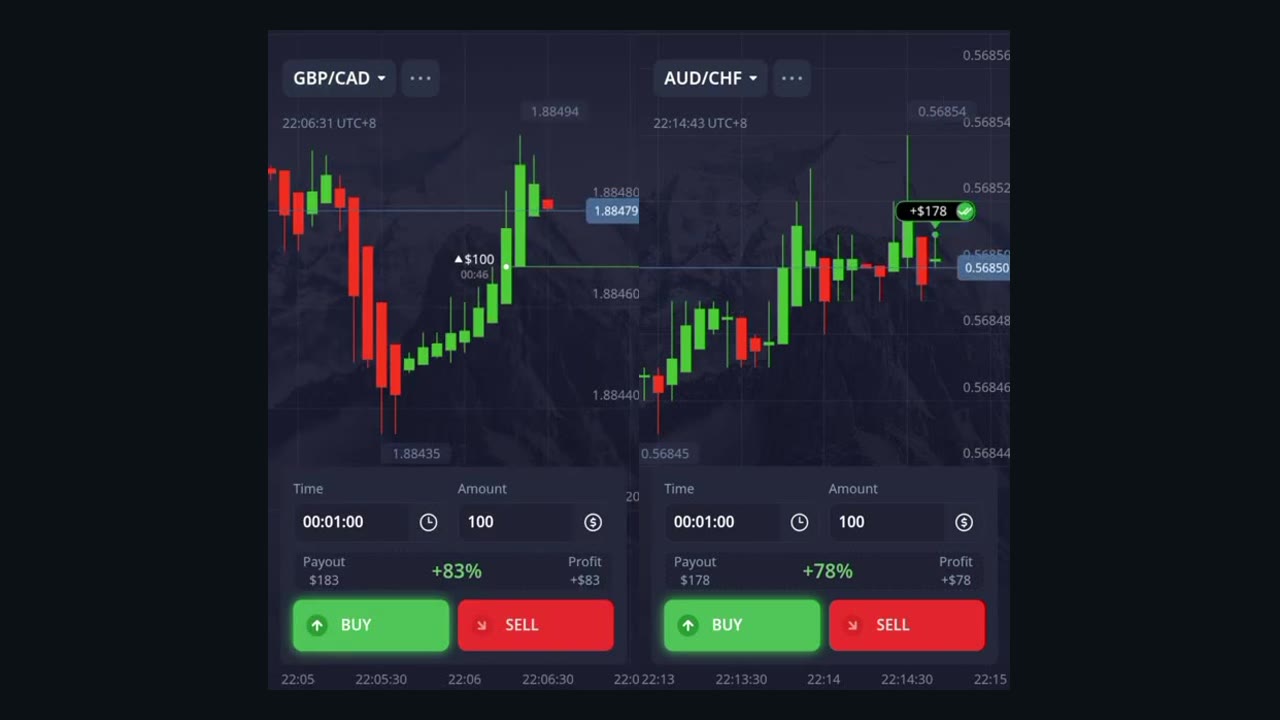
This step takes three seconds and changes the maths of every trade. In the Pocket Option asset search, each pair shows its current percentage next to the name. In the session, searching "eur" returns EUR/CHF, EUR/GBP and EUR/USD all at +92% — while the pairs actually traded ranged from +78% (AUD/CHF) to +83% (GBP/CAD) to +92% (EUR/GBP).
On a $100 stake that spread is the difference between $78 and $92 of profit for the exact same risk of $100. Over a run of trades, taking the 92% pair instead of the 78% one when both have a valid signal materially changes where you end up — a loss costs the same either way, but a win pays 18% more.
The Trade Routine
- A signal appears in the PipGems feed for one of your selected pairs, with a direction.
- Switch to Pocket Option and open the non-OTC version of that pair — never the OTC twin.
- Glance at the payout percentage. If it is poor and another signalled pair pays better, take the better one.
- Set the expiry to 00:01:00 and the amount to your fixed stake ($100 throughout this session).
- Press BUY for an up signal or SELL for a down signal, then leave it alone until expiry.
That is the entire loop. There are no indicators to read on the chart and no discretionary judgement about candles — the only decisions are which signalled pair to take and whether the payout justifies it.
What the Session Actually Produced
The video does not hide the losing trades, which is the main reason it is worth watching. Across roughly twenty minutes of screen time:
- AUD/CHF — a SELL at 78% payout, then later a BUY that closed +$178. The app's own feed logs AUDCHF as Won.
- GBP/CAD — a BUY into a clean push at 83% payout, closing +$183. Logged as Won.
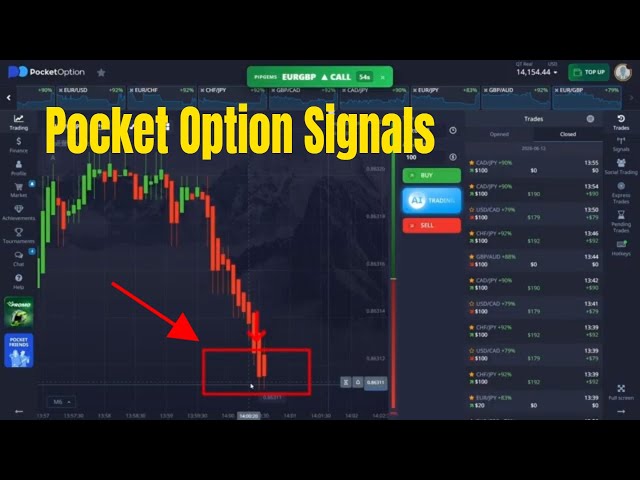
- EUR/GBP — the honest one. The first trade lost (the feed shows EURGBP as Lost), the second came back roughly break-even, and the third closed green at +$192 on the 92% payout.
- EUR/AUD — a SELL at 85% payout taken near the end of the session.
The EUR/GBP sequence is the realistic picture of how signal trading goes: three trades on the same pair, three different outcomes. A trader who quit after the first one would have booked only the loss; a trader who doubled up after it would have been taking on far more risk than the setup justifies. Fixed stake, same size every time, is what makes a sequence like that survivable.
Watch the Full Mobile Session
See the pair filters, the payout checks, and every trade from entry to expiry — including the losing EUR/GBP entry:
Risk Management Rules
- Non-OTC only. If the live market is closed and only OTC versions are available, sit out rather than forcing the signal onto a synthetic chart.
- Fixed stake. The session uses the same $100 on every trade. Never increase the size after a loss to win it back.
- Match the expiry to the interval. 1-minute signals belong on 1-minute trades — using a longer expiry on a short signal changes what you are betting on.
- Prefer the better payout when two signalled pairs are both valid. Same risk, more reward.
- Cap the session. A handful of well-paid trades beats chasing every signal in the feed.
- Start on a demo account until the app-switching routine is second nature — fumbling between two apps is how good signals get entered late.
The Verdict
This one earns 4.5 out of 5. The workflow is genuinely mobile-first — two apps, a fixed stake and a 1-minute expiry, with no chart analysis required — and the non-OTC rule is a real, checkable edge that most signal users overlook. Showing the EUR/GBP loss and the break-even alongside the wins is what pushes it above the usual highlight-reel session. The half point comes off for the app-switching itself: a fast signal on a 1-minute expiry leaves little room to hop between apps, check a payout and place the trade, so execution speed becomes the limiting factor rather than signal quality.
#PocketOption #PipGems #ForexSignals #MetaTrader #NonOTC #TradingSignals #MobileTrading #ForexTrading #TradingStrategy #BinaryOptions
This content is for educational purposes only and is not financial advice. Trading involves substantial risk; you can lose some or all of your capital. No result is guaranteed and past performance does not indicate future results. Trade only what you can afford to lose.