How the Strategy Works with Pocket Option?
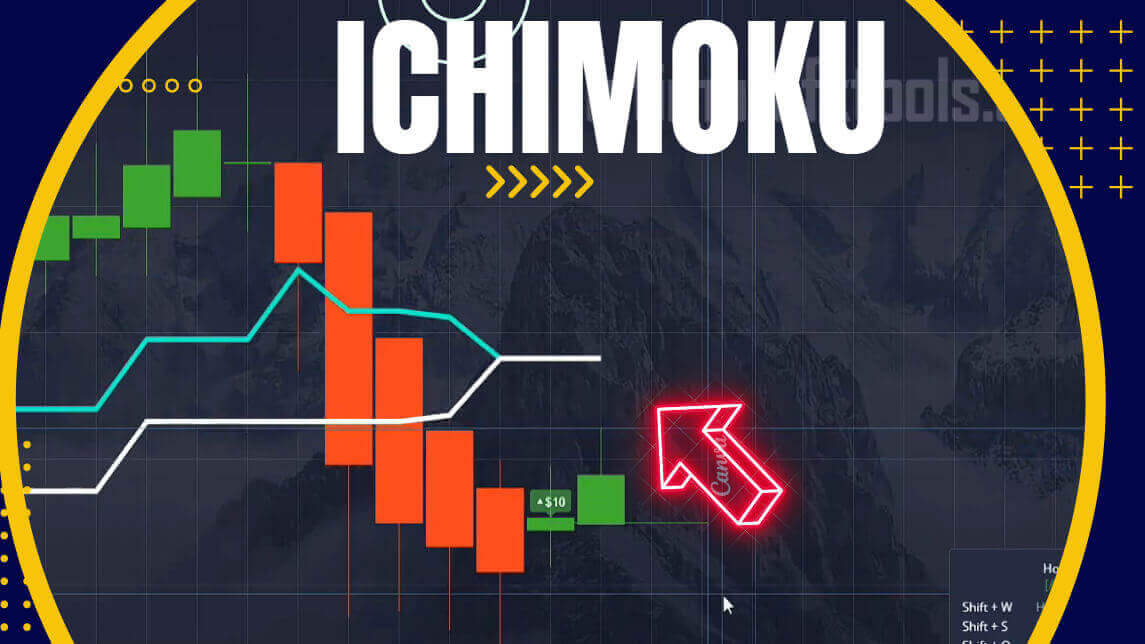
The "2 lines Ichimoku" approach strips the Ichimoku Kinko Hyo indicator down to just its two fastest components - the Tenkan-sen and the Kijun-sen - and reads the way they cross for a directional cue. Instead of watching the full cloud, spans, and lagging line, you focus on these two moving-average-style lines to keep the chart readable on Pocket Option's short binary timeframes. It is a discretionary approach, not an automated system, and like any moving-average method it works better in trending conditions than in flat, choppy ranges.
What the Two Ichimoku Lines Do
The Tenkan-sen (conversion line) is the faster of the two - it reacts quickly to recent price and roughly tracks short-term momentum. The Kijun-sen (base line) is slower and represents the medium-term balance point of price. When the faster Tenkan crosses above the slower Kijun, it suggests short-term momentum is turning up; a cross below suggests it is turning down. Because both lines are derived from midpoints of recent highs and lows rather than closing prices, they tend to sit closer to the middle of the range and can smooth out some of the noise a raw moving average would show.
Settings, Timeframe and Entry Rules
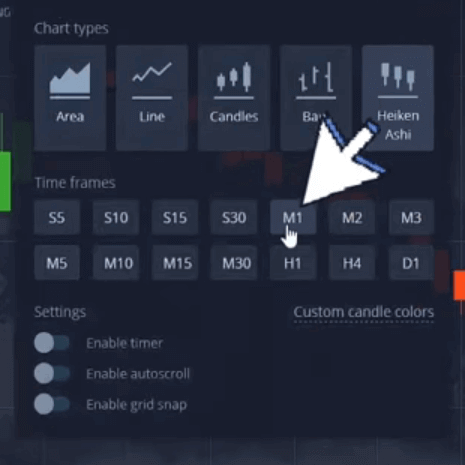
Set the chart timeframe to one minute for a detailed short-term read. Many traders pair this with a Heiken Ashi chart type, whose averaged bars make the direction of each swing easier to see at a glance.
For the indicator itself, one common configuration is Tenkan 12, Kijun-sen 23, and Senkou Span B 45. These are a starting point, not a magic setting - test them on a demo account and adjust to the pair and session you trade. In the indicator's display options, hide everything except the two lines so the chart stays uncluttered.
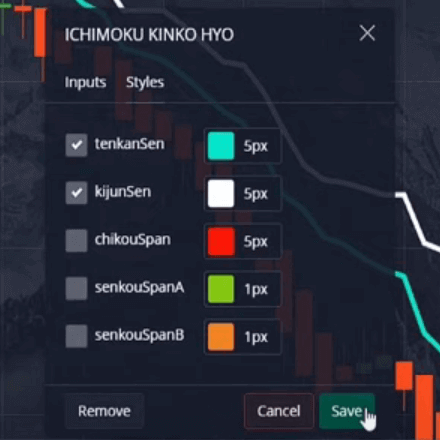
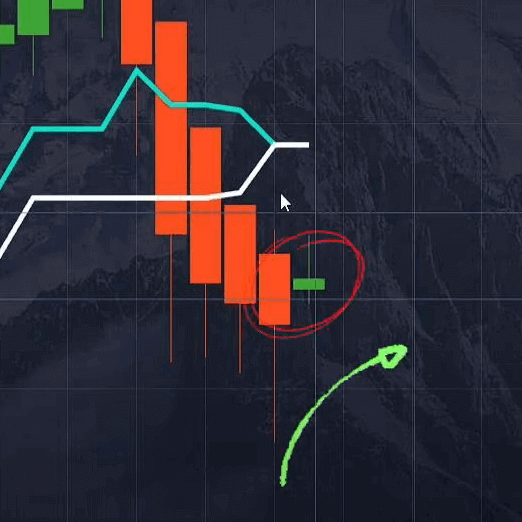
A basic entry cue appears when the two lines cross and the current bar closes in the same direction - for example, the Tenkan crossing above the Kijun as an up bar forms points to a possible upward move. A short expiry of around two to three minutes suits this one-minute setup. Waiting for the bar to close before acting helps filter out crosses that fizzle mid-candle.
Where It Struggles: Chop and Whipsaw
Be honest about the weakness of any crossover method: the Tenkan/Kijun cross lags price and produces frequent false signals when the market is ranging. In a sideways, low-volatility stretch the two lines can cross back and forth repeatedly, each one looking like a valid signal and each one reversing shortly after. This "whipsaw" is where most losses on a simple crossover system come from. Adding a confirmation filter - a trend read from a higher timeframe, or an oscillator such as OsMA or a Super Trend line - and simply standing aside when price is flat can cut down on those low-quality entries. Reading raw price context matters as much as the lines themselves; the broader Pocket Option strategy roundup covers other filters worth pairing with this one.
Realistic Expectations
Treat this as one tool among several, not a complete system. It gives a clear, mechanical directional cue that is easy to follow, but no indicator setting removes the uncertainty of short-term price moves. Journal your trades, review which market conditions the crosses actually worked in, and expect losing streaks to happen. Want the full library of indicators and strategies to test alongside it? Lifetime access is a one-time $39.
Risk Management
Only trade money you can afford to lose, and never stake your whole balance on a single position. A sensible approach is fixed-fractional staking - risking a small, constant percentage of your account per trade - combined with a hard daily loss cap that stops you for the session once it is hit.
A warning on Martingale: the Martingale method - doubling or increasing your stake after every loss to "recover" - does not reduce risk. Each binary trade is independent, so a normal losing run makes the required stake balloon until it exceeds your balance and wipes out the account. Avoid it. Use fixed, planned position sizing instead and accept that any single trade can lose.
Frequently Asked Questions
Does this strategy win every trade?
No. No indicator or strategy wins every trade. The 2 lines Ichimoku cross is a lagging signal that whipsaws in ranging markets, so losing trades are a normal part of using it. Manage risk on the assumption that any given entry can lose.
Why only two Ichimoku lines instead of the full indicator?
Hiding the cloud and the spans keeps the chart clean on fast binary timeframes so you can read the Tenkan/Kijun cross quickly. The trade-off is that you lose the extra context the full Ichimoku provides, which is why a separate confirmation filter helps.
What timeframe and expiry should I use?
This write-up uses a one-minute chart with an expiry of roughly two to three minutes. Those are starting points - test different combinations on a demo account first and adjust to the pair and session you trade.
This content is for educational purposes only and is not financial advice. Trading involves substantial risk; you can lose some or all of your capital. No result is guaranteed and past performance does not indicate future results. Trade only what you can afford to lose.