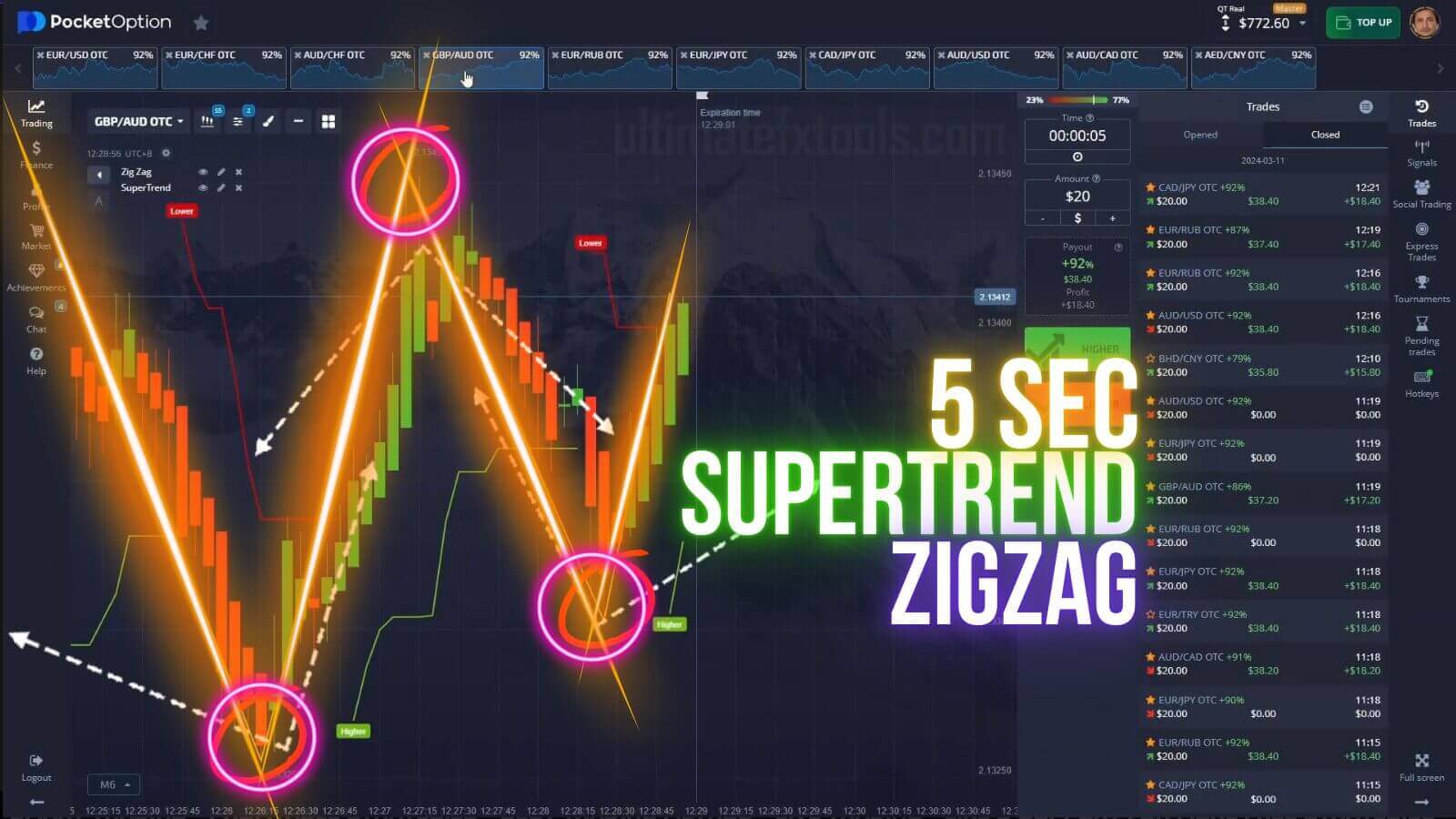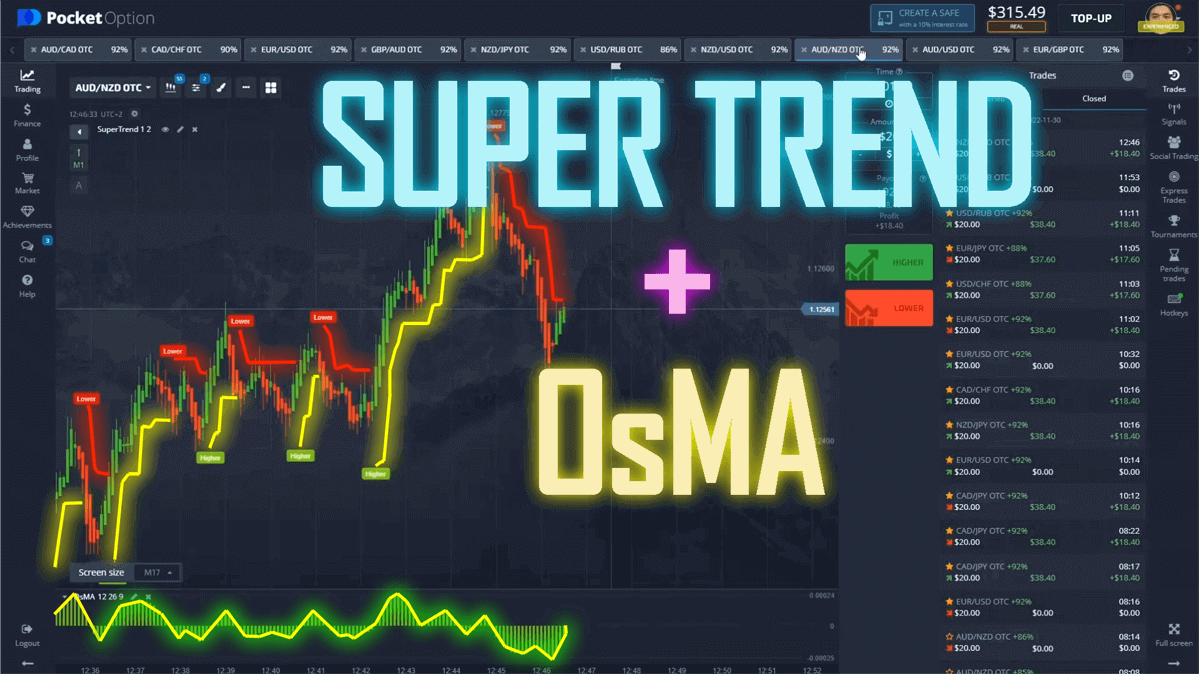
Super Trend and OsMA is a two-tool setup for the Pocket Option OTC market: one indicator reads the direction of the move, the other times the entry into it. Super Trend tells you which side of the market to lean on; OsMA tells you when momentum is actually shifting. Used together on a closed candle, they filter out many low-quality trades you would take on either tool alone. First, an honest note on OTC pairs: they are synthetic instruments the platform prices itself, not a live interbank feed, so they can move in ways that ignore outside news. That is why a mechanical, rules-first approach matters here.
What Super Trend Plots
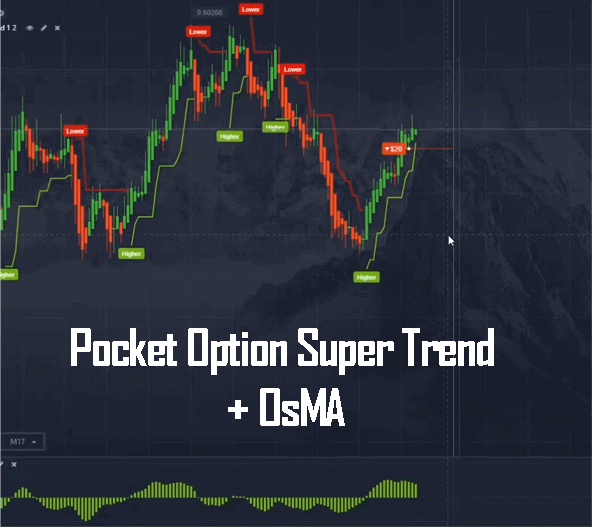
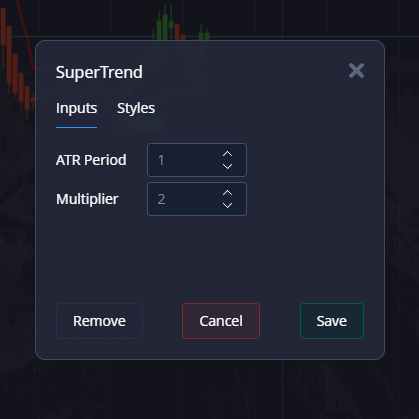
Super Trend is an ATR-based trend filter: a single line that sits below price and turns green in an uptrend, then flips above and turns red when the trend reverses. Built on Average True Range (default ATR period 10, multiplier 3), it adapts to volatility — widening when the market is active, tightening when it is calm. Its strength is clarity: green line, look only for up trades; red line, look only for down trades. Its weakness is lag. Super Trend confirms a trend only after it has begun, and in a sideways range it whipsaws — flipping colour on small moves and firing false direction changes. That is the biggest reason to stand aside when price is stuck in a flat channel. For the tool on its own, see the Super Trend indicator on Pocket Option.
What OsMA Plots
OsMA — the Oscillator of Moving Average — is the MACD histogram: it plots the distance between the MACD line and its signal line as bars around a zero line. When the bars rise above zero, upside momentum is building; when they fall below zero, downside momentum is building. OsMA reacts earlier than Super Trend, so it is your timing tool, catching the moment momentum turns before the trend line has flipped. The trade-off is noise: on fast OTC candles it can flicker, printing a small opposite bar that means nothing. You never act on OsMA alone — you use it to time an entry in the direction Super Trend has confirmed. It also pairs with other tools, as in OsMA and EMA and OsMA and Vortex.
Setup and Settings
Keep the configuration simple so both tools stay readable under a short expiry:
- Super Trend: start with ATR period 10 and multiplier 3. Very short values (an ATR period of 1) make the line flip on almost every candle and drown you in false signals, so keep the defaults until you have a reason to change them.
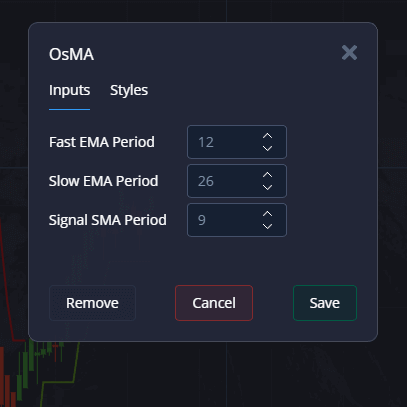
- OsMA: standard MACD inputs — 12 fast EMA, 26 slow EMA, 9 signal line. This reacts quickly enough for one-minute reading without twitching on every bar.
- Chart: one clean, liquid pair you know well, and let each candle fully close before you read it.
Entry Rules
Direction from Super Trend, timing from OsMA, confirmation from the candle close:
- Higher (up): the Super Trend line is green and below price, OsMA crosses above zero or turns up, and you enter on the close of the confirming candle.
- Lower (down): the Super Trend line is red and above price, OsMA crosses below zero or turns down, and you enter on the confirming candle's close.
- Stand aside: Super Trend is flipping colour repeatedly, OsMA disagrees with the line, or price is drifting flat with no direction. No agreement means no trade.
When It Fails
The setup breaks down in the conditions that break most trend tools: tight ranges and low volatility, where Super Trend whipsaws and OsMA flickers around zero at once. It can also mislead you right after a sharp spike, before Super Trend has caught up to a reversal. Treat those moments as a signal to wait. Risk control is what keeps the method usable — stake a small, fixed fraction of your balance per position, cap how many trades you take in a session, and stop for the day at a preset loss limit. No indicator combination removes losing trades; the goal is consistency, not a magic signal. Practise on a demo account until the reads feel automatic before risking real funds.
Pocket Option Super Trend and OsMA
FAQ
Is the Super Trend and OsMA combination reliable on OTC pairs?
It is a decision-support setup, not a certainty. OTC pairs are synthetic and priced by the platform, so no combination of indicators can predict them. The pairing simply filters out weak trades by requiring Super Trend and OsMA to agree before you act. Risk management, not the indicators, is what carries you over time.
What settings should I start with?
Super Trend at ATR period 10 and multiplier 3, and OsMA on standard MACD inputs (12, 26, 9). Read the one-minute chart and let each candle close before acting. Every tool referenced here is included with the single $39 lifetime plan.
Why do I keep getting false signals in a range?
Because both tools are momentum-driven, and a flat market has no momentum to read: Super Trend flips on tiny moves while OsMA hovers around zero. The fix is not new settings but selectivity — when direction is unclear, stand aside.
This content is for educational purposes only. Trading involves risk. Past results do not guarantee future outcomes. Always practice responsible money management and limit your daily trades to avoid large losses.