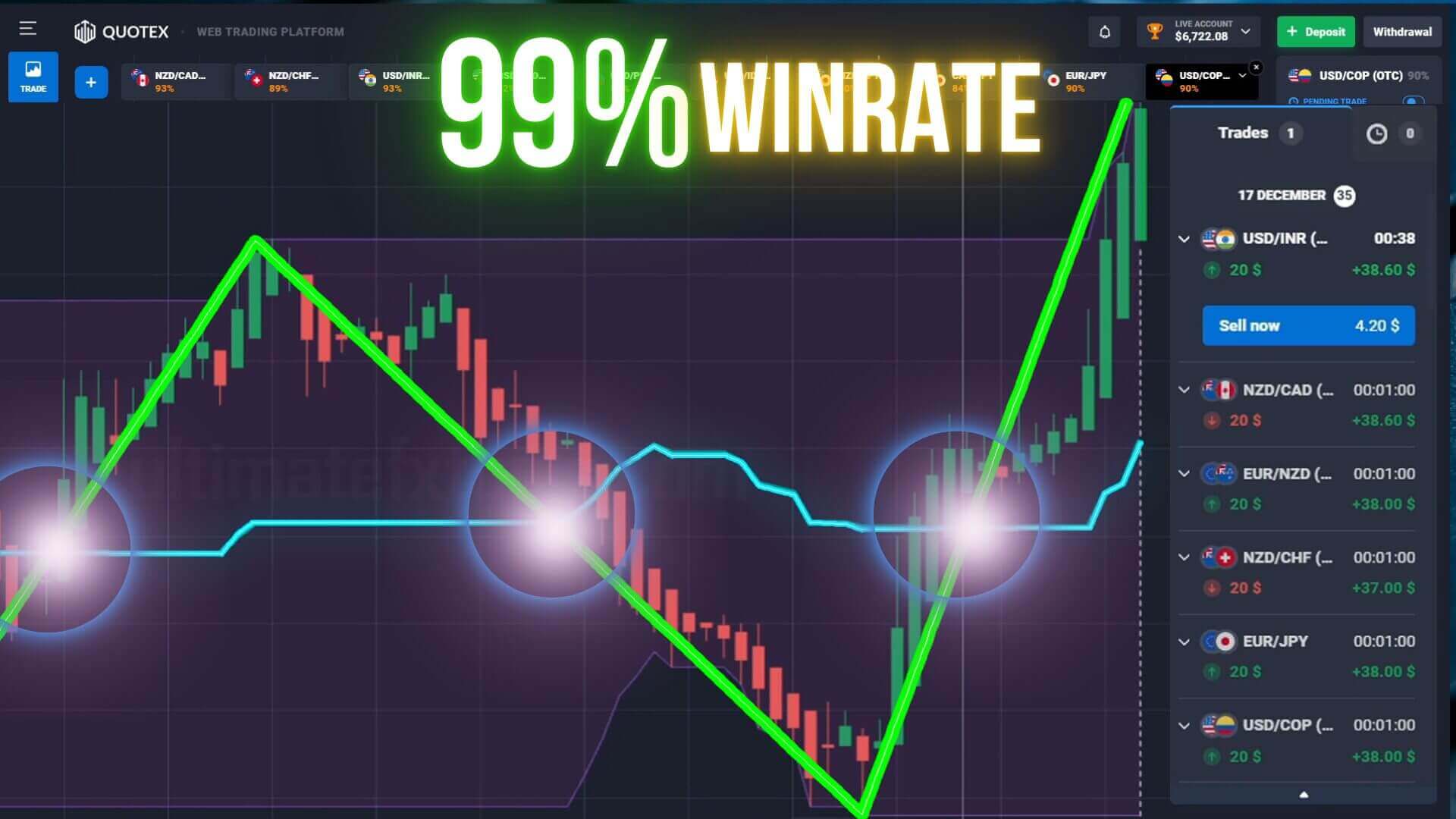
Only 2 Lines Zigzag Donchian Hack
The word "hack" here is a nickname, not a promise. Nothing beats a trading platform or removes losing trades — this is a shortcut for stripping a chart down to two lines so you can read direction quickly instead of squinting at six overlapping indicators. The lines are the Zigzag Line and the Donchian Channel, and the caveat below matters as much as the setup.
What the ZigZag Line Actually Does
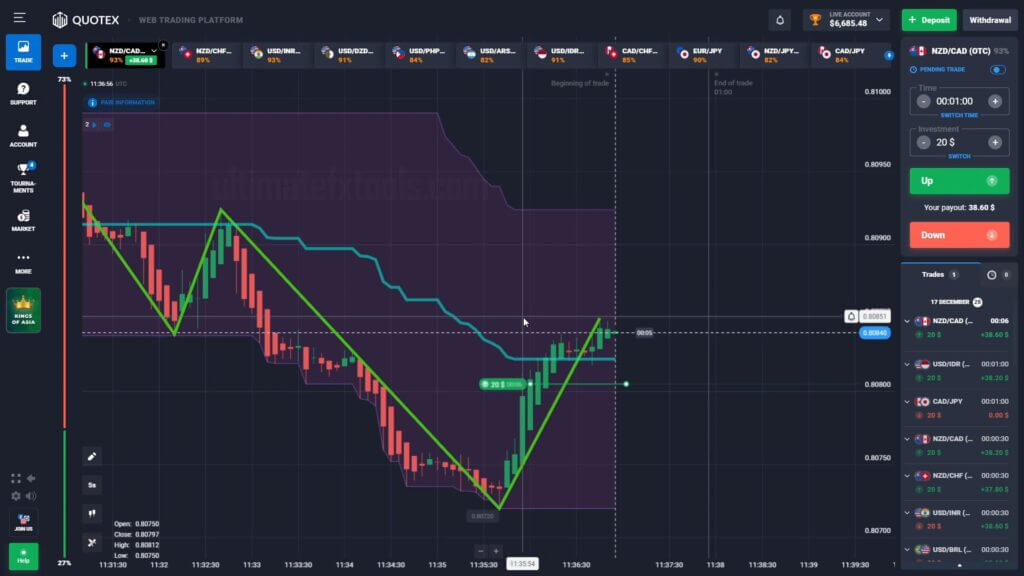
ZigZag is not a signal generator and was never designed as one. It is a filter that connects significant highs and lows with straight lines, ignoring any move smaller than a threshold you set. Its only job is to answer "which turning points mattered?" A pattern of higher highs and higher lows is easy to see when ZigZag draws it for you, and much harder to read in raw candles.
The Repainting Caveat — Read This Before You Trade It
ZigZag repaints, and most tutorials skip this. The last leg is provisional: while a swing is forming, ZigZag does not know whether the current candle is the extreme, so it redraws that segment as new prices arrive. A leg that appears to confirm an upturn can be erased and redrawn lower a few candles later. On a historical chart every turn looks perfectly timed — only because the past legs are locked in. Live, the leg you are staring at can still move.
This is not a defect; it is how the tool works. But it means you must never treat a fresh ZigZag turn as an entry trigger by itself. Only completed legs are trustworthy, and by then the turn is old news — which is exactly why the second line exists.
What the Donchian Channel Adds
The Donchian Channel plots the highest high and lowest low of the last N candles, plus a middle line between them. Unlike ZigZag it does not repaint: once a candle closes, the bands are fixed. It answers a different question — is price breaking out of its recent range, or wandering inside it? ZigZag gives you the shape; Donchian says whether there is force behind it.
Setting Up the Two Lines
Add ZigZag with its standard settings: Depth 12, Deviation 5, Backstep 3. Depth is the minimum candles between swings, Deviation the minimum move in points, Backstep how far back the line may revise itself. Raising Depth to around 20 gives fewer, larger legs and less redrawing; lowering it makes the line twitchier. Add the Donchian Channel on the same chart with a period of 20, middle line visible. Then remove everything else — two lines only is the whole point.
Reading the Cross
The setup looks for the ZigZag line crossing the Donchian middle line while price pushes toward a band:
- Up bias: the ZigZag leg crosses above the middle line with price in the upper half of the channel or tagging the upper band.
- Down bias: the leg crosses below the middle line with price in the lower half.
- Stand aside: the channel is flat and narrow, or price is parked on the middle line. A cross inside a dead range is noise — the most common source of poor entries here.
Wait for the candle to close before acting — an unclosed candle can withdraw the very cross you are reacting to. Short expiries around 30 seconds suit this reading: long enough for a breakout to travel, short enough that you are not holding through a reversal. Longer sessions add exposure without adding information.
When It Fails
In a ranging market the bands go flat, ZigZag flips on every small swing, and you get crosses that lead nowhere. Around news releases price gaps through the bands and the channel is instantly stale. On very low timeframes the redrawing is at its worst. Recognising these conditions and not trading them does more for consistency than any parameter tweak.
Risk Management
Two lines will not rescue a bad risk plan. Stake a small fixed fraction of your balance per trade, cap your trades per session, and stop for the day at a preset loss limit. Losing trades are normal, so the aim is repeatable decisions. Practise on a demo account until you can tell a real cross from a repainted one without hesitating — that comes from screen time, not settings. See also this 30-second OTC ZigZag approach, the Donchian Channel with Schaff Trend Cycle, and a one-minute Donchian and ATR variation.
FAQ
Does the ZigZag indicator repaint?
Yes. The most recent leg is redrawn as new candles arrive, because ZigZag cannot know a swing extreme until it has passed. Past legs are fixed, which is why historical charts look far cleaner than live trading feels. Treat ZigZag as structure, never as a trigger on its own.
Is the "2 lines hack" a way to beat the platform?
No. It is a nickname for a minimal chart setup, nothing more. No indicator combination wins every trade or removes risk. The benefit is clarity: fewer lines means faster, calmer decisions under a short expiry.
Do I need paid indicators for this?
No. ZigZag and Donchian both ship with MetaTrader, so you can build this for free. Our $39 lifetime plan covers the wider library if you want alert-based versions, but it is not required for the two-line method.
This content is for educational purposes only. Trading involves risk. Past results do not guarantee future outcomes. Always practice responsible money management and limit your daily trades to avoid large losses.


