Pocket Option Risk Management: The Honest Guide
Risk management is the part of trading that decides how long you stay in the game. On a fixed-time platform like Pocket Option, every trade closes on a set expiry and settles as either a payout or a full loss of the amount you staked, so one oversized position can undo a long run of careful decisions. This guide is deliberately honest: risk management does not create winning trades, and no method removes losing ones. What it does is limit the size of your losses so that a bad streak — which every trader hits — does not empty your account. Fixed-time and binary options carry a high risk of total loss, and most short-term traders lose money over time. Treat the rules below as the foundation for every strategy.
Core Risk Management Rules
1. Risk a small, fixed fraction per trade
The single most important habit is fixed-fractional staking: risk the same small percentage of your current balance on every trade — commonly 1% to 2%, and rarely more than 5%. On a $500 balance that is roughly $5 to $10 per position. Because the stake is a percentage, it shrinks automatically when your balance falls, which slows a losing streak instead of accelerating it. A dollar amount you simply "feel like" risking is not a plan; a fixed fraction is.
2. Set a hard daily and per-session loss cap
Decide, before you open the platform, how much you are willing to lose in one session and in one day — for example, three losing trades in a row or 10% of your balance. When you hit that cap, you stop. The cap protects you from the mindset of trading to "win it back," where most large losses actually happen. Write the number down and close the app when you reach it.
3. Never use martingale or double-after-a-loss
This is the most important line on the page. Martingale — doubling your stake after every loss to recover the previous ones — is the opposite of risk management, not a version of it. Each fixed-time trade is an independent event; a loss does not make the next trade more likely to win. What doubling does guarantee is that a normal run of five or six losses in a row turns a tiny stake into a balance-ending one. Keep your stake constant whether you just won or just lost.
4. Size positions with discipline, not emotion
Your position size should come from your rule, not from how confident a setup feels. "This one is certain" is exactly the thought that precedes an oversized loss. Keep every stake inside your fixed fraction, even on the setups you like most.
5. Keep a trade journal
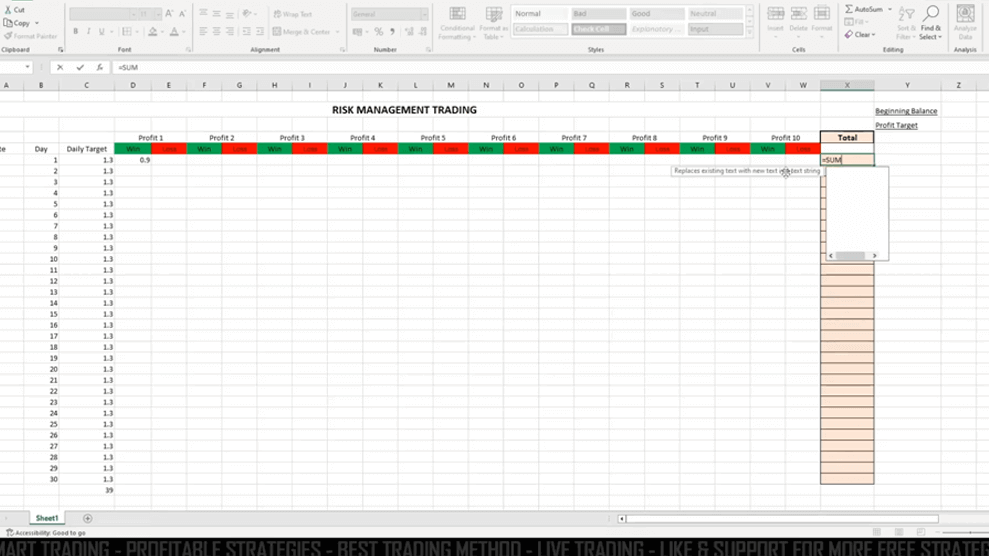
Record every trade: the pair, the time, the setup, the stake, and the outcome. A journal turns impressions into data, and it exposes the leaks — revenge trades, oversized bets, the hours you trade worst — that you would otherwise repeat. A simple spreadsheet is enough.
6. Trade only money you can afford to lose — and demo first
Never fund an account with rent, bills, or borrowed money. Use only capital whose total loss would not change your life, because on a fixed-time platform the total loss of a stake is a normal outcome. Before risking real funds, practice the rules above on a demo account until sizing and stopping feel automatic.
Mistakes That Blow Accounts
Most wiped accounts share the same short list of causes, and almost none of them are about picking the wrong indicator:
- Martingale and revenge trading — chasing losses with larger stakes until one streak ends the account.
- No loss cap — trading "just one more" long past the point of clear thinking.
- Oversized single trades — risking 20%, 50%, or more on a setup that "can't lose."
- Trading scared or borrowed money — pressure that forces rushed, low-quality decisions.
- No record — repeating the same mistakes because nothing is written down.
Fix these five and you have solved most of what actually destroys accounts. For structured tools that help you enforce these limits, see the PipGems risk management app and this AI risk management companion for Pocket Option. Newer traders may also want the beginner tips guide before scaling up their stakes.
FAQ
Does risk management make me profitable?
No. Risk management limits how much you lose on bad trades and bad streaks; it does not create winning trades or guarantee any outcome. Its job is survival and consistency, so a strategy has time to play out.
Is martingale a valid recovery system?
No. Doubling after a loss is the fastest common way to blow an account. Each trade is independent, so a loss does not "owe" you a win, and a normal losing streak scales the stake to a level that wipes the balance. A fixed, small stake is the safer discipline.
How much should I risk per trade?
A common guideline is 1% to 2% of your balance per trade, rarely more than 5%. The exact figure matters less than keeping it small and constant. Every indicator and tool on the site is included in the single $39 lifetime plan if you want to build a full workflow around these rules.
This content is for educational purposes only. Trading involves risk. Past results do not guarantee future outcomes. Always practice responsible money management and limit your daily trades to avoid large losses.