1-Minute Binary Options with the Stochastic Oscillator
One-minute binary options are among the fastest and most demanding ways to trade. With an expiry that close, small bursts of momentum decide the outcome and there is little time to second-guess an entry. The Stochastic Oscillator is popular for these short windows because it reacts quickly to momentum shifts and flags when price may be stretched too far in one direction. This guide explains what the indicator measures, how to configure it, and — just as importantly — where it gives false signals.
What the Stochastic Oscillator Measures
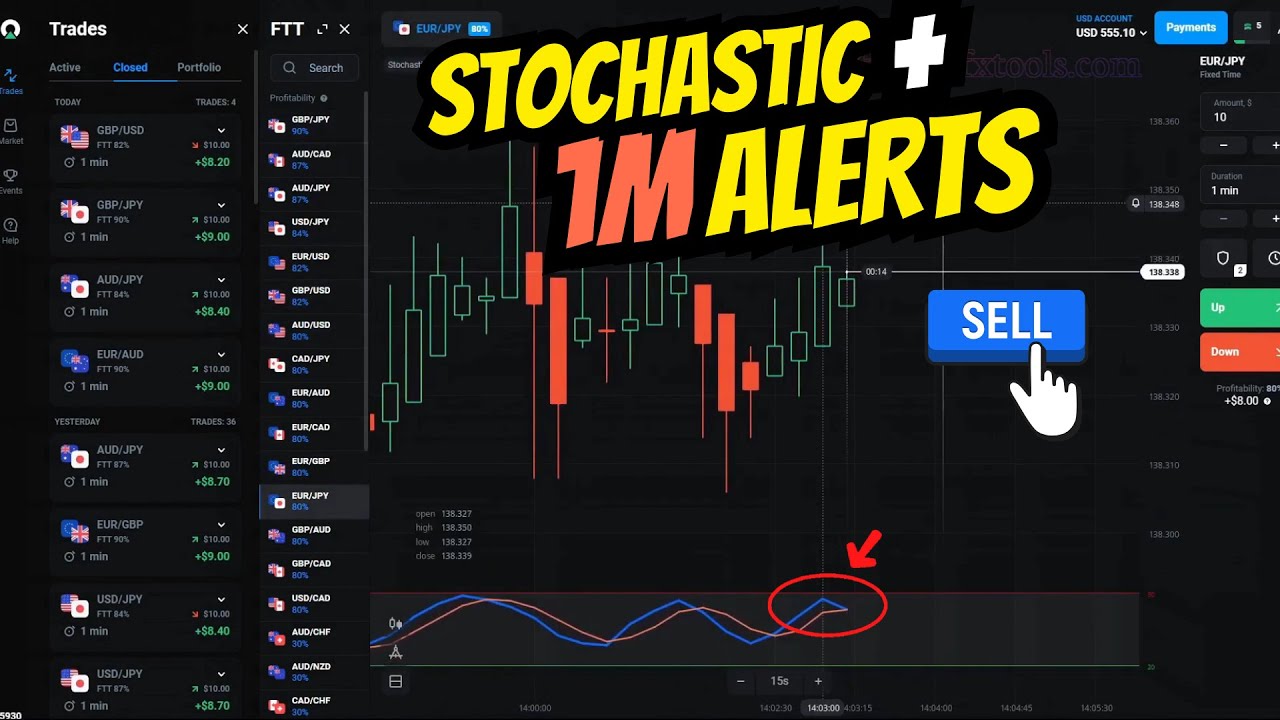
The Stochastic Oscillator compares the current closing price to the high-low range over a set number of candles, plotting the result on a scale from 0 to 100. It is made up of two lines: the %K (the raw calculation) and the %D (a moving average of %K that acts as a signal line). Readings above 80 are traditionally called "overbought" and readings below 20 "oversold," but those labels describe momentum, not a certainty that price will reverse. In a strong trend, Stochastic can sit pinned in overbought or oversold territory for a long time while price keeps running.
Traders watch two things: the level of the lines, and the crossover between %K and %D. A %K cross above %D emerging from a low zone hints at building upward momentum; a %K cross below %D from a high zone hints at the reverse.
Settings, Timeframe, and Entry Rules
For 1-minute expiries, faster settings react sooner but produce more noise. A common fast configuration is %K around 5, %D of 3, with slowing of 3 — tighten or widen these while testing on a demo account. Use liquid pairs such as EUR/USD, USD/CAD, or AUD/USD, and prefer active hours like the London and New York session overlap when spreads are tighter.
A disciplined checklist for a call (up) setup might read:
- Stochastic turning up out of the sub-20 zone with %K crossing above %D.
- A supportive candle — a rejection wick or small bullish reversal candle at a level.
- No strong opposing trend on the higher timeframe pushing against your entry.
A put (down) setup mirrors this: Stochastic rolling down from above 80 with %K crossing below %D, confirmed by a bearish candle. If the indicator, the candle, and the broader context disagree, the highest-value decision is often to skip the trade. Some traders pair Stochastic with a separate signal tool such as the Binary Sniper Pro indicator for a second layer of confirmation rather than acting on the oscillator alone.
Its Weakness in Trends
The single biggest mistake with Stochastic is treating overbought and oversold as automatic reversal signals. During a directional move, the oscillator can flatten at an extreme and stay there. Taking a countertrend put every time Stochastic hits 80 in a rising market is a fast way to accumulate losses. The indicator works best when the market is ranging or a trend is genuinely losing steam, not as a blind fade of every extreme. On a 1-minute chart outcomes are also high-variance, so any single reading tells you far less than a consistent process over many trades.
Realistic Expectations
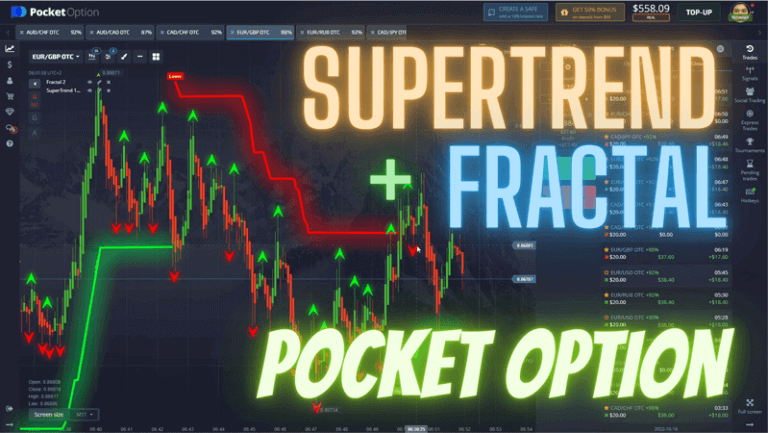
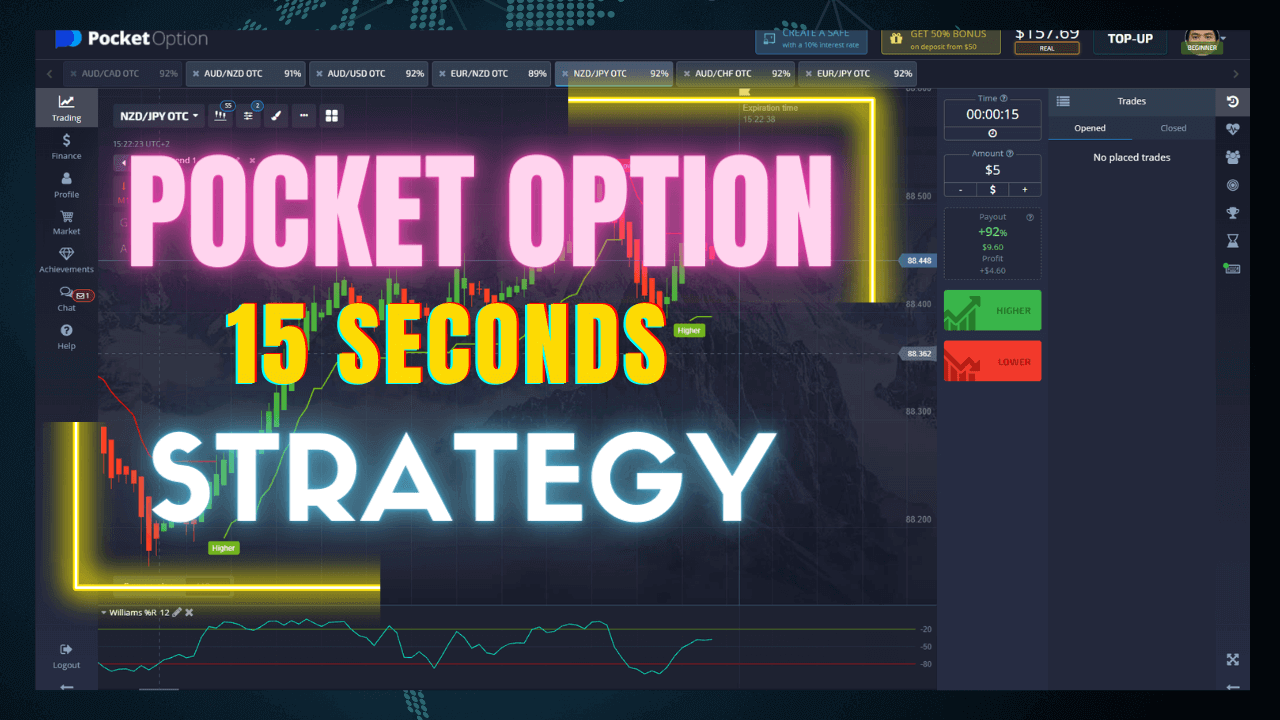
No indicator setting removes uncertainty from short-expiry trading. Stochastic is a filter, not a prediction of the next candle. Expect false signals, expect losing streaks, and judge the approach over a large sample. For other short-window methods, the 15-second Pocket Option strategy and the Pocket Option Super Trend strategy cover related fast-timeframe ideas.
Risk Management
Fast trading amplifies both good and bad decisions, so protecting capital is the priority:
- Risk only a small fixed percentage — many traders use 1–2% of the account per trade.
- Do not use martingale or double your stake after a loss. Chasing losses this way can wipe out an account quickly and is a common cause of blow-ups.
- Cap how many trades you take per hour to avoid overtrading and revenge trades.
- Keep a journal: log the pair, time, Stochastic reading, and outcome so you can review what works.
- Test any configuration on a demo account before risking real money.
The full set of alert indicators and strategy files is available with $39 lifetime access, but the discipline above matters more than any single tool.
Frequently Asked Questions
Does this strategy win every trade?
No. No strategy or indicator wins every trade. The Stochastic Oscillator can improve your read on momentum, but it produces false signals — especially in trends — and 1-minute expiries are high-variance. Treat it as one input in a disciplined process, not a guarantee.
What are the best Stochastic settings for 1-minute trades?
There is no universally "best" setting. Faster values (for example %K 5, %D 3) react sooner but add noise; slower values are steadier but lag. The sensible approach is to test a couple of configurations on a demo account and keep the one that fits your pairs and session.
Why does Stochastic give false signals on fast charts?
Lower timeframes contain more random noise, and overbought/oversold readings do not force a reversal. When price is trending, the oscillator can stay stretched while the move continues, so a crossover alone is not enough — confirm with price action.
This content is for educational purposes only and is not financial advice. Trading involves substantial risk; you can lose some or all of your capital. No result is guaranteed and past performance does not indicate future results. Trade only what you can afford to lose.