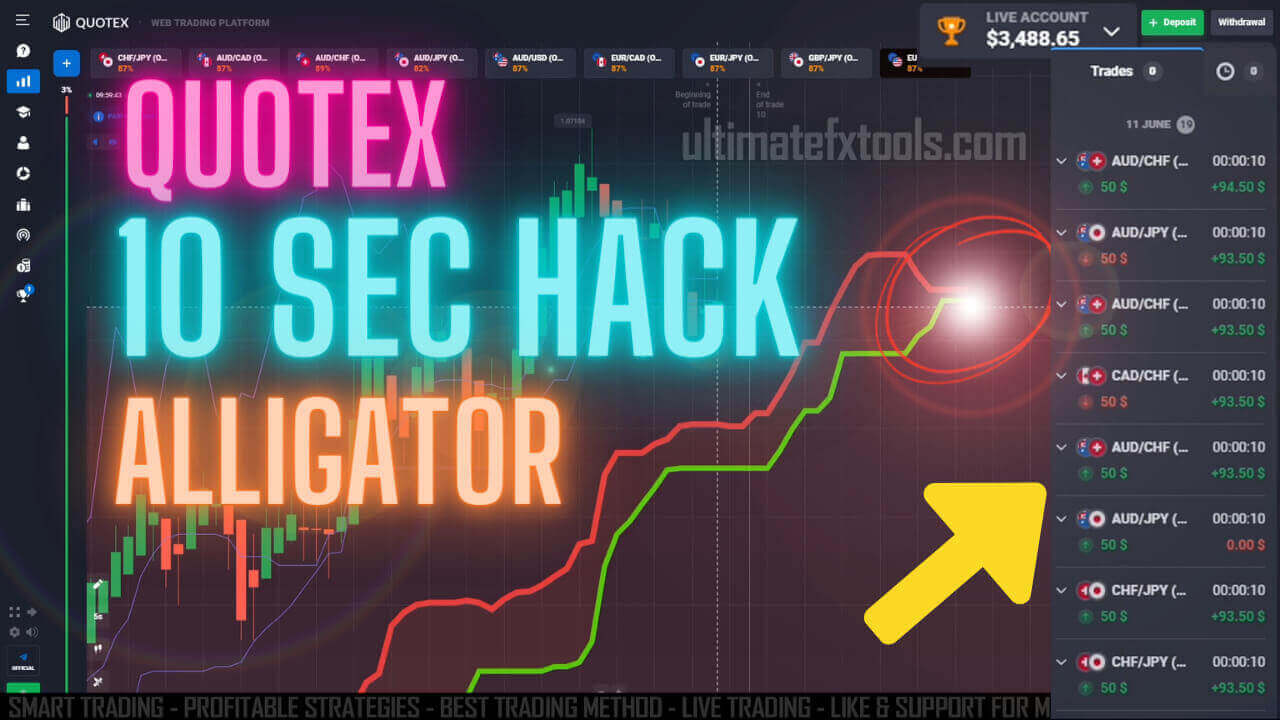
Is the "10 Seconds Hack" Quotex Real?
There is no secret "hack" that forces a Quotex trade to win. In trading communities the word hack is simply slang for a repeatable technique or shortcut, and that is all this page describes: a way to read the Alligator indicator on a Quotex chart. The headline number matters, too: a 10-second expiry is one of the shortest windows a platform offers, and over such a span price is dominated by random noise rather than any readable trend. That makes the outcome close to a coin flip, and no indicator — the Alligator included — can reliably predict a move that small. Treat what follows as a framework for reading the market, not a formula for certain results.
What the Alligator Indicator Actually Plots
The Alligator was created by Bill Williams and is built from three smoothed moving averages plotted over price, each shifted forward into the future:
- Jaw (blue) — a 13-period smoothed average, shifted 8 bars ahead.
- Teeth (red) — an 8-period smoothed average, shifted 5 bars ahead.
- Lips (green) — a 5-period smoothed average, shifted 3 bars ahead.
Because it is built from moving averages, the Alligator lags — it describes what price has already done, not what it is about to do. That lag is the single most important thing to understand before putting it on a fast chart.
Reading the Lines: Sleeping vs. Awake
The whole idea rests on one simple picture. When the three lines are tangled together and drifting sideways, the "alligator is sleeping" — the market is ranging with no trend, and this is exactly when short-expiry trades misfire most. When the lines separate and fan out in order, the "alligator is eating" — a trend is underway and price is pulling away from the averages. Act only when the mouth is clearly open and the lines are stacked in the move's direction; stand aside while they are intertwined.
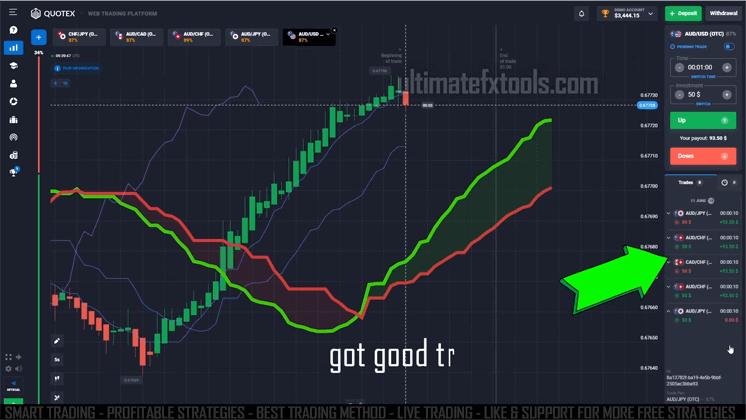
Alligator Settings on Quotex
On Quotex the Alligator is a built-in indicator, so you do not need MetaTrader to add it. The standard Bill Williams configuration is the starting point most traders keep:
- Jaw: period 13, shift 8
- Teeth: period 8, shift 5
- Lips: period 5, shift 3
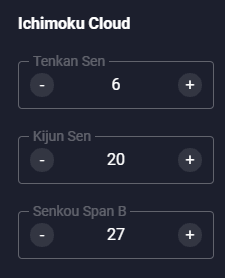
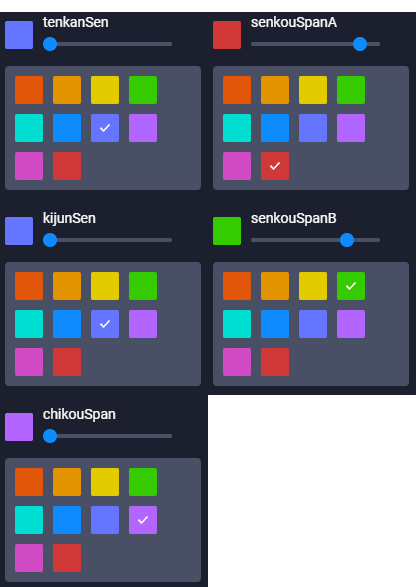
Leave the smoothing on its default (a smoothed moving average applied to the median price) and keep the colours distinct — blue jaw, red teeth, green lips — so the order of the lines is easy to read at a glance. The panels below show the settings and the coloured lines.
A Simple Entry Framework
If you are going to use this at all, wait for structure rather than chasing every flicker:
- Up (buy / call): the lips (green) cross above the teeth and jaw, all three fan upward in order, and price is trading above them.
- Down (sell / put): the lips cross below the teeth and jaw, the lines fan downward in order, and price is trading below them.
- Stand aside: the lines are intertwined or flat. A sleeping alligator is a signal to do nothing, not to force a trade.
Even with a clean fan, remember the lag: part of the move may already be gone by the time the mouth opens.
Why a 10-Second Expiry Is So Dangerous
Ten seconds is barely a heartbeat of market data. Over that window there is almost no trend for a lagging indicator to catch, the spread and any execution delay eat into the tiny move you are betting on, and a single random tick can flip the result. This is why an ultra-short expiry behaves closer to a coin flip than a strategy: the shorter the window, the more the noise dominates and the less any indicator can help. The Alligator reads far better on longer expiries, where a genuine trend has room to develop. For a fuller walkthrough on its own, see our Alligator trading strategy; for how unforgiving these tiny windows are, read the 5-second strategy breakdown. You can also pair it with fractals in the Fractal + Alligator method, or begin with a calmer Quotex easy strategy.
FAQ
Is the 10 Seconds Hack a real hack that always wins?
No. "Hack" is community slang for a technique, not a cheat code. No indicator or setting can guarantee a winning trade, and at a 10-second expiry the outcome is close to random. Anyone promising certain wins is misleading you.
What are the best Alligator settings for Quotex?
Start with the Bill Williams defaults — jaw 13 / shift 8, teeth 8 / shift 5, lips 5 / shift 3 — which is what the built-in Quotex indicator uses. There is no magic setting; the values only describe how quickly the lines react, not whether a trade will win. Every indicator we cover is included in the single $39 lifetime plan on our pricing page.
Can the Alligator predict a 10-second move?
Not reliably. The Alligator is a lagging, trend-following tool that works best when a trend has time to form. Over ten seconds there usually is no trend to read, so it cannot forecast the outcome. Longer expiries give it far more to work with and lead to steadier, more repeatable decisions.
This content is for educational purposes only. Trading involves risk. Past results do not guarantee future outcomes. Always practice responsible money management and limit your daily trades to avoid large losses.


