3 Indicators for Binary Options (and Why "Will Win" Is Misleading)
The idea that a fixed set of three indicators "will win" binary options is one of the most persistent myths in retail trading. Let's be clear: no combination of indicators guarantees winning trades. Indicators are calculations drawn from past price data. They help you read momentum, trend and volatility, and they filter out some low-quality setups. What they cannot do is remove uncertainty or predict the future. They improve your decision-making; they do not deliver certainty.
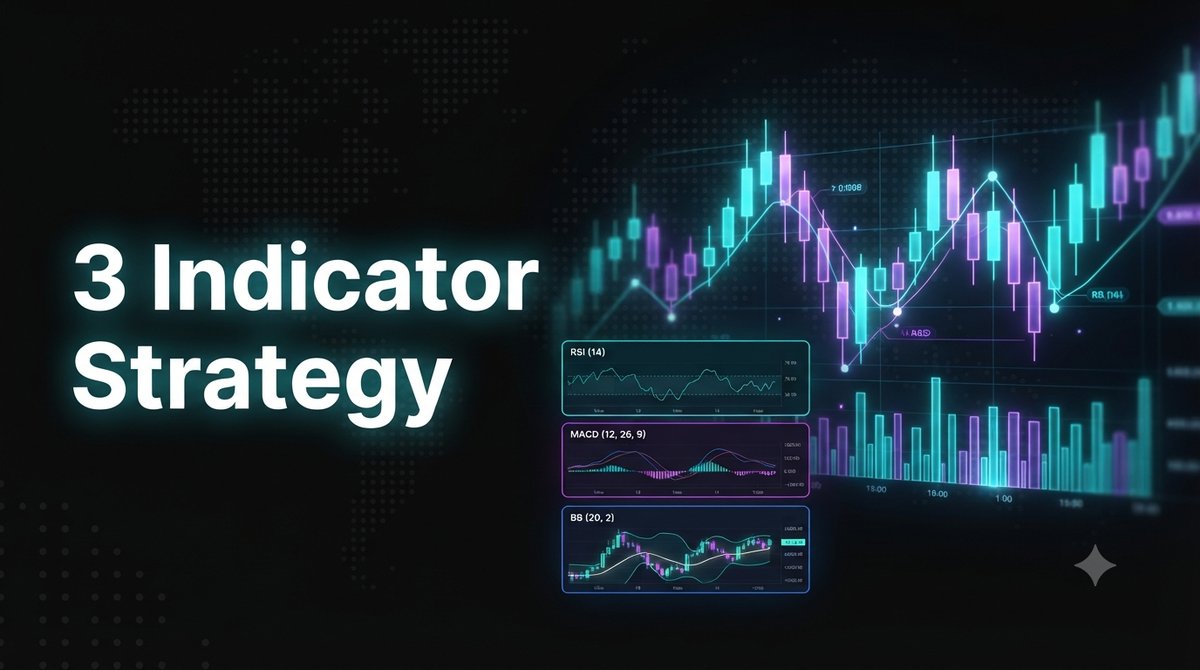
Below are three indicators that each measure a genuinely different thing. Used together, they give a more balanced view of the market than any single tool. That is the real value of combining indicators, not a promise of results.
The Three Indicators and What Each One Does
1. Moving Average (Trend)
A moving average smooths price into a single line so you can see the underlying direction. A common approach is to watch whether price is trading above or below a medium-length average (for example a 20-period EMA), which tells you the prevailing bias. On its own, a moving average lags price because it is built from past candles, so it confirms a trend rather than calling the turn.
2. RSI (Momentum)
The Relative Strength Index (RSI) is an oscillator that measures the speed and size of recent price moves, typically scaled from 0 to 100. It highlights when a move may be stretched (overbought or oversold) and can show momentum fading before price turns. RSI is most useful as a filter: for example, only taking trend-aligned setups when momentum agrees.
3. Bollinger Bands (Volatility)
Bollinger Bands wrap a moving average in an upper and lower band based on standard deviation, so they expand when volatility rises and contract when it falls. They give context: a touch of the outer band during a strong trend means something different from a touch during a flat, ranging market. This volatility read is information the other two tools do not provide.
How the Three Combine (Independent Confirmation)
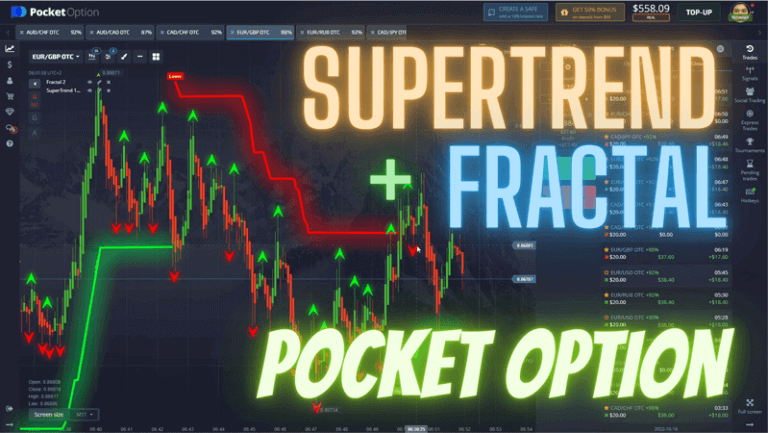
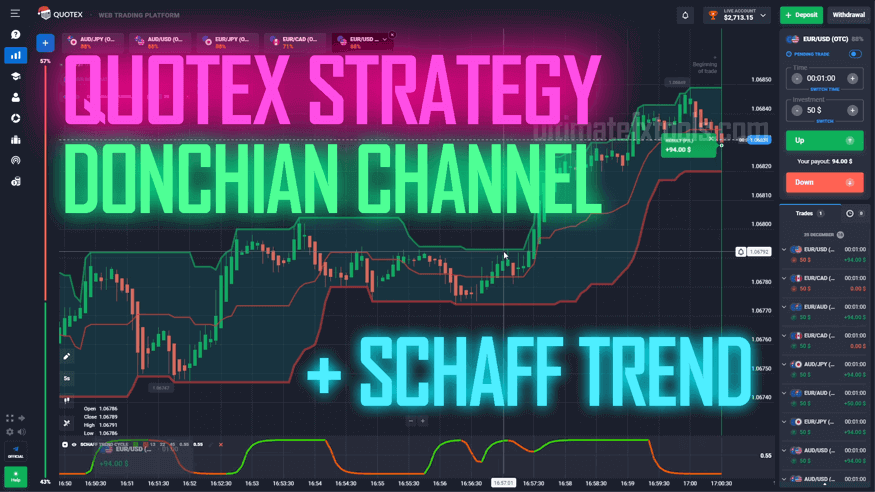
These three were chosen because they belong to different families: trend, momentum and volatility. That matters. If you instead stacked two oscillators of the same type, say RSI and Stochastic, they would often move together and rise and fall on the same data. Two tools telling you the same thing is correlation, not independent confirmation, and it can give a false sense of agreement. Genuine confirmation comes from tools that measure different aspects of price. A simple, sober way to combine them: use the moving average to define direction, use RSI to check that momentum supports that direction, and use Bollinger Bands to judge whether volatility conditions are reasonable for entry. If you want to explore related multi-indicator setups, the Donchian Channel and Schaff Trend Cycle and Super Trend walkthroughs show the same logic applied to other tools.
Why "Will Win" Is Misleading
Even when all three indicators line up, the market can still move against you. Indicators describe conditions that have often preceded a move; they do not make that move happen. News, low liquidity, spreads and simple randomness all affect short-term outcomes. Anyone promising that three indicators "always win" is overselling. A realistic goal is a repeatable process that keeps you in higher-quality setups over many trades, while fully accepting that individual trades can and will lose.
Timeframe and Entry Guidance
- Match timeframe to expiry: if you trade short expiries, read signals on a correspondingly short chart, and confirm on one higher timeframe.
- Wait for alignment: only act when trend, momentum and volatility broadly agree, and skip the trade when they conflict.
- Avoid the news: indicators behave poorly around high-impact releases, so stand aside during them.
- Practice first: test the combination on a demo account before risking real money.
Risk Management
Risk control matters more than any indicator. Risk only a small, fixed portion of your account per trade so that a losing streak, which is normal, cannot wipe you out. Do not chase losses. In particular, avoid martingale-style doubling after a loss: it grows your exposure fastest at exactly the wrong moment and can drain an account in a handful of trades. Keep a simple journal so you can review what is actually working. UltimateFXTools bundles these kinds of indicators and structured strategies together, and you can get lifetime access for a one-time $39 if you want everything in one place.
FAQ
Will these 3 indicators always win?
No. No indicator or combination of indicators wins every trade or guarantees results. These three help you read trend, momentum and volatility so you can be more selective, but losing trades are a normal and unavoidable part of trading.
Is more indicators always better?
No. Adding several tools that measure the same thing just repeats one signal and clutters your chart. Three tools from different families give you more information than five that all overlap.
What is the best timeframe for these indicators?
There is no single best timeframe. Choose one that matches your expiry, confirm on a higher timeframe, and test it on a demo account before committing real capital.
This content is for educational purposes only and is not financial advice. Trading involves substantial risk; you can lose some or all of your capital. No result is guaranteed and past performance does not indicate future results. Trade only what you can afford to lose.