The Best AI Strategy in Binary Options: An Honest Look
"AI strategy" has become one of the most searched phrases in binary options, and it is easy to see why. Artificial intelligence can scan charts in seconds, summarise research, and spot patterns a tired human eye might miss. But before you hand your account to any tool that calls itself "AI", it helps to separate what these systems genuinely do from the marketing hype. The honest version of a "best" AI strategy is not a magic robot that prints money. It is a disciplined way of using AI as a decision aid, on top of solid analysis and strict risk control.
The most important thing to understand up front is this: AI and large language models (LLMs) cannot predict the future. Markets are driven by news, liquidity, and human behaviour that no model has seen yet. An AI can describe probabilities and patterns from the past, but it cannot know where price will be on your next 60-second trade.
What AI Tools Realistically Do — and Don't Do
Used sensibly, AI-assisted analysis can genuinely help your process. It just works best as an assistant, not an oracle.
- Can do: summarise an economic calendar, explain what an indicator like RSI or the DeMarker measures, and help you write or debug indicator code.
- Can do: speed up backtesting notes, organise a trading journal, and describe historical patterns for a pair or timeframe.
- Cannot do: see the future, guarantee any trade, or "read" the next candle before it forms.
- Cannot do: replace your own judgement, or remove the real risk that any single trade can lose.
It is also worth remembering that AI can hallucinate — it can produce confident, well-worded answers that are simply wrong. Treat every AI output as a draft to verify, not a signal to act on blindly.
How to Use AI-Assisted Analysis Responsibly
A workable approach keeps AI in a support role while you keep control of the actual decisions:
- Use AI to research and explain concepts, then confirm anything factual against the live chart and a reliable source.
- Combine AI notes with a trend filter on a higher timeframe so you are not trading against the broader direction.
- Wait for a confirmed signal from your own indicators before entering — never on the strength of an AI "prediction" alone.
- Keep a journal of what worked and what didn't. This is where AI helps most: turning your own results into feedback you can learn from.
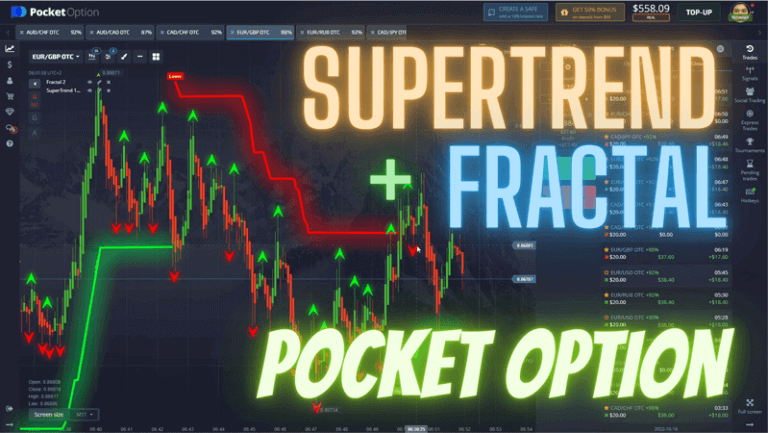
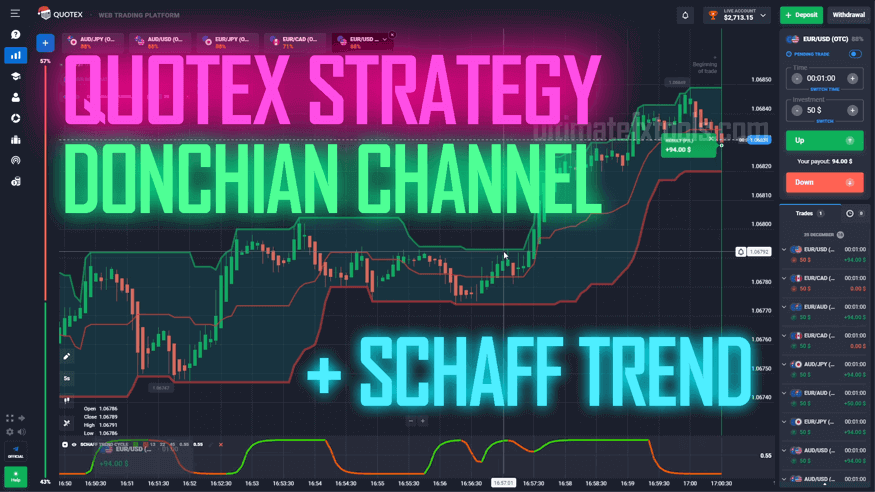
If you want a structured indicator toolkit to pair with this workflow, the trend and momentum tools covered in our Pocket Option Super Trend strategy and the Quotex Donchian Channel and Schaff Trend Cycle guide are a practical starting point.
Red Flags of "AI Bots" and Signal Sellers
Plenty of products promise an AI bot that "never loses" or that wins on autopilot. Those claims are the clearest sign to walk away. Be wary when you see:
- Guaranteed win rates, "sure shot" signals, or promises that you cannot lose.
- Pressure to fund a specific unregulated platform through their referral link.
- Screenshots of profits with no verifiable, independent track record.
- Any bot that leans on the Martingale method to "recover" losses — doubling down after losing trades can wipe out an account very quickly.
Realistic Expectations and Risk Management
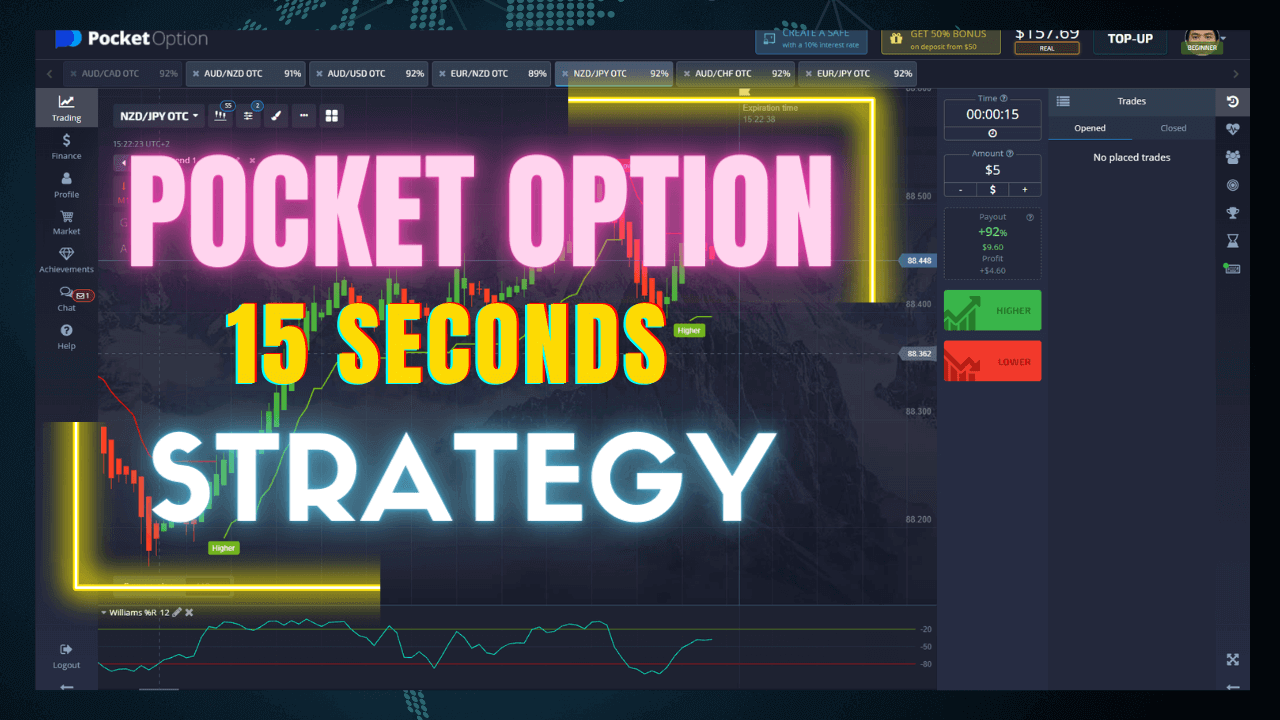
No indicator, strategy, or AI removes risk from binary options, where a wrong call means losing the amount staked on that trade. Set expectations accordingly and protect your capital first. A sensible baseline is to risk only a small, fixed percentage — around 1-2% of your balance per trade — so that a run of losing trades does not end your account. Avoid Martingale-style position sizing entirely; treat it as a warning, not a technique. Trade the timeframes and major pairs (such as EUR/USD or GBP/USD) that you understand, and stop for the day when you hit a preset loss limit. For a low-timeframe example of disciplined entries, see our 15-second OTC strategy for Pocket Option.
Frequently Asked Questions
Can AI guarantee winning trades?
No. AI cannot guarantee any trade. It can help you analyse and organise information, but it cannot predict future prices, and every trade carries real risk of loss. Any product promising guaranteed wins should be treated as a warning sign.
Is an AI bot better than learning to trade myself?
AI works best as a support tool that speeds up research and journaling, not as a replacement for your own understanding. Traders who learn how their indicators and risk rules actually work tend to make better decisions than those who blindly follow a black-box bot.
Do I need to pay for AI tools to use this approach?
Not necessarily. Much of responsible AI-assisted analysis uses free tools plus your own charts. If you want a complete, ready-made indicator library to build your workflow around, UltimateFXTools offers lifetime access to 100+ indicators and strategies for a single $39 payment.
This content is for educational purposes only and is not financial advice. Trading involves substantial risk; you can lose some or all of your capital. No result is guaranteed and past performance does not indicate future results. Trade only what you can afford to lose.