Best Binary Options AI Trading Signals: An Honest Guide
Search for the "best" AI trading signals and you will find no shortage of services claiming their algorithm has cracked the market. The honest truth is more useful: AI signals are a decision aid, not a crystal ball. Software can scan charts faster than any human and flag patterns you might miss, but no model can see the future or remove the risk that is built into trading itself. This guide explains what these tools realistically do, how to use them alongside your own analysis, and how to spot the services that overpromise.
What AI Trading Signals Really Are
An AI trading signal is an automated read of market data. The software applies statistical models or machine-learning logic to price action, volatility, and technical indicators, then outputs a suggestion — for example, a possible "up" or "down" bias on a given asset and timeframe. That output is a probability-weighted opinion based on historical patterns, not a promise about the next candle.
This matters because markets are driven by news, sentiment, and events that no dataset can fully anticipate. A model trained on past behaviour can be blindsided by anything genuinely new. Treat a signal the way you would treat a second opinion: useful input to weigh, never an instruction to follow blindly.
How to Use Signals With Your Own Confirmation
The traders who get value from AI signals rarely trade them raw. They use the signal as a starting point and then confirm it with their own reading of the chart before committing anything. A simple, repeatable routine helps:
- Check the higher-timeframe trend first — a signal that fights the dominant trend deserves more caution.
- Confirm with a familiar indicator you understand, such as RSI, moving averages, or DeMarker, rather than stacking a dozen you do not.
- Note the market context — avoid entries around major news releases when volatility can spike unpredictably.
- Skip the trade when the signal and your own analysis disagree. There is always another setup.
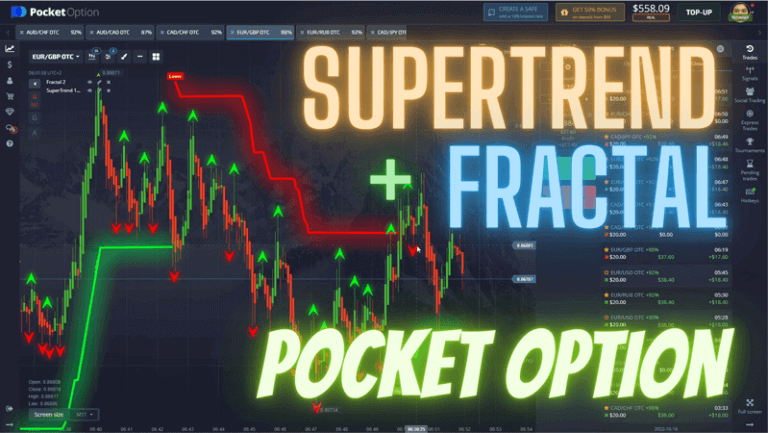
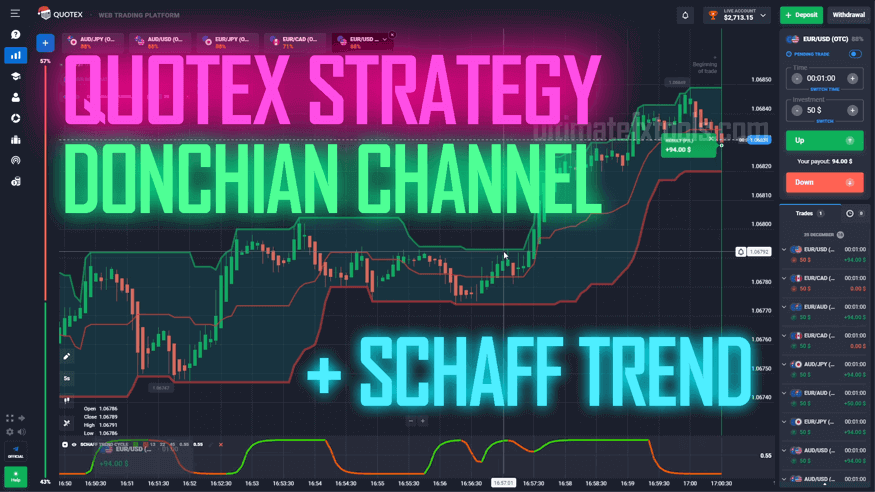
Used this way, a signal becomes a filter that speeds up your process, not a replacement for judgement. If you want to see how confirmation logic works in practice, our Pocket Option Super Trend strategy and the Quotex Donchian Channel and Schaff Trend Cycle walkthrough both show how a signal is checked against trend and momentum before entry.
Red Flags of "Guaranteed-Win" AI Services
Plenty of paid signal services lean on AI as a marketing word. Be sceptical when you see any of the following, because they describe things trading cannot deliver:
- Claims of guaranteed profits, "no-loss" results, or specific win-rate numbers — no honest tool can promise these.
- Screenshots of winning trades with no mention of losers. Every real strategy has losing periods.
- Pressure to add funds quickly or to recover a loss by increasing your stake, often paired with Martingale advice. Doubling after a loss can drain an account fast and is not a safety net.
- No explanation of how the model works, and no way to test it on a demo before you pay.
Setting Realistic Expectations
A good AI signal tool can save time, reduce emotional decisions, and highlight setups you would otherwise miss. What it cannot do is turn trading into a sure thing. Binary options in particular carry a fixed-risk structure where a wrong call means losing the full stake on that trade, so results depend far more on your risk discipline than on any single signal source. The realistic goal is a consistent, rules-based process — not a magic feed that is right every time.
Risk Management Guidelines
Risk control is what keeps you in the game long enough for a sound process to matter. Limit each trade to a small fixed percentage of your account, commonly 1-3%, so that a normal losing streak cannot wipe you out. Decide your daily loss limit before you start and stop when you hit it. Avoid Martingale-style stake increases after losses — the theory sounds tidy but a short run of losers can escalate the stake beyond what your account can absorb. A flat, fixed-percentage stake is far more survivable and makes your results easier to review honestly.
Frequently Asked Questions
Are AI trading signals guaranteed to win?
No. No signal service, AI or otherwise, can guarantee winning trades. AI models estimate probabilities from past data; they cannot predict future prices or eliminate risk. Any service promising guaranteed wins is a warning sign, not a feature.
Should I trade a signal without my own analysis?
It is safer not to. Signals work best as one input among several. Confirm each one against the higher-timeframe trend and an indicator you understand, and pass on setups where the evidence conflicts.
Do I need to pay a subscription for good signals?
Not necessarily. Many traders build their own signal logic from standard indicators. UltimateFXTools bundles its full indicator and strategy library for a single $39 lifetime payment with no recurring fees, so you can study the tools and apply your own confirmation rather than renting a black box.
This content is for educational purposes only and is not financial advice. Trading involves substantial risk; you can lose some or all of your capital. No result is guaranteed and past performance does not indicate future results. Trade only what you can afford to lose.