Scalping Strategies: A Beginner's Guide
Scalping is a short-term trading style built around many small trades held for seconds to a few minutes. The appeal is obvious: fast feedback and no overnight exposure. But it is one of the hardest styles for a newcomer to run well because it magnifies the two things beginners underestimate most: transaction costs and decision speed. This guide explains what scalping actually involves, why it is tough for beginners, a simple framework to study on a demo account, and honest expectations to carry into it.
What Scalping Actually Is
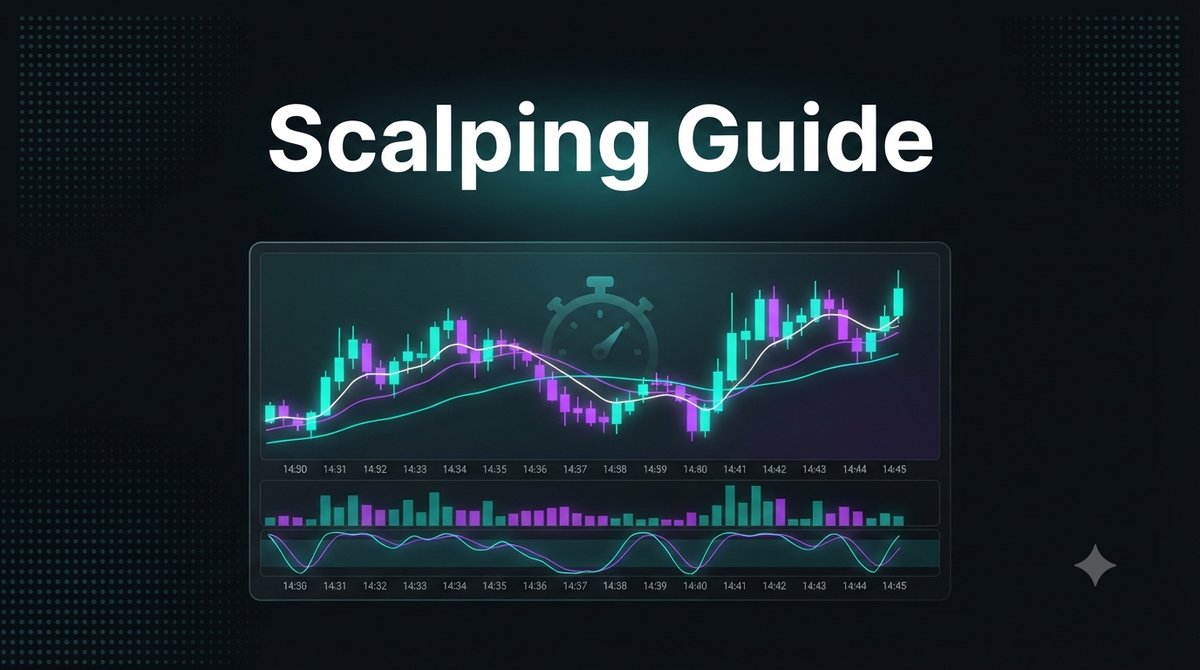
A scalper aims to capture small price moves on low timeframes such as the M1 or M5 chart, closing positions quickly rather than holding for hours or days. A scalper may take dozens of trades in a single session. Because each target is small, the spread and any commission you pay on every trade become a large slice of the outcome. That cost drag is the single most important thing to understand before you start.
How It Compares to Other Styles
- Day trading opens and closes positions within the same day, aiming at moves that play out over minutes to hours.
- Swing trading holds positions for days or weeks and asks for patience rather than speed.
- Scalping works the lowest timeframes, needs fast execution, and lives or dies on tight costs and discipline.
Why Scalping Is Hard for Beginners
Small profit targets leave little room for error. A wide spread, slow order fills, or a moment of hesitation can turn a reasonable idea into a loss. Scalping also demands sustained concentration, and the high trade frequency makes it easy to overtrade, chase, or let one bad run snowball. None of this makes scalping impossible, but it is not the gentle on-ramp beginners often expect. Treat it as a skill to build slowly, not a shortcut.
A Simple Scalping Framework to Study
This is a study framework for a demo account, not a recipe for profit. Keep it simple while you learn:
- Read the higher timeframe first. Mark the day's high and low and note obvious supply and demand zones on the daily or H1 chart so your short-term trades align with the broader picture.
- Trade with, not against, momentum. A fast moving average or an oscillator such as the DeMarker can help you gauge whether short-term momentum favors buyers or sellers. Indicators describe conditions; they do not predict the next candle.
- Pick entries on the M1 or M5. Look for a pullback into a level in the direction of the trend rather than entering mid-move.
- Define your exit before you enter. Set a stop-loss and a modest take-profit up front, and let the trade resolve without moving your stop wider.
- Journal every trade. Record why you entered and exited. Reviewing that log teaches you more than any single indicator.
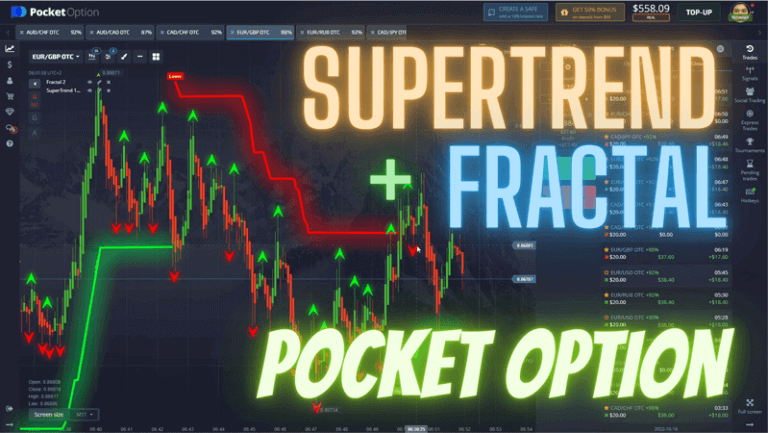
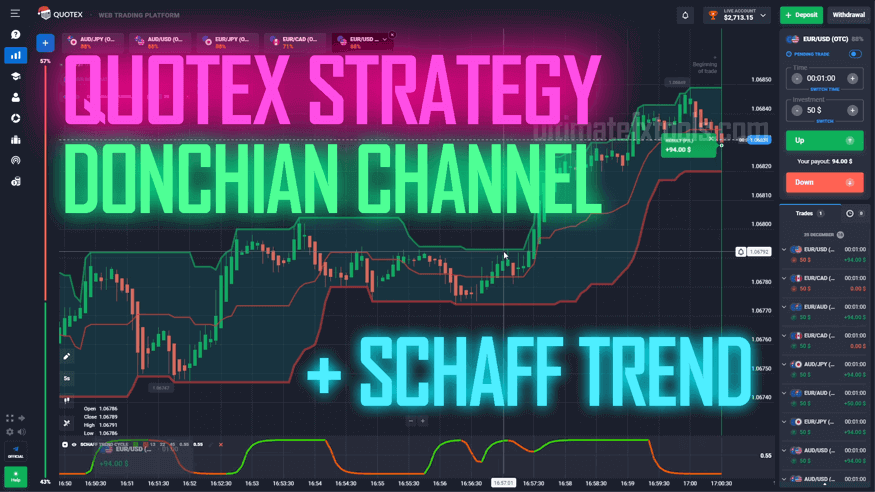
If you want indicators to test this framework on a demo chart, our Pocket Option Super Trend strategy and the Quotex Donchian Channel and Schaff Trend Cycle walkthrough show how trend and momentum tools are applied on live charts.
Risk Management
Risk control matters more in scalping than in any slower style because you take so many trades. Decide in advance how much of your account a single trade can risk and keep every position to that same small fraction. Always use a stop-loss. Avoid martingale-style position sizing, where you increase your stake after a loss to recover it; a losing streak can wipe out an account faster than any winning run can rebuild it. Because scalping spreads your costs across many trades, favor pairs with tight spreads and a trading platform with fast, reliable fills. Watch out for high-impact news, when spreads widen and fills slip. Practice on a demo account until your process is consistent before committing real money.
Realistic Expectations
Scalping is high-variance work. Even a well-followed plan produces losing trades and sessions, and results vary from one trader and market to the next. No indicator or method removes that uncertainty. Progress comes from repetition, honest review, and protecting your capital while you learn.
FAQ
Is scalping a guaranteed way to profit?
No. Nothing in trading is guaranteed. Scalping is a demanding, high-variance style where costs and execution speed work against you, and any trader can have losing days. Approach it as a skill to develop, not a sure thing.
Is scalping good for beginners?
It is one of the harder styles to start with because it punishes small mistakes and high costs quickly. Many newcomers find day or swing trading more forgiving while they learn. If scalping appeals to you, build the habit on a demo account first.
Which indicators are best for scalping?
There is no single best tool. Fast moving averages and momentum oscillators like the DeMarker are common because they respond quickly, but they describe current conditions rather than predict the future. Test any indicator on a demo chart before relying on it.
You can explore a broad set of trend and momentum tools to practice these ideas through our $39 lifetime access, which covers 100+ indicators for MT4 and MT5.
This content is for educational purposes only and is not financial advice. Trading involves substantial risk; you can lose some or all of your capital. No result is guaranteed and past performance does not indicate future results. Trade only what you can afford to lose.