Cryptocurrency Trading Strategies with Momentum and DeMarker Indicators
Cryptocurrency markets move fast, and reading price behavior clearly matters when you are deciding whether to enter or stay out. One approach many traders explore combines the Momentum indicator with the DeMarker indicator to spot potential shifts in direction. Neither tool predicts the future, and crypto is highly volatile, so treat these signals as context for a decision rather than a command to trade.
What the Momentum Indicator Does
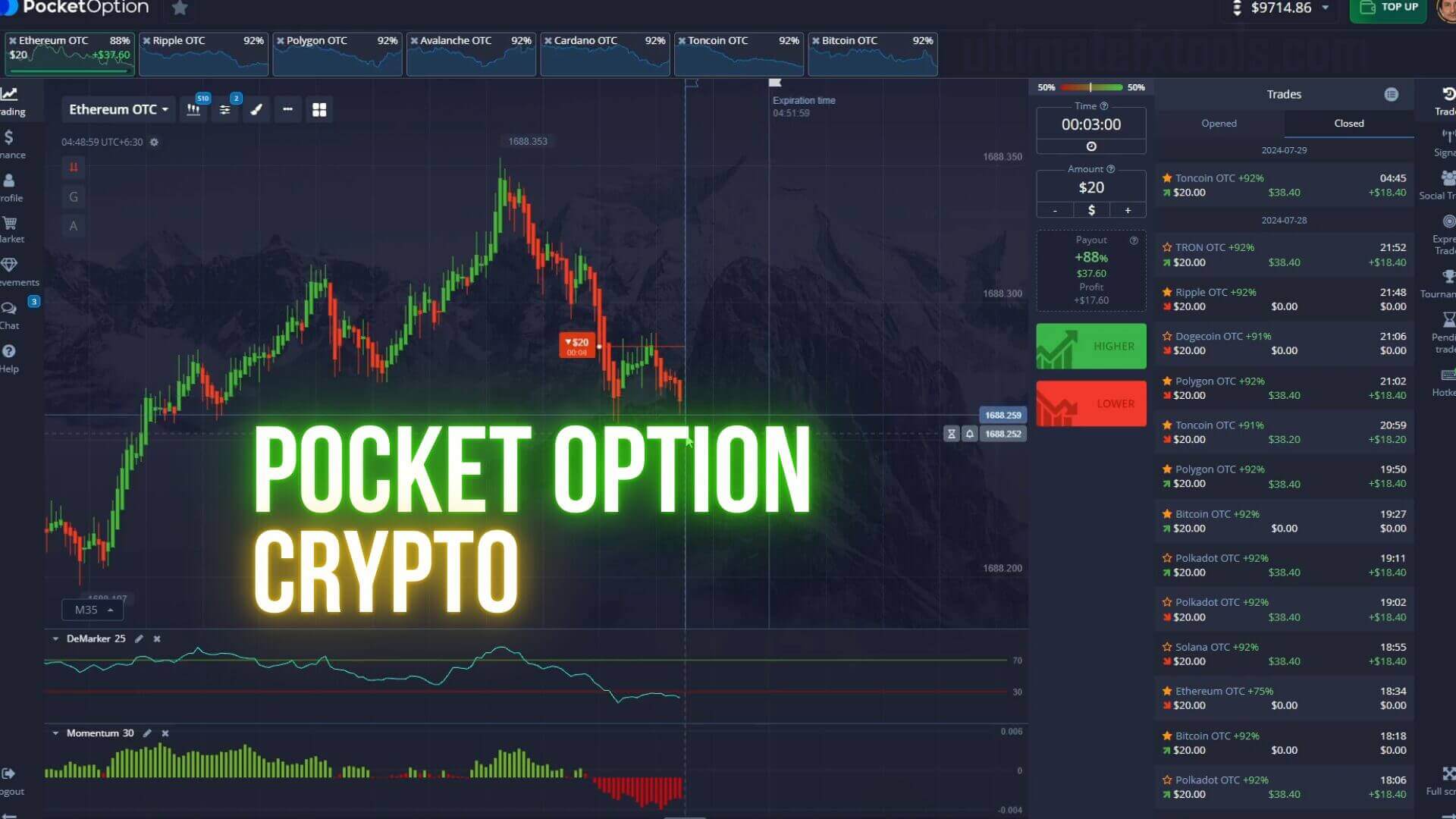
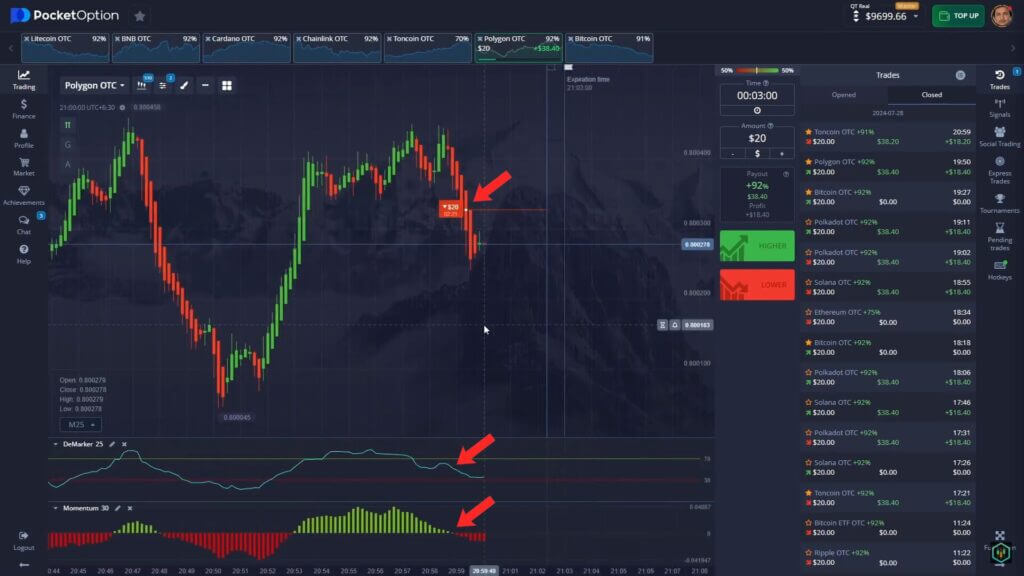
The Momentum indicator measures how quickly the price of an asset is changing over a chosen number of periods. When momentum is rising, price is gaining pace to the upside; when it fades or turns lower, buying pressure may be easing. Some chart setups color the reading, and a shift from green to red can flag that the recent up-move is slowing. That does not confirm a reversal on its own, but it can prompt you to look closer.
What the DeMarker Indicator Does
The DeMarker indicator compares recent price action to prior periods to gauge whether demand is stretched. A reading near the middle of its range suggests a balanced market. A cross below the 30 level points to oversold conditions, while a move above 70 points to overbought conditions. These zones highlight where a move may be running out of room, not a fixed moment to act.
How the Two Indicators Combine
Be honest about what this pairing is: both Momentum and DeMarker are momentum-type tools, so they tend to be correlated. When they agree, you are seeing the same underlying pressure described two ways rather than two fully independent confirmations. That overlap can make a signal feel stronger than it is. To reduce that bias, many traders read these alongside price structure such as support and resistance, or a longer-timeframe trend, before deciding anything.
Timeframe and Entry Ideas
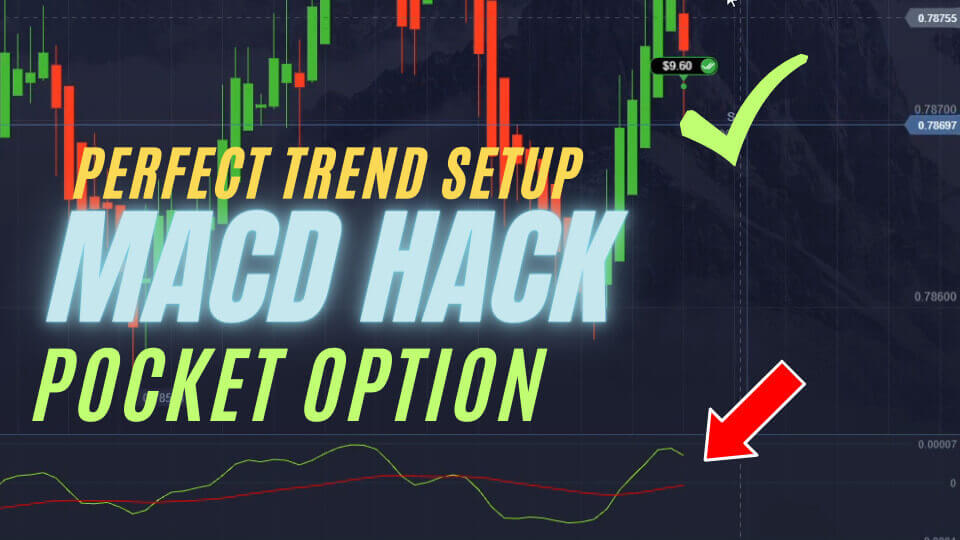
On short crypto timeframes, one common read is a possible downtrend when Momentum shifts from green to red while DeMarker sits near its midpoint or rolls over from an overbought zone. The mirror case is a possible upturn when DeMarker crosses below 30 into oversold territory and Momentum begins to turn from red toward green. Because short intervals carry a lot of noise, it helps to define your entry, your invalidation point, and your exit before the trade rather than reacting tick by tick. If you want a trend-based companion approach, see our Pocket Option Perfect Trend Setup.
Realistic Expectations
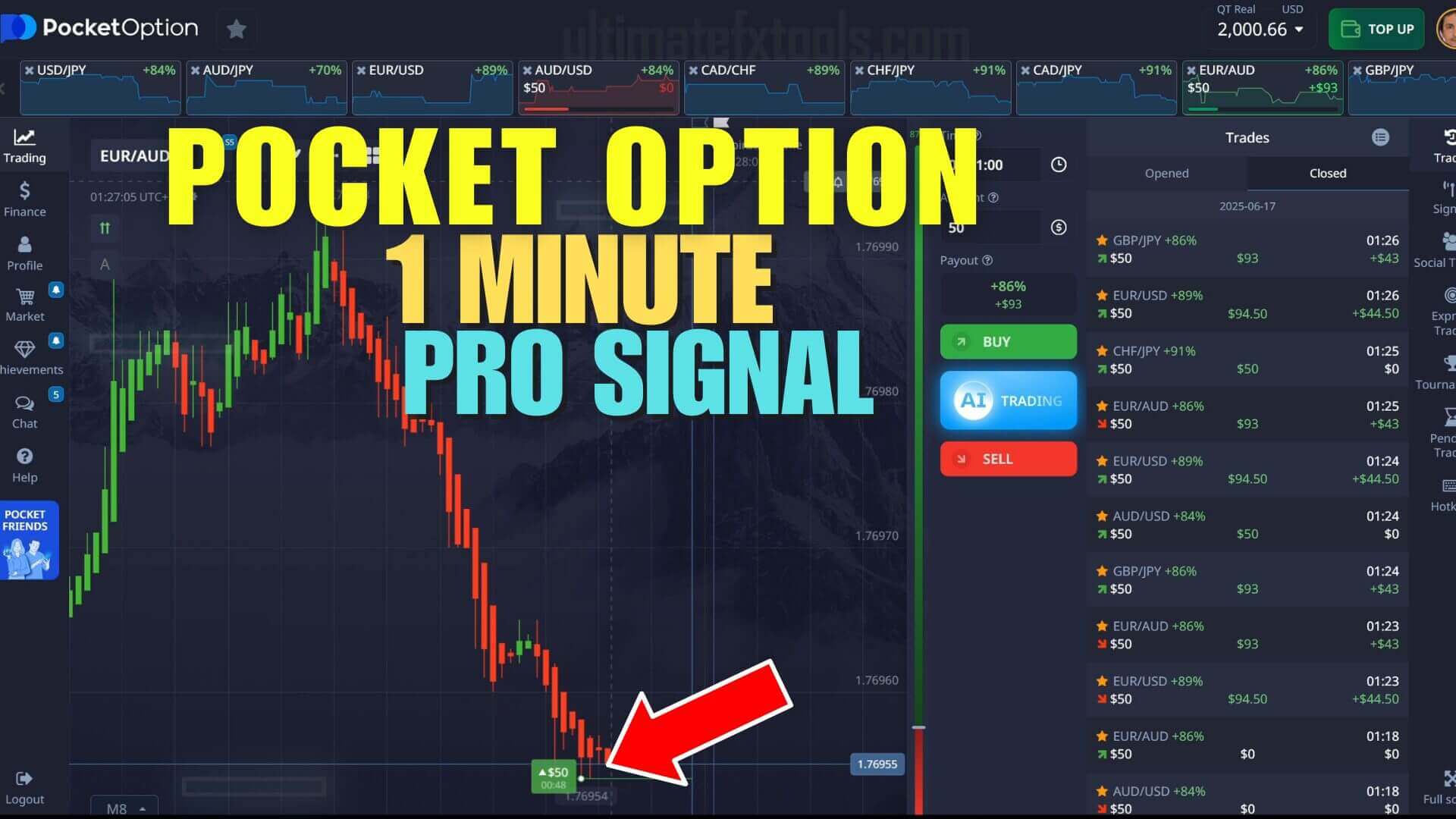
No indicator combination removes uncertainty. Some setups that look clean still fail when a news event or a sudden liquidity shift moves the market against you. The goal is a repeatable, rule-based process you can review and refine over time, not a fixed outcome. Keep a simple log of your setups so you can see which conditions actually suited your style. For another signal-reading example, our 1-Minute Pocket Option Pro Signals post walks through a fast-timeframe workflow.
Risk Management
Risk control matters more than any single signal. Decide in advance how much of your account you are willing to risk on one trade, and keep it small enough that a losing streak does not wipe you out. Use a stop or a defined exit on every position, and avoid martingale-style strategies that increase size after a loss to chase it back, since those can grow a small drawdown into a large one very quickly in volatile crypto conditions. Only trade funds you can afford to lose, and practice on a demo account until your process is consistent.
Frequently Asked Questions
Does this strategy win every trade?
No. No strategy wins every trade, and this one is no exception. Momentum and DeMarker can help you frame a decision, but markets change fast and losing trades are a normal part of the process. Manage risk on every position.
Are Momentum and DeMarker independent confirmations?
Not really. Both are momentum-type indicators, so they are correlated and often move together. Treat their agreement as one perspective rather than two separate confirmations, and consider adding price structure or a higher timeframe for context.
What timeframe works best?
There is no single best timeframe. Shorter intervals produce more signals but more noise, while higher timeframes are slower but often clearer. Test different settings on a demo account and choose what fits your schedule and risk tolerance.
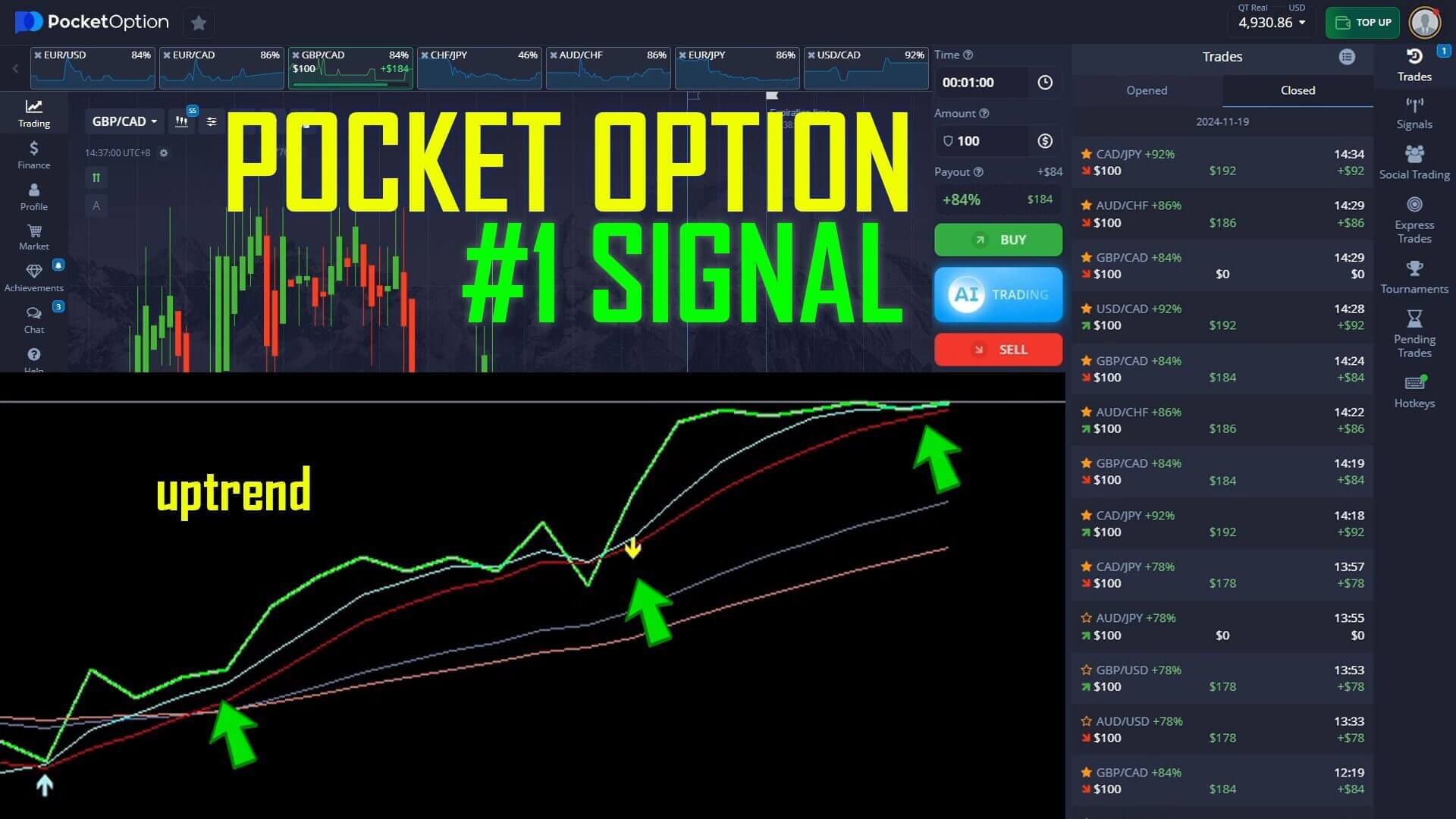
You can get all of our indicators and strategy guides together with $39 lifetime access. To explore a related signal-based setup, take a look at Pocket Option's #1 Signal.
Pocket Option Free Strategy 2025 - Crypto Trading
This content is for educational purposes only and is not financial advice. Trading involves substantial risk; you can lose some or all of your capital. No result is guaranteed and past performance does not indicate future results. Trade only what you can afford to lose.