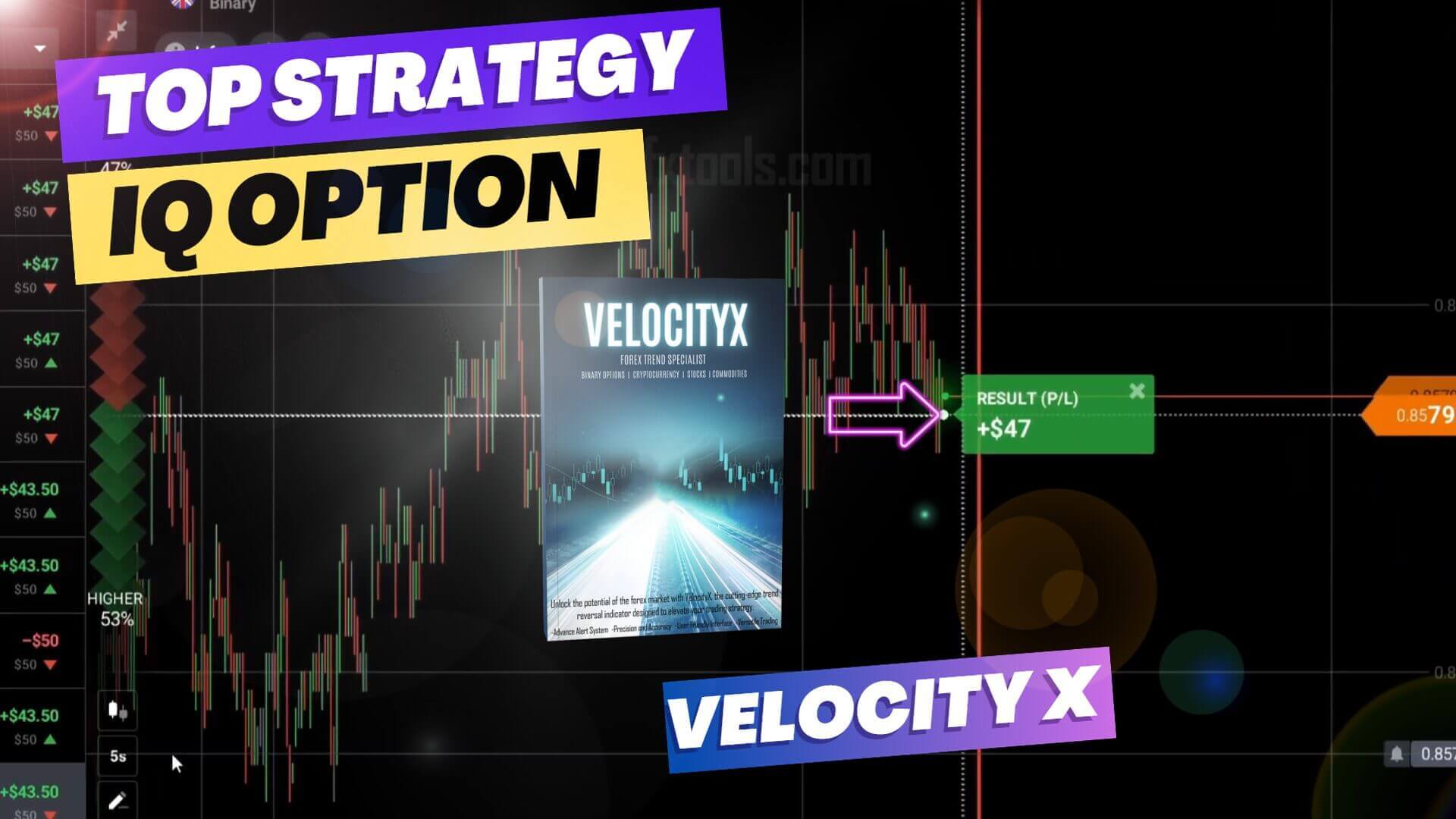
Top Strategy IQ Option for Trading Success
IQ Option is a fixed-expiry platform: you pick a direction, the timer runs, and the position closes whether you like the last five seconds or not. That format rewards traders who can tell a real momentum push from a twitch in a flat market. The Velocity X indicator was built for that reading. It is decision support on a MetaTrader 4 chart — it measures conditions and flags moments worth your attention. It does not predict the next candle, it carries no win rate, and no honest setup wins every trade. Here is how it works, how to read it, and where it stops working.
What Velocity X Actually Measures
Velocity X is a composite, not a single formula. It blends three well-known readings and only speaks when they line up:
- CCI (Commodity Channel Index): how stretched is price from its own recent average? This is what spots a move running out of room.
- ATR (Average True Range): is this market actually moving? ATR is the volatility gate — in a dead session, it is what should keep you out.
- WMA (weighted moving average): which way is the near-term trend leaning? The weighting favours recent candles, so it turns sooner than a plain average.
Together they cover the two conditions that break most short-expiry traders: a market gone sideways, and a market that has already made its move before you notice. The alert system then pushes a notification to your phone or terminal, so you are not staring at a chart waiting.
How to Read the Signal
An up alert says momentum has turned higher and volatility is present. A down alert says the reverse. Your job before acting is a quick sanity check, not a second opinion from four more indicators — a 30-second decision window leaves no room for deliberation.
Ask three things. Is price respecting a visible structure — holding above a recent swing low for an up alert, failing under resistance for a down alert? Is the candle fully formed, or are you reacting to an unsettled wick? And does the alert agree with the WMA lean, or fight it? An alert that argues with the prevailing trend is not automatically wrong, but it is a lower-quality read, and skipping those is the biggest contributor to trading with more consistency. Most traders do not lose because the tool is quiet. They lose because they take every alert it gives.
Installing Velocity X and Setting It Up
- Attach Velocity X to your MetaTrader 4 chart, then open the matching pair on IQ Option so both tabs are aligned. A mismatched pair or timeframe makes every alert useless.
- Set candle time to 30 seconds, the timeframe this setup is built around, and match your expiry to it. A 30-second read with a five-minute expiry is two strategies stapled together.
- Leave the CCI, ATR and WMA components on their defaults until you have logged a real sample of trades. Tightening sensitivity produces more alerts, not better ones.
- Wait. The indicator goes quiet for stretches, and that silence is information — it usually means volatility is not there.
- Trade two or three liquid pairs you know well rather than scanning the list.
When This Setup Fails
Be clear-eyed about the failure modes. Velocity X struggles in tight, low-volatility ranges where CCI keeps flagging stretched conditions that never resolve into a move — ATR is meant to filter those, but chop still leaks through. It lags at violent reversals: news releases, session opens and thin overnight liquidity produce candles no momentum composite reads in time. And on a 30-second chart, spread and latency eat a real slice of a small move, which is why alerts that look fine in MetaTrader can land badly on the platform.
The response is risk management, not a better indicator. Stake a small, fixed fraction of your balance per trade, cap how many trades you take per session, and set a daily loss limit you actually stop at. Then practise the routine on a demo account until the reads are automatic — the point of demo is not to prove the tool works, it is to find out how you behave after three losses in a row.
For the same indicator applied differently, see the IQ Option trend alert signal walkthrough, a Pocket Option variation using Velocity X, and a closer look at the moving-average component in IQ Option weighted moving average.
FAQ
Does Velocity X have a win rate?
No, and be sceptical of any indicator sold with one. Velocity X measures momentum, volatility and trend direction, and alerts you when they align. Outcomes depend on the market, your expiry, your risk sizing and your discipline. Losing trades are a normal part of fixed-expiry trading.
Which timeframe and expiry should I use?
The 30-second candle is the core setup. In choppier conditions, a one-minute reading filters out weaker alerts at the cost of fewer of them. Whatever you pick, keep the expiry matched to the candle you read the signal on.
Do I need anything else to run it?
Just MetaTrader 4 and the indicator file. Velocity X is included with every other tool on the site in the single $39 lifetime plan.
This content is for educational purposes only. Trading involves risk. Past results do not guarantee future outcomes. Always practice responsible money management and limit your daily trades to avoid large losses.