Bollinger Bands and an AI Chart Scanner on Pocket Option
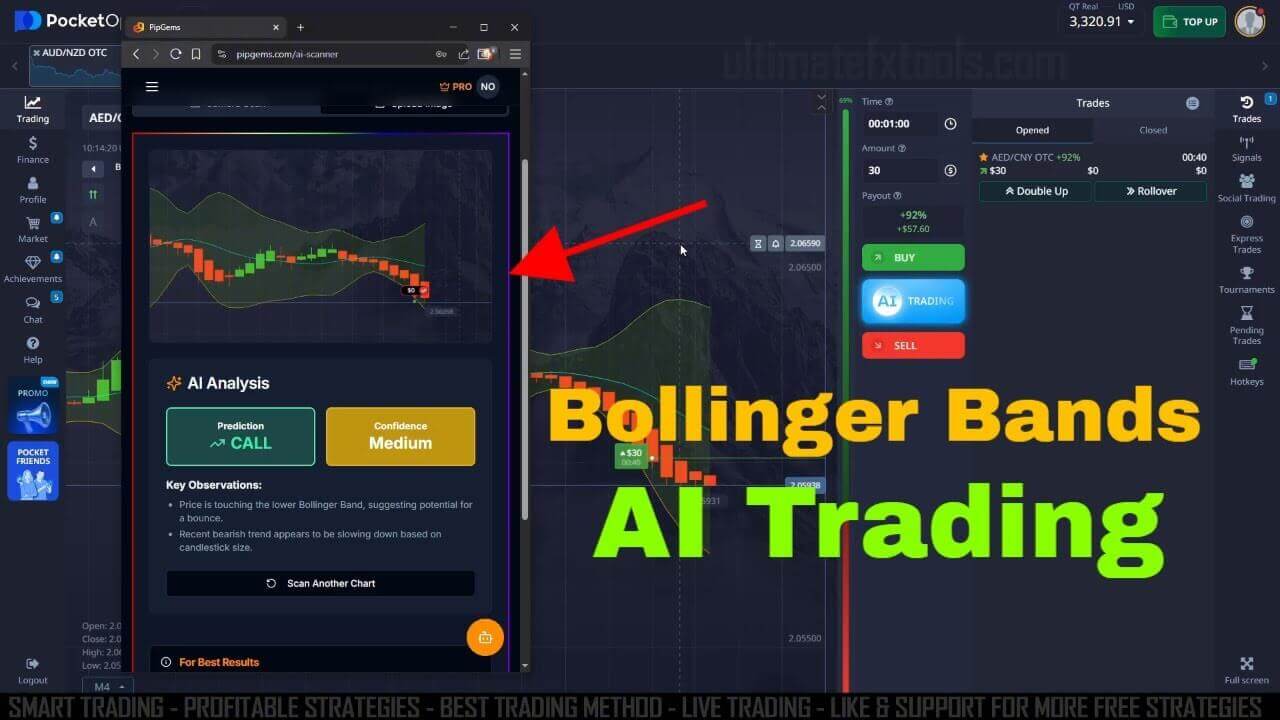
This Pocket Option approach for short-expiry OTC trades pairs an old volatility tool, Bollinger Bands, with a modern PipGems AI chart scanner. One thing has to be clear first: Bollinger Bands describe volatility, not direction, and the AI does not see the future. It reads a screenshot and pattern-matches recent price. Together they can help you slow down and confirm a setup, but neither is a signal you follow blindly. Every read still ends with your own eyes on the candle.
What Bollinger Bands Actually Plot
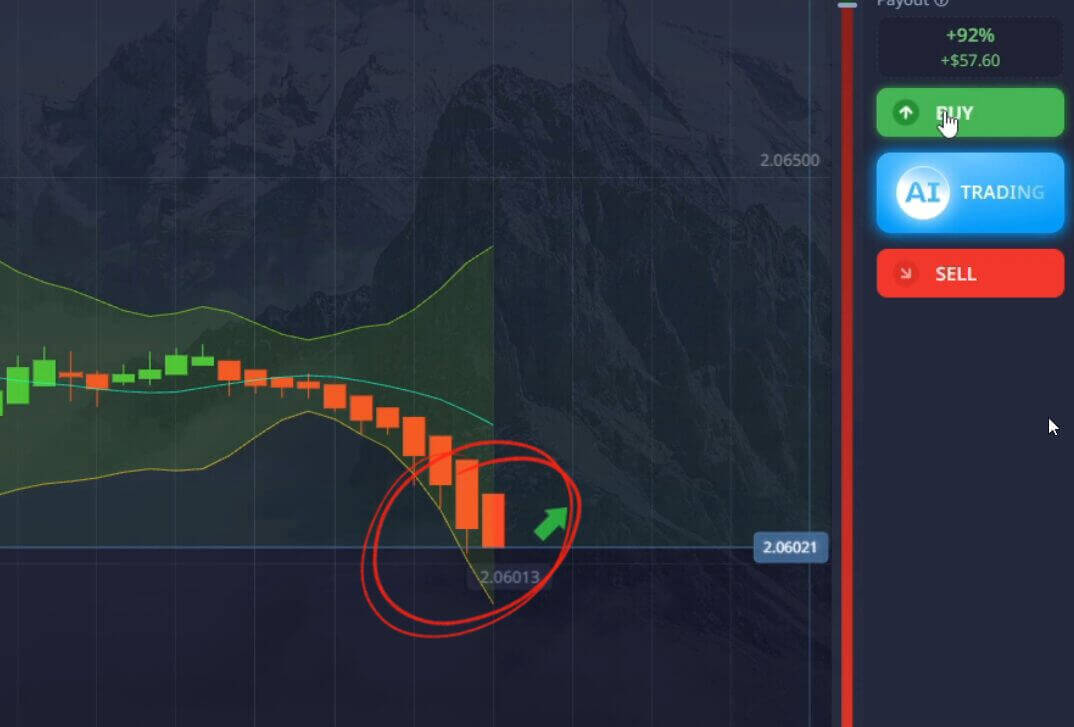
Bollinger Bands are three lines: a middle moving average and an upper and lower band set a number of standard deviations away from it. The classic setting is a 20-period average with the bands at 2 standard deviations. Standard deviation measures how spread out recent prices are, so the bands widen when the market gets volatile and squeeze when it goes quiet. The tool tells you how much price is moving, not which way.
This is where most beginners go wrong. A touch of the upper or lower band is not a sell or buy signal. In a strong trend, price can ride along a band for many candles in a row. The band edge marks a statistically stretched price, nothing more: a place to pay attention, not a place to trade automatically.
What the AI Scanner Adds
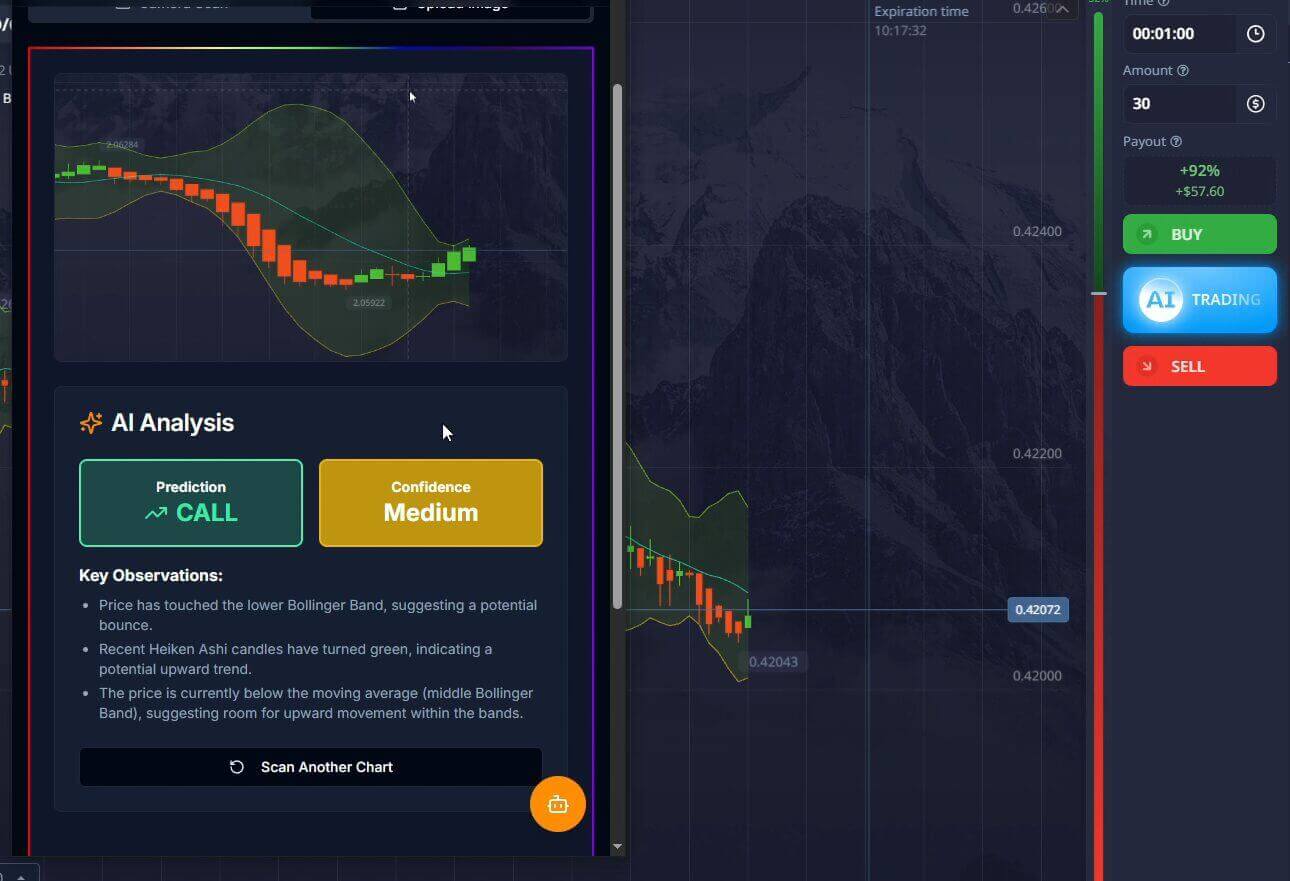
The PipGems AI chart scanner reads a screenshot of your live chart and returns a direction, usually CALL, PUT or WAIT, along with a confidence rating. Read that rating carefully: it reflects how strongly the current picture matches the patterns the model was trained on. It is not a probability that the trade will finish in your favour. A high confidence read on a messy, low-liquidity OTC chart is still a read on a messy chart. The scanner's value is that it applies the same criteria every time and never gets bored, greedy or fearful mid-session. Treat it as a disciplined second opinion, not the final word.
Chart Setup and Settings
Keep the chart clean so you and the scanner read the same thing:
- Timeframe: a 5-second candle chart on Pocket Option, aimed at a 1-minute trade.
- Indicator: Bollinger Bands only, set to Period 13 and Deviation 3. This shorter period reacts faster than the classic 20/2 setting, which suits fast OTC candles but also fires more false stretches.
- Nothing else on the chart. A cluttered screenshot makes the AI read slower, and speed matters on a one-minute expiry.
Keep your settings identical between the chart and what you tell the scanner, or its read answers the wrong question.
How to Confirm a Signal
The scanner flags a condition; you confirm it. Do not enter the moment the AI prints a direction. Wait for the candle to close and check that price action agrees before you commit:
- CALL: the AI reads UP, and you see firm green candles holding at or above the middle band, not a lone spike into the upper band during a falling market.
- PUT: the AI reads DOWN, and you see firm red candles pressing at or below the middle band.
- Stand aside: the AI and the candles disagree, the read is WAIT, or price is drifting flat and stretched with no momentum behind it. A skipped trade costs nothing.
When This Setup Fails
Two situations break the method. The first is a strong trend, where price hugs one band and the AI keeps reading a reversal that never comes; band touches in a trend are traps, not entries. The second is a dead, ranging market where the bands squeeze flat and every small poke looks like a signal with no follow-through. In both cases the honest move is to trade less, not more. No indicator and no AI removes losing trades, so risk control matters most: stake a small fixed fraction of your balance per trade, cap how many trades you take, and stop for the day at a preset limit. Practice on a Pocket Option demo before you risk real funds. To see the same scanner elsewhere, compare the Expert Option Bollinger Bands AI scanner walkthrough and the full PipGems AI scanner Pocket Option OTC setup.
FAQ
Does a Bollinger Band touch mean I should trade a reversal?
No. A band touch only tells you price is stretched relative to recent volatility. In a trend, price can ride a band for a long run, so a touch alone is not a signal. Wait for the candle to close and momentum to confirm before acting.
Is the AI confidence rating a win probability?
No. The confidence number reflects how closely the current chart matches patterns the model has learned, not the odds of the trade finishing your way. The AI pattern-matches recent price; it does not predict the future. Treat a high rating as a reason to look closer, not to skip your own confirmation.
How do I get the PipGems scanner?
The PipGems AI scanner is included with the UltimateFXTools $39 lifetime plan, alongside the indicator library. You supply the discipline: match your settings, confirm on candle close, and keep risk small on every trade.
This content is for educational purposes only. Trading involves risk. Past results do not guarantee future outcomes. Always practice responsible money management and limit your daily trades to avoid large losses.