Enhance Binary Options Trading With These Indicators
Indicators do not predict the market. What they do well is turn raw price action into a clearer picture of what is happening right now: whether price is trending, how much momentum is behind the current move, and how wide the recent price swings are. Used with that mindset, a handful of well-chosen indicators can help you filter out low-quality setups and time your entries with more discipline. Used carelessly, they can just as easily crowd your chart and produce conflicting signals. This guide covers the main indicator families, how each one honestly helps and where it falls short, and how to combine them without fooling yourself.
The Main Indicator Types And What Each Does
Most useful indicators fall into three broad groups. The goal is to pick one from each group rather than three that all measure the same thing.
Trend indicators
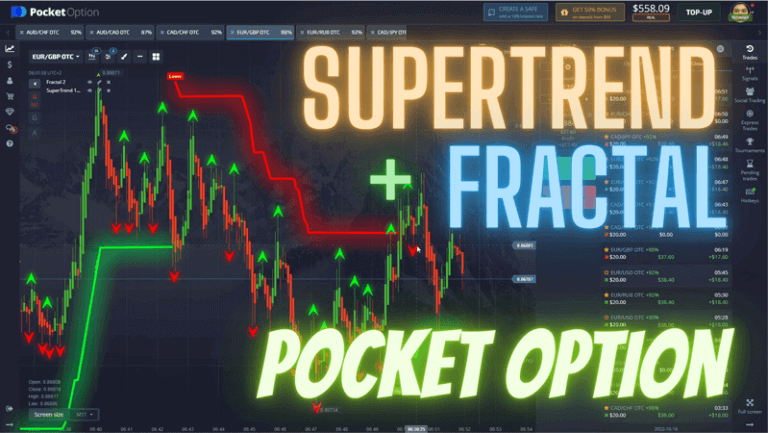
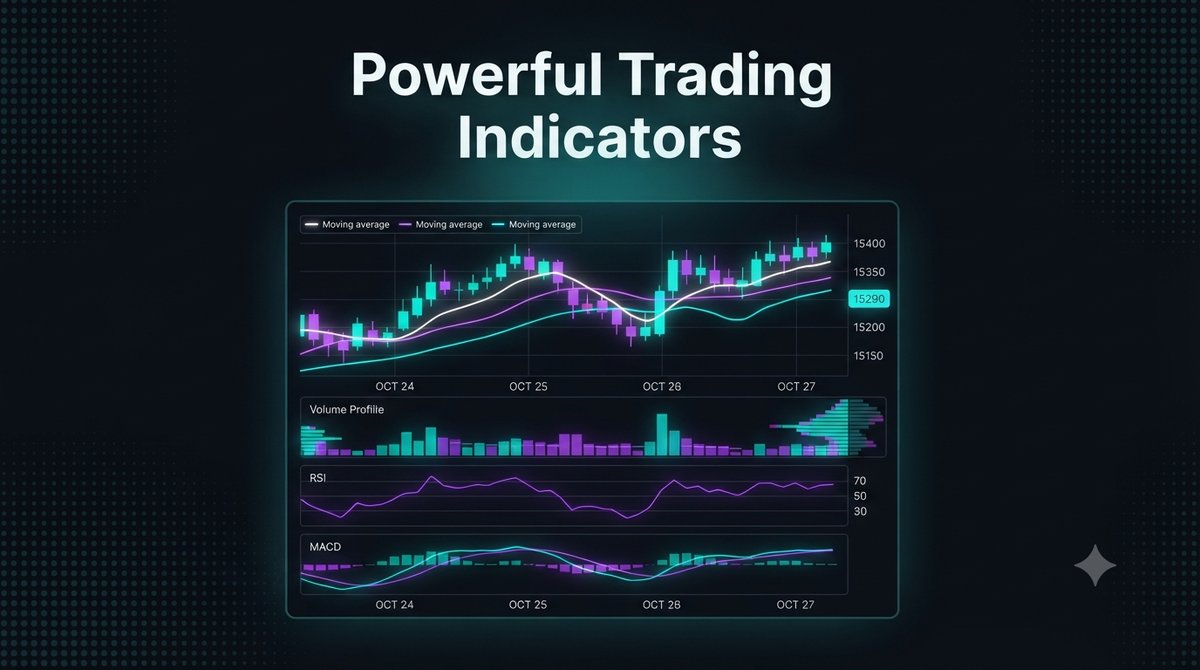
Moving averages, MACD, and the Supertrend fall here. They smooth price to show direction and help you avoid trading against the dominant flow. Their weakness is lag: because they are built from past prices, they confirm a move after it has already started and can whipsaw badly in sideways markets. A simple pairing of two moving averages is a common starting point, as covered in our moving averages with DeMarker walkthrough.
Momentum oscillators
RSI, the Stochastic oscillator, and DeMarker measure the speed of price change and flag when a move may be stretched. They are helpful for spotting exhaustion, but "overbought" and "oversold" readings can persist for a long time in a strong trend, so a single oscillator reading is never a standalone entry cue.
Volatility indicators
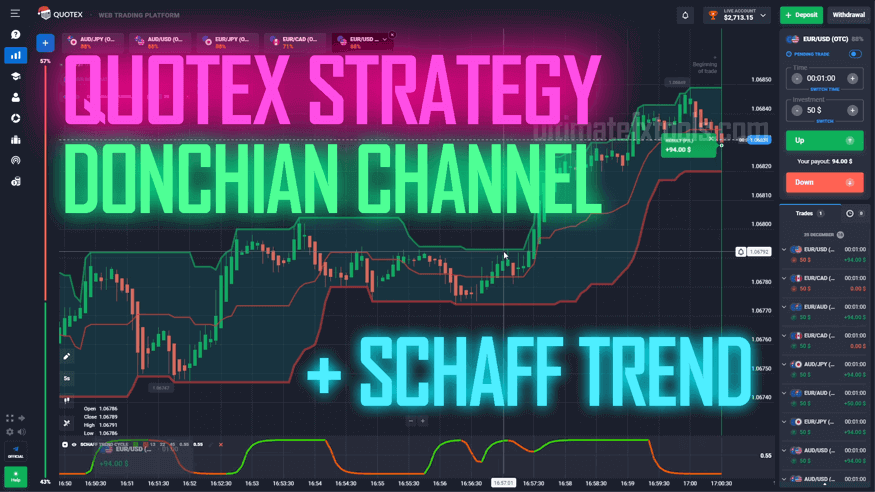
Bollinger Bands and Average True Range describe how far price is currently swinging. They tell you when conditions are calm or expanding, which affects how reliable other signals are. Our guide to Bollinger Bands breaks down several practical readings of band width and touches.
How To Combine Indicators Without Duplicating Them
Confirmation only means something when two tools measure different things and agree. Stacking three momentum oscillators is not confirmation; it is correlation, because they all react to the same input and will mostly nod along with each other. A more honest structure is one indicator per job: a trend tool to set direction, a momentum tool to time the pullback, and a volatility read to judge whether the environment suits your setup. When those three lenses point the same way, you have a stronger case. When they disagree, that is useful information too, usually a signal to stand aside rather than to force a trade.
Timeframe And Entry Approach
Short binary expiries are noisy, and lower timeframes produce more false signals per hour than higher ones. A practical habit is to read the broader direction on a higher timeframe, then drop down to your entry timeframe only to time the trade in that same direction. Wait for your indicators to align rather than acting on the first flicker, and keep expiry length consistent with the timeframe you are reading. There is no setting that removes false signals entirely, so treat every entry as a probability, not a certainty.
Realistic Expectations
No indicator or combination wins every trade. Each tool has a specific blind spot, and even a well-built system will produce losing streaks. The value of indicators is better, more consistent decision-making over many trades, not a shortcut to guaranteed outcomes. If a strategy or seller implies otherwise, treat that as a red flag.
Risk Management
Because binary options are all-or-nothing per trade, risk control matters more than any indicator. Risk only a small, fixed portion of your account on each position, and never chase losses. Avoid martingale-style position doubling after a loss: it feels logical but a normal run of losing trades can drain an account quickly. Practise a new indicator combination on a demo account until it behaves predictably before committing real money, and only trade capital you can afford to lose.
FAQ
Do these indicators win every trade?
No. No indicator or combination of indicators wins every trade. Each tool has weaknesses such as lag or false signals, and markets change. Indicators can improve the quality of your decisions over time, but losing trades are a normal part of trading.
How many indicators should I use at once?
Usually two or three, each measuring something different, is enough. Adding more of the same type (several momentum oscillators, for example) creates redundant, correlated signals rather than genuine confirmation and often just adds noise.
Where can I get these indicators?
Many are built into common platforms and charting tools for free. If you want a ready-made bundle of custom indicators and strategies for MT4 and MT5, UltimateFXTools offers lifetime access for a one-time $39. Whatever you use, test it on a demo account first.
This content is for educational purposes only and is not financial advice. Trading involves substantial risk; you can lose some or all of your capital. No result is guaranteed and past performance does not indicate future results. Trade only what you can afford to lose.