Pocket Option - A Simple Strategy for Beginners
Let's start with the part most articles on this topic skip: the majority of people who trade fixed-time options lose money. That is not a warning bolted on at the end — it is the baseline you are working against, and any page that tells you otherwise is selling you something. Fixed-time options are a short-horizon, all-or-nothing product. Nothing on this page changes that.
So what actually separates a disciplined trader from the crowd? Not a secret setup. It is process and risk control — having written rules, following them when the chart is moving, and sizing positions so that a bad run does not end the account. If you are new, the realistic goal is not income. It is learning to execute a plan on a demo account without breaking your own rules. That is a skill you can measure honestly, and it is the only thing worth building first.
With that framing in place, here is the simple Fractal-based setup this post is about. It suits beginners because it has few moving parts and gives you something concrete to practice.
What the Setup Actually Is
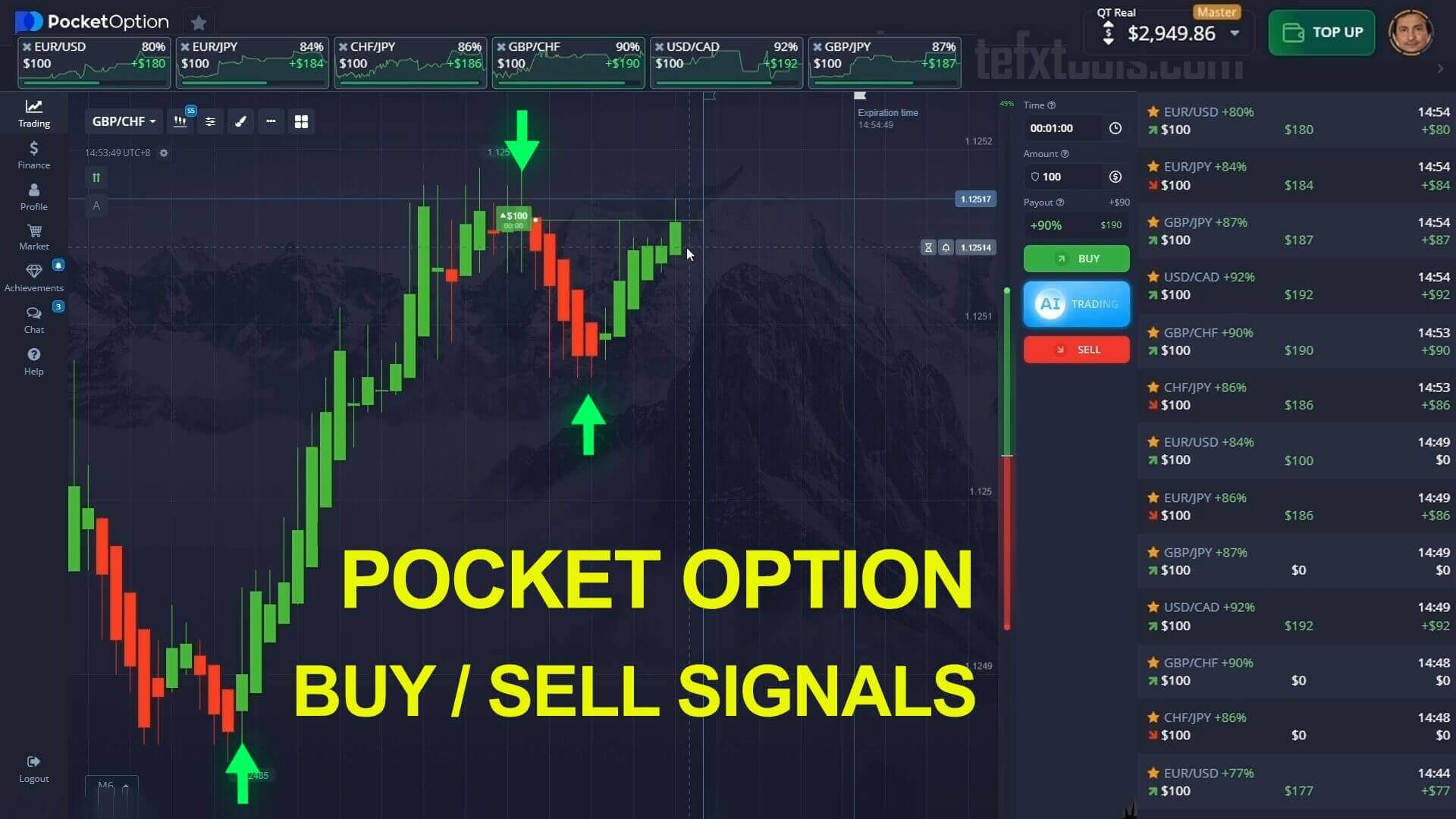
The method reads classic candle patterns on a fast chart and uses the Fractal indicator to mark short-term turning points, with a trend indicator alongside it for context.
- Set up your indicators: Keep the Fractal indicator on its default settings. Add one trend indicator you already understand — a moving average is enough. Resist the urge to stack five more; extra indicators mostly add noise and hesitation.
- Read the chart: The original version of this method uses a 20-second chart time frame. Be blunt about the trade-off: at 20 seconds you are reading mostly noise, and the shorter the window, the more the outcome depends on chance rather than on your read. Beginners are better served practising the same rules on a 1-minute or 5-minute chart.
- Identify entry points: Look for two red fractals in a row while the trend indicator agrees with that same direction. Agreement between the two is the whole point of the filter.
- Stand aside: If the fractals and the trend indicator disagree, or price is drifting sideways with no direction, there is no setup. Skipping trades is a decision, and it is usually the better one.
Notice what the rules do not include: any claim about how often they will be right. No one can honestly give you that number, because it depends on the market, the pair, the time of day and, most of all, on whether you actually follow your own rules.
Risk Management: The Part That Matters Most
If you take one thing from this page, take this section. The setup above is maybe a quarter of the job. Risk control is the rest, and it is what keeps you in a position to learn at all.
- Fixed, small stake. Decide on a small fixed fraction of your balance per position and never vary it because you feel confident. Confidence is not information.
- Never increase stakes after a loss. Doubling up to recover feels logical and is the fastest way to zero. A losing streak is not "due" to end.
- Cap your session. Set a maximum number of trades per day and a daily loss limit before you open the platform. When you hit either, you stop. No exceptions, no "one more".
- Only risk money you can afford to lose entirely. Not rent, not borrowed funds.
- Keep a log. Record every trade, the rule that triggered it, and whether you followed your plan. Judge yourself on rule-following, not on outcomes — that is the habit that builds consistency.
For a deeper walkthrough of position sizing and session limits, read our Pocket Option risk trading guide. Demo first, always: run the rules on a demo account until you can execute a full session without breaking a single one. If you cannot do that on demo, real money will not fix it.
FAQ
How much money can I make with this strategy?
No one can tell you that, and anyone who does is selling something. There is no figure we could put here that would be honest. Most people who trade fixed-time options lose money, and the sensible goal for a beginner is learning to follow a plan, not an income target.
Is a 20-second chart really suitable for beginners?
Honestly, no. It is the time frame the original method used, but at that speed you are reacting more than analysing. Practise the same rules on a slower chart first. If you want a structured look at very short expiries, see the 15-second strategy for Pocket Option.
Do I need paid indicators to try this?
No. Fractals and a moving average are standard on most trading platforms. If you later want a wider toolkit, everything on the site is included in a single $39 lifetime plan — but no indicator replaces risk control, and buying one will not shortcut the demo work. For another simple two-indicator structure, see Pocket Option OsMA and EMA.
This content is for educational purposes only. Trading involves risk. Past results do not guarantee future outcomes. Always practice responsible money management and limit your daily trades to avoid large losses.